
Elm sawfly
Trichiocampus ulmi
Description
How to identify
The elm sawfly (Trichiocampus ulmi) is a member of the Hymenoptera order and the Tenthredinidae family. Adult sawflies are small insects with a black, shiny body and translucent wings, often going unnoticed due to their size and swift flight.
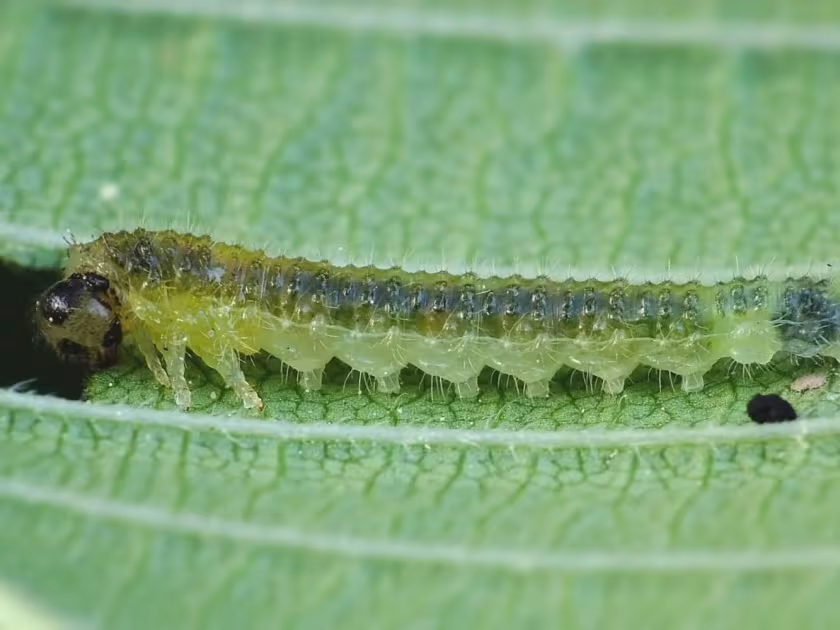
The larvae, commonly known as false caterpillars, are the primary stage causing visible damage. They are yellowish-green with distinct rows of black spots, making them relatively easy to identify when inspecting the undersides of leaves.
They overwinter as prepupae in tough, papery cocoons hidden in the soil beneath the host tree or within the crevices of the tree bark. Pupation occurs during the spring, leading to the emergence of adults.
Females possess an ovipositor used to saw into the leaf tissue, where they deposit individual eggs. A single female can produce several generations per season, depending on the climatic conditions of the region.
Understanding their lifecycle is crucial for timing interventions, as the species tends to favor stressed trees, often proliferating in dense urban or park environments where elm trees are prevalent.
What it damages
The elm sawfly is host-specific to the elm tree (genus Ulmus). Both native elm species and ornamental cultivars are susceptible to feeding damage, which can range from minor aesthetic issues to severe defoliation.
Young larvae feed gregariously, initially creating small, circular holes or transparent "windows" in the leaf tissue by avoiding the veins. This early-stage damage is often concentrated in specific patches on the tree.
As the larvae mature, they become solitary and far more voracious, devouring the entire leaf blade and leaving only the main veins behind, a process that can rapidly strip a branch of its foliage.
Heavy infestations reduce the tree's photosynthetic capacity, which leads to early leaf drop. Over several consecutive years, this stress weakens the elm, making it susceptible to secondary pests and various pathogens.
In extreme cases, particularly for young or newly planted trees, the loss of foliage can be critical, severely stunting growth or even leading to the eventual decline of the tree if left unmanaged.
When it appears
Adult sawflies typically emerge in late spring, usually May, which coincides with the flushing of fresh elm foliage. This is the optimal time for gardeners to start monitoring their trees for signs of activity.
The first generation of larvae appears in early June and remains active throughout the summer months. Visual signs of their feeding become most apparent during the peak of the warm season.
A second generation often develops during mid-to-late summer, prolonging the threat to the tree's health. In warmer climates, this lifecycle can be even more compressed, leading to continuous overlapping generations.
The total development time from egg to adult is roughly one month, allowing populations to grow rapidly when conditions are favorable, specifically during warm and moderately humid periods.
By late summer, the final generation of larvae finishes feeding and migrates towards the base of the tree or deeper into the soil to form the protective cocoons necessary for winter survival.
Signs of infestation
The earliest signs of an infestation include the presence of small, window-like holes in the leaves. Careful inspection of the undersides will typically reveal the larvae resting or feeding in groups.
The presence of fine, dark granular frass (excrement) on the leaves below or on the ground surface is a reliable indicator that an active colony of elm sawfly larvae is residing in the canopy.
A noticeable yellowing or browning of the foliage before autumn is a common symptom of severe defoliation, indicating that the tree is under significant metabolic stress from persistent feeding.
Large-scale leaf drop during mid-summer, often accompanied by the audible sound of feeding larvae in quiet conditions, suggests a heavy infestation that requires immediate management action.
Missing or stunted new shoot growth is another sign, as the tree redirects energy from growth to simple survival, sacrificing its development to compensate for the significant loss of foliage.
Control measures
Cultural control methods involve soil cultivation around the base of the tree in early spring or late autumn. This disturbs the overwintering cocoons and exposes them to predators and harsh weather conditions.
Biological treatments, such as products containing Bacillus thuringiensis, are highly effective against young larvae while maintaining safety for non-target beneficial insects and the surrounding environment.
For severe infestations, systemic insecticides can be applied to the canopy. It is essential to follow local regulations and apply them during periods when pollinators are not active to minimize environmental impact.
Promoting overall tree health through proper irrigation and nutrient management helps elms recover more quickly from defoliation events and increases their natural resilience against various pests.
Encouraging local bird populations and predatory insects by maintaining a diverse garden environment provides natural suppression of sawfly numbers, reducing the need for chemical intervention.
Taxonomy
- Latin name
- Trichiocampus ulmi
- Order
- Hymenoptera
- Family
- Tenthredinidae
- EPPO code
- TRCCUL
Discussion
No discussions yet — be the first.