
Cat roundworm
Toxocara mystax
Description
How to identify
Toxocara mystax (also known as Toxocara cati) is a nematode parasite classified under the order Ascaridida and family Toxocaridae.
While primarily a parasitic organism in feline intestines, its eggs represent a significant biological pollutant in agricultural soil environments.
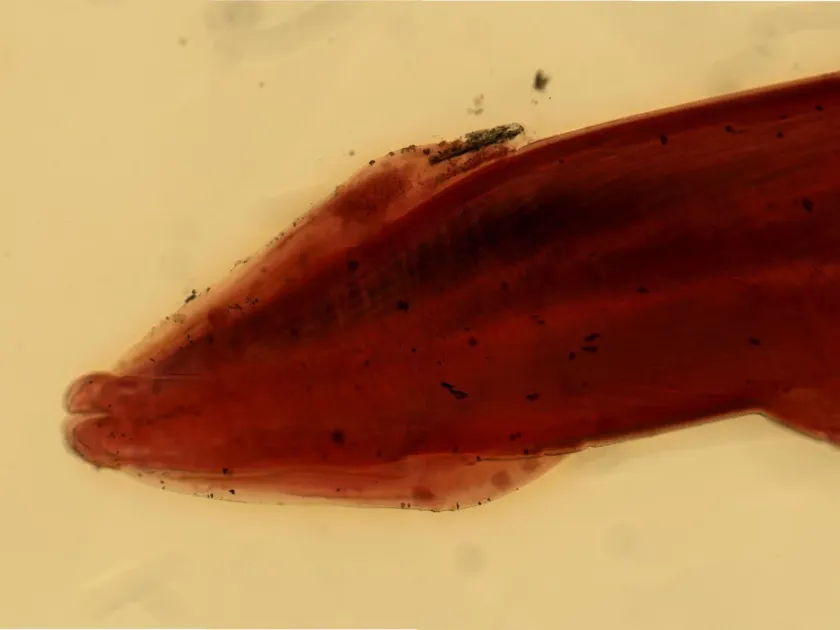
The adult worms are elongated, reaching lengths of 3 to 10 cm, but they are rarely encountered in field conditions compared to their resilient eggs.
The eggs possess a highly resistant outer shell, allowing them to remain viable in the soil for several years despite temperature fluctuations.
These microorganisms are cosmopolitan, found wherever feline populations interact with human-cultivated land or garden spaces.
What it damages
It is important to emphasize that Toxocara mystax does not cause direct physical damage to plants, as it does not feed on vegetable tissues.
The primary concern is the contamination of the soil surface, which poses a severe sanitary risk for the production of fresh produce.
Fruits and vegetables that grow in contact with the ground are prone to carrying these eggs, which can lead to health risks upon consumption.
Agricultural operations are affected by the need to ensure that organic fertilizers, such as manure, are free from parasitic contamination.
The economic impact is indirect, related to food safety standards and the necessity of rigorous sanitation protocols in vegetable production.
When it appears
The survival rate of Toxocara mystax eggs in the soil is highly dependent on environmental humidity and temperature patterns.
Optimal conditions for egg longevity in the soil occur during moderate temperatures between +15°C and +25°C with sufficient moisture.
Spring and summer are the critical seasons for potential soil contamination when animal activity is most frequent in garden areas.
While winter freezing inhibits larval development within the egg, it does not destroy the parasite, which resumes its cycle as temperatures rise.
Direct exposure to harsh sunlight and excessive soil dryness can eventually decrease the viability of these eggs over time.
Signs of infestation
Detecting the presence of Toxocara mystax eggs in soil is impossible through simple visual inspection of plant health or soil appearance.
A high-risk indicator is the presence of stray cats or the application of untreated organic matter sourced from areas with high pet activity.
Reliable identification can only be achieved through professional laboratory analysis (soil helmintology tests) of collected soil samples.
Because there are no direct symptoms on the plants, a proactive approach to soil maintenance is required to prevent biological buildup.
Maintaining clear records of soil treatments and animal presence on the farm can help identify potential high-risk zones.
Control measures
Effective management focuses on limiting animal access to cultivation areas and ensuring high standards of agricultural hygiene.
All organic fertilizers should be subjected to heat treatment or proper long-term composting to eliminate potential biological hazards.
The use of physical barriers, such as fencing, is essential to keep cats away from vegetable beds and planting rows.
Workers should strictly follow safety protocols, including wearing gloves and thoroughly washing all produce that touches the soil.
- Deep cultivation of soil to bury potentially contaminated surface layers.
- Using cover crops to improve soil biological health.
- Implementing strict waste management to discourage stray animal presence.
- Routine cleaning of tools and footwear before moving between plots.
Taxonomy
- Latin name
- Toxocara mystax
- Order
- Nematodes
- Family
- Ascarididae
- EPPO code
- TOXCMY
Discussion
No discussions yet — be the first.