
Poultry caecal worm
Heterakis gallinarum
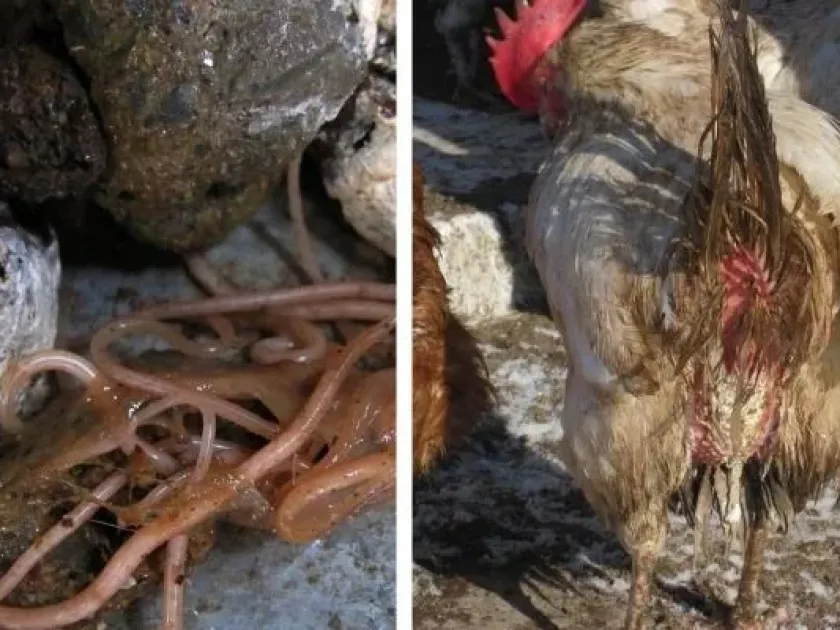
Description
How to identify
Heterakis gallinarum is a parasitic nematode belonging to the order Ascaridida and the family Heterakidae. It typically inhabits the caeca of chickens, turkeys, and other domestic birds.
The adult worms are small, ranging from 7 to 15 mm in length, and have a white to yellowish body. Males are distinguished by a well-developed precloacal sucker.
The life cycle is direct and does not require an intermediate host. Eggs are shed in bird droppings and mature into infective larvae when conditions are suitable.
These eggs possess a thick protective shell, allowing them to remain viable in soil for several years, even under harsh environmental conditions.
Transmission occurs when birds ingest infective eggs while pecking at soil, foraging, or consuming contaminated water and feed supplies.
What it damages
From an agricultural standpoint, Heterakis gallinarum is significant due to its presence in poultry manure, which is often used as a fertilizer for crops.
Applying raw or improperly composted manure to garden beds poses a serious risk of contaminating the soil with parasite eggs, turning the garden into a disease reservoir.
Vegetable crops, particularly those consumed raw, are at risk of surface contamination, which can lead to hygiene issues in horticultural production.
While the nematode does not feed on plant tissues, its presence in the soil requires strict adherence to biosafety protocols in integrated farming systems.
High infestation levels in the soil can compromise the sanitary quality of the produce and disrupt the overall health of the farm ecosystem.
Signs of infestation
Detecting the presence of Heterakis gallinarum in agricultural soil requires specific laboratory techniques such as soil floatation and microscopic examination.
Visual identification of the parasite eggs is impossible without professional diagnostic equipment due to their microscopic size and camouflage within soil particles.
A history of uncontrolled poultry grazing on agricultural land is a primary indicator of potential soil contamination with this specific nematode.
The presence of uncomposted manure clumps in the garden is a direct warning sign that the soil may harbor a high concentration of infective parasite eggs.
Frequent occurrence of caecal worm disease in poultry flocks raised on the farm serves as strong clinical evidence of environmental contamination.
Control measures
The most effective strategy is the thorough thermal treatment of poultry manure through aerobic composting to destroy the parasite eggs before soil application.
Implementing a rigorous deworming program for all poultry on the farm is essential to minimize the shedding of new eggs into the environment.
Zoning the farm to strictly separate poultry enclosures from vegetable cultivation areas prevents cross-contamination and maintains soil hygiene.
Ensure that manure is aged for a minimum of 6 to 12 months under proper composting conditions to allow for natural heat generation that kills nematode eggs.
When sourcing organic fertilizers, always confirm they have undergone a standardized sanitation process to ensure the absence of biological contaminants.
Taxonomy
- Latin name
- Heterakis gallinarum
- Order
- Nematodes
- Family
- Ascarididae
- EPPO code
- HETKGA
Discussion
No discussions yet — be the first.