
Ash sawfly
Tomostethus sinofraxini
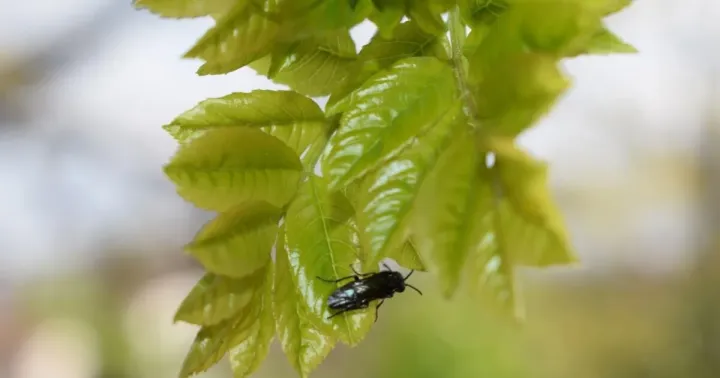
Description
How to identify
The Ash sawfly (scientific name: Tomostethus sinofraxini) belongs to the Tenthredinidae family within the order Hymenoptera. It is a specific pest that primarily targets ash species (genus Fraxinus).
The adult sawfly is a small, winged insect that resembles a wasp but lacks the constricted waist characteristic of many other Hymenoptera. They play a critical role in the spring emergence cycle.
Larvae, often referred to as false caterpillars, have a robust, chewing mouthpart apparatus. Their bodies are typically greenish, blending in perfectly with the underside of the ash leaves they consume.
The life cycle undergoes complete metamorphosis, consisting of egg, larva, pupa, and adult stages. Most populations spend the winter in the soil within protective cocoons.
Due to their cryptic behavior, identifying them often relies on spotting the tell-tale skeletonization of leaves rather than the adult insects themselves, which are quick to fly.
What it damages
Ash trees (Fraxinus spp.) are the primary hosts for this insect. The pest is highly specialized and does not typically migrate to other deciduous tree species.
Larval feeding causes significant leaf tissue loss. They consume the soft parts of the leaf, leaving the veins intact, a process known as skeletonization.
Massive infestations can result in complete defoliation of the tree. This places the plant under severe physiological stress, especially during the peak of the growing season.
Defoliated trees are unable to perform photosynthesis effectively, which leads to reduced nutrient storage and stunted annual growth rates.
Repeated yearly defoliation can weaken an ash tree to the point where it becomes susceptible to secondary infections, fungal pathogens, and eventual decline.
When it appears
Adult emergence typically occurs in early spring, synchronized precisely with the bud break and early leaf development of the host ash trees.
The active larval feeding stage occurs during late spring and early summer, matching the period when the tree produces its maximum foliage mass.
By mid-summer, the larvae reach maturity and burrow into the soil beneath the host tree to spin cocoons and enter a state of diapause until the next spring.
The pest is generally monovoltine, meaning it produces only one generation per year, though unusual climatic conditions can sometimes trigger partial second cycles.
Strategic monitoring should be conducted in early May or when the first leaves appear to catch the larvae early in their life cycle when they are most vulnerable.
Signs of infestation
Initial signs include small, irregularly shaped holes appearing in the leaf surface, which rapidly increase in size as the larvae grow larger.
Observing the undersides of leaves often reveals clusters of larvae. When disturbed, they frequently curl their bodies into an "S" or "C" shape as a defensive reaction.
Dark fecal pellets, or frass, accumulating on the foliage or the ground beneath the tree canopy are clear indicators of intense pest activity.
A thinning canopy or "see-through" appearance of the leaves suggests that the infestation has reached a level that requires immediate management intervention.
Premature leaf drop or late-season yellowing in unaffected areas of the tree can also indicate that the tree is suffering from the stress caused by sawfly feeding.
Control measures
Managing the Ash sawfly requires a combination of preventative cultural practices and targeted interventions to maintain tree health.
Tilling the soil around the base of the tree in late autumn or early spring can expose pupae to freezing temperatures and natural predators, reducing the population.
Chemical control involving systemic or contact insecticides is effective if applied early, specifically targeting the first and second larval instars.
- Applying biological pesticides like Bacillus thuringiensis.
- Using sticky traps to capture emerging adults during the spring flight.
- Encouraging local populations of birds and parasitic wasps that predate on larvae.
Maintaining tree vigor through proper watering and fertilization during droughts can help trees withstand limited defoliation without suffering permanent damage.
Taxonomy
- Latin name
- Tomostethus sinofraxini
- Order
- Hymenoptera
- Family
- Tenthredinidae
- EPPO code
- TOMOSI
Discussion
No discussions yet — be the first.