
Ash sawfly
Tomostethus multicinctus
Description
How to identify
The Ash sawfly (Tomostethus multicinctus) belongs to the order Hymenoptera, family Tenthredinidae. Adult sawflies are small, dark, wasp-like insects that emerge in early spring, synchronized with the budburst of their host trees.
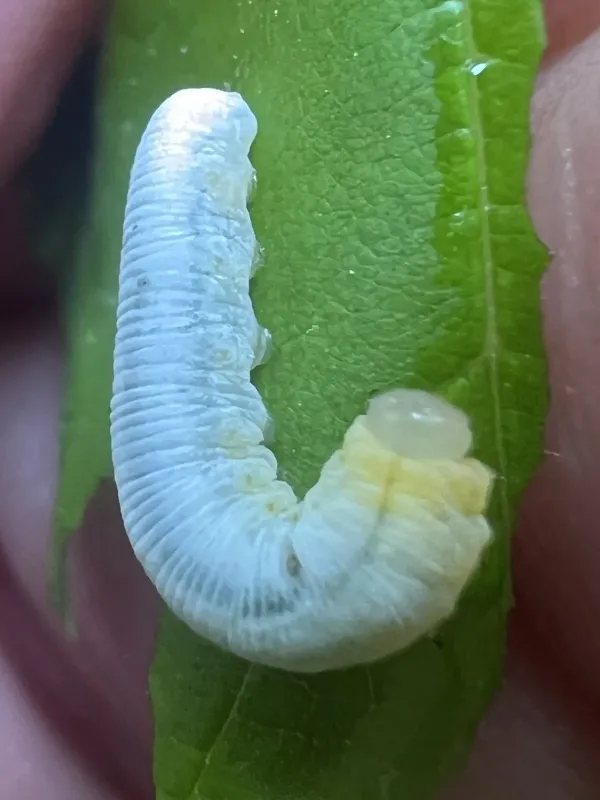
The larvae, often called false caterpillars, are the primary stage of the insect that causes damage. They are typically light green to yellowish with a darker head capsule, featuring both thoracic legs and abdominal prolegs, which differentiates them from lepidopteran caterpillars.
Their life cycle consists of a complete metamorphosis: egg, larva, pupa, and adult. The females utilize a saw-like ovipositor to insert eggs into the leaf tissues of host trees, where the larvae will later emerge to begin their feeding cycle.
After reaching maturity, the larvae descend to the ground to pupate within the soil or leaf litter, constructing protective cocoons. This allows them to safely overwinter until the next spring when the cycle begins anew.
Adult sawflies have a relatively short lifespan, primarily focused on mating and egg-laying. Their synchronization with host phenology is a critical survival strategy, ensuring that larvae have immediate access to nutrient-rich young leaves.
What it damages
This pest specifically targets ash trees (Fraxinus species). While it can be found in natural forests, it is particularly problematic in nurseries and urban landscaping where ornamental ash trees are grown.
Signs of infestation
The primary symptom of infestation is the skeletonization or complete consumption of leaves by the larvae. Large populations can quickly strip a tree, leaving only the midribs and main veins of the foliage.
Early warning signs include tiny necrotic spots on the leaves, which are the sites of oviposition. These spots can lead to localized leaf curling or deformity as the tissues react to the egg injection.
Massive feeding activity results in a visible accumulation of frass (larval droppings) beneath the canopy. This debris often alerts arborists and gardeners to an ongoing infestation before the defoliation becomes severe.
Defoliated trees exhibit reduced growth and vitality. If the tree is repeatedly stripped of its leaves over several growing seasons, it becomes highly susceptible to drought stress and secondary pathogens.
The overall aesthetic of the canopy becomes sparse and ragged. This is particularly concerning for decorative trees in urban settings, where the visual quality of the ash tree is a primary requirement.
Control measures
Biological control, including the protection and encouragement of natural predators such as parasitic wasps, birds, and predatory bugs, is a key component of long-term sustainable management of sawfly populations.
Cultivation practices such as shallow tilling or raking under the tree canopy in late autumn or early spring can disrupt the soil-dwelling pupae, significantly reducing the number of adults that emerge in the next season.
Insecticidal treatments should be applied only when necessary and targeted toward young larvae. Using reduced-risk or selective insecticides helps to mitigate negative impacts on beneficial non-target insects.
Monitoring using sticky traps or pheromone attractants helps in determining the precise timing for intervention. Proper timing is crucial because older, larger larvae are more resistant to control measures than younger ones.
In highly sensitive areas, such as playgrounds or small residential gardens, manual removal of infested leaf clusters (if reachable) can be an effective non-chemical way to suppress the initial population growth.
Taxonomy
- Latin name
- Tomostethus multicinctus
- Order
- Hymenoptera
- Family
- Tenthredinidae
- EPPO code
- TOMOMU
Discussion
No discussions yet — be the first.