
African Grey Hornbill
Tockus nasutus
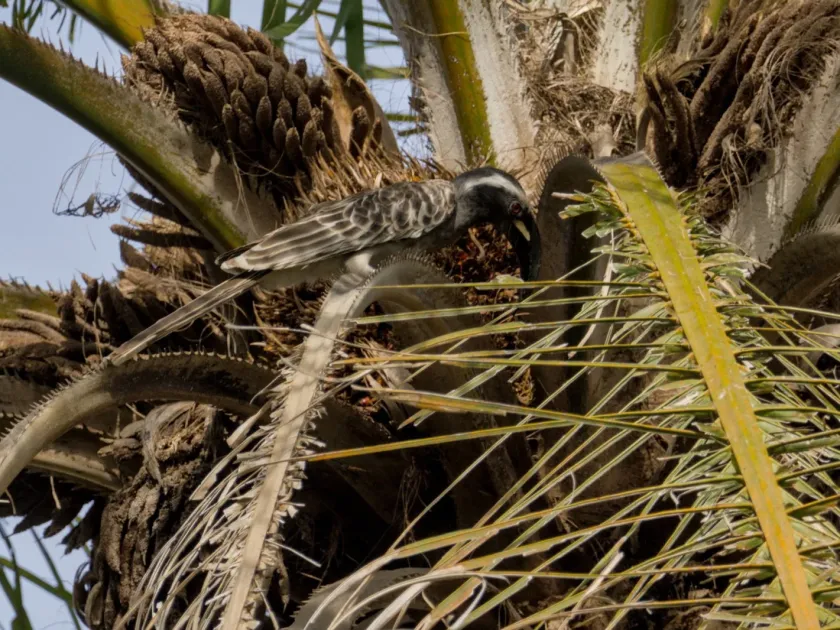
Description
How to identify
The African Grey Hornbill (lat. Tockus nasutus) is a member of the Bucerotidae family, commonly found in African savannahs and woodlands. It is a medium-sized bird characterized by a long, curved, dark-colored bill, which is its most distinctive anatomical feature.
Its plumage is predominantly grey and brown, with white spots on the wings and a distinctive white tail pattern. Males and females show slight variations, which is useful to note when monitoring population density in agricultural areas.
These birds are highly social and often move in small groups, which makes them a significant threat when they target commercial plantations. Their daily routines are closely linked to tree cover, providing them with safe nesting sites.
The species is highly adaptable, allowing it to move into cultivated areas that border their natural habitat. Their presence is often detected by their distinct vocalizations during dawn and dusk feeding times.
Understanding their behavior is critical for crop management, as their intelligence allows them to quickly adapt to static scarecrows and simple repulsion methods.
What it damages
The African Grey Hornbill poses a serious threat to various crops, specifically targeting fruits and grain. They are known for their ability to peck through tough rinds and husks, causing extensive damage to ripening produce.
Cereal crops like sorghum, millet, and maize are particularly susceptible during the milk-to-dough stage. The birds consume the grain directly from the cob or head, leading to significant yield losses for farmers.
Beyond direct feeding, the physical impact of these birds weakens the crop structure. The injuries to the plants allow secondary pathogens, such as fungi and bacteria, to infect the grain or fruit.
In rural farming communities, the economic impact can be severe. Losses are compounded by the contamination of crops with droppings, making the produce unsellable in local or export markets.
Persistent attacks by flocks of these birds can degrade an entire harvest's quality, turning a healthy crop into waste within a matter of days if left unmanaged.
When it appears
The frequency of African Grey Hornbill attacks is highly correlated with the crop ripening cycle. During the reproductive season, when the birds need high-calorie food for their fledglings, crop damage incidents increase significantly.
In arid climates, the seasonal depletion of wild fruit and seeds forces these birds to rely more heavily on agricultural plots. Irrigated farms often become the primary food source during drought periods.
The birds are most active during the early morning and late afternoon hours. These windows are critical for farmers to deploy active protection measures and monitoring teams.
Monitoring the birds' population trends throughout the planting season is essential. By identifying peak activity times, farmers can schedule harvest activities to occur just before the birds reach their highest pressure levels.
Environmental factors, such as rainfall, heavily influence their food availability, which in turn dictates the level of damage to be expected in a given year.
Signs of infestation
Visual identification of an infestation starts with spotting the birds perching on fences or high branches near the field edges. Their distinct calls serve as an early warning for nearby agricultural workers.
Signs of active damage include scattered remnants of grain husks and debris on the soil surface beneath the plants. The crops will show clear signs of pecking, with jagged holes and missing seeds.
The presence of fecal matter on the leaves and stalks indicates prolonged feeding activity. This also presents a sanitation concern that must be addressed before the harvesting process begins.
- Physical holes in fruit flesh caused by their powerful beaks.
- Empty grain heads with ragged, uneven feeding patterns.
- Broken branches or bent stems in orchards and corn fields.
- Reduced songbird activity in areas currently occupied by the flock.
These signs indicate the need for immediate action, as the birds have likely established a feeding routine that will persist until the food source is completely exhausted.
Control measures
Effective control of the African Grey Hornbill requires an integrated approach. Acoustic deterrents that mimic predator sounds or alarm calls can be highly successful if rotated frequently to prevent the birds from habituating.
Mechanical protection, such as netting for fruit trees, is the only way to provide a 100% success rate for high-value crops. This physical barrier ensures the harvest remains pristine and untouched.
Visual repellents like shiny reflective tapes or realistic predator models can work, but their effectiveness diminishes over time. Moving these tools every few days is essential for sustained control.
Agricultural hygiene, including clearing overgrown vegetation around the field perimeters, helps reduce the birds' shelter. Removing nesting sites, such as dead trees near fields, is a long-term strategy for prevention.
A balanced strategy of sound and visual scare tactics, combined with proactive field management, is the most sustainable way to protect a harvest from this species.
Taxonomy
- Latin name
- Tockus nasutus
- Family
- Bucerotidae
- EPPO code
- TOCKNA
Discussion
No discussions yet — be the first.