
Zelkova aphid
Tinocallis takachihoensis
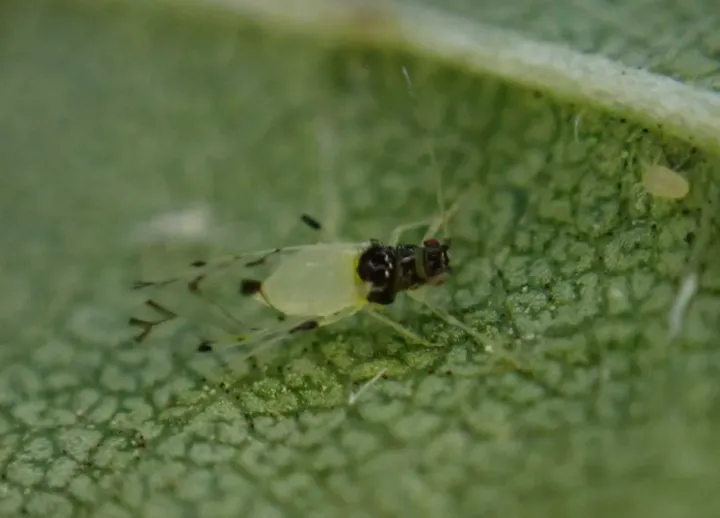
Description
How to identify
The Zelkova aphid, Tinocallis takachihoensis, is a member of the family Aphididae (order Hemiptera). This species is specifically known for its association with certain Ulmaceae host plants.
Adults exhibit morphological characteristics typical of the Calaphidinae subfamily, often displaying distinct body structures and coloration patterns that aid in their identification under a magnifying glass.
The life cycle of this aphid is intricately linked to the phenology of its host tree. They typically reside in colonies on the underside of leaves, which provides a microenvironment protected from environmental stressors.
The development of the aphid proceeds through several nymphal stages. Their behavior and reproductive output are heavily influenced by environmental factors such as temperature and host quality.
Recognizing this aphid is crucial for arborists and park managers, as early detection of the species can significantly prevent widespread damage in urban landscapes.
What it damages
Tinocallis takachihoensis primarily feeds on the foliage of Ulmus and related species. By inserting their stylets into the leaf tissue, they extract plant sap essential for their development.
Persistent feeding leads to the depletion of nutrients in the leaves, resulting in chlorosis, curling, and early leaf senescence. This directly impacts the tree's overall vigor and photosynthetic potential.
A significant consequence of aphid infestation is the production of honeydew. This sticky substance covers the foliage, serving as a medium for the growth of sooty mold.
Sooty mold growth creates a dense, dark layer on the leaves, which hinders light absorption and gas exchange, further exacerbating the stress on the host tree.
In cases of severe infestation, the cumulative effect of sap extraction and reduced photosynthesis can result in stunted growth and increased susceptibility to secondary pathogens.
When it appears
The active season for these aphids begins in early spring as soon as the host trees start producing new, succulent foliage. The first generation of nymphs emerges from overwintering eggs.
Throughout the summer, the population can expand rapidly. High summer temperatures often correlate with increased reproductive rates, leading to heavy infestations if not managed.
As autumn approaches, the aphids prepare for winter. They shift their life cycle towards the production of eggs, which are deposited in bark crevices or near bud scales for overwintering.
These eggs are highly resistant to cold, ensuring that the next generation survives the dormant season to continue the cycle when conditions improve in the following year.
Monitoring efforts should be most intense during the late spring to early summer period, which is when the most significant growth and damage typically occur.
Signs of infestation
The most direct sign of Tinocallis takachihoensis is the physical presence of aphid colonies on the underside of the leaves, often visible during routine tree inspections.
Sticky honeydew found on the upper surfaces of lower leaves or on nearby surfaces is a reliable indicator that an active aphid population is present above.
The development of black sooty mold is a very common secondary symptom. Its presence is often more noticeable than the aphids themselves, especially during the mid-summer months.
Visual changes to the leaves, such as unnatural curling, yellowing, or early fall, are classic indicators that the tree is under heavy feeding pressure from sap-sucking pests.
Increased ant activity on the tree trunks and branches is another strong indicator, as ants forage for the honeydew produced by the aphids.
Control measures
Integrated Pest Management (IPM) is the most effective approach for controlling Tinocallis takachihoensis. This involves a combination of monitoring, cultural practices, and chemical or biological interventions.
Promoting tree health through proper fertilization and watering helps increase the tree's resilience to pest attacks, making it less attractive to aphid colonization.
Chemical control may involve the use of systemic insecticides, which are absorbed by the plant and provide long-lasting protection against sap-sucking insects.
Biological control agents, including lady beetles and lacewings, play a vital role in natural population suppression and should be encouraged within the landscape.
- Regular monitoring of tree foliage for early signs of infestation.
- Pruning of severely infested or dead branches to reduce pest harborages.
- Application of horticultural oils or soaps for early-stage infestations.
- Targeted use of systemic insecticides during peak activity periods.
- Conservation of natural predators to maintain a balanced ecosystem.
Taxonomy
- Latin name
- Tinocallis takachihoensis
- Order
- Hemiptera (bugs, aphids, leafhoppers)
- Family
- Aphididae
- EPPO code
- TINCTA
Discussion
No discussions yet — be the first.