
Nile tilapia
Tilapia nilotica
Description
How to identify
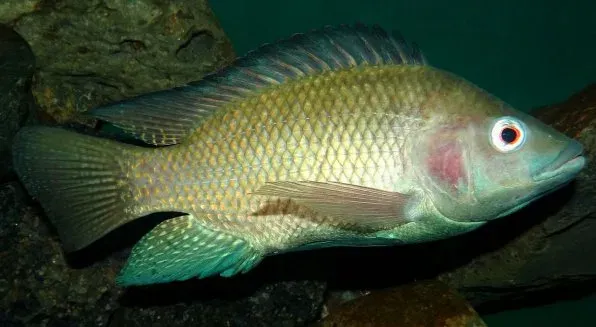
Nile tilapia (Oreochromis niloticus) is a freshwater fish belonging to the Cichlidae family. It is known for its high adaptability to varying environmental conditions.
Physically, the fish has a compressed body with distinct vertical stripes on the caudal fin. It is classified under the order Perciformes, known for complex social and feeding behaviors.
The species can tolerate low dissolved oxygen levels and significant temperature fluctuations. These traits make it highly successful in colonizing new agricultural waterways.
The biological cycle is rapid, with females acting as mouthbrooders to protect their offspring. This reproductive strategy ensures a high survival rate in diverse aquatic habitats.
Nile tilapia can thrive in both natural rivers and man-made irrigation systems, becoming a significant pest when it enters controlled plant growth environments.
What it damages
In hydroponic and aquaponic setups, Nile tilapia can cause severe damage by consuming plant roots. This destroys the structural integrity of crops like basil, lettuce, and leafy greens.
In rice paddies, the fish excavate the bottom substrate, uprooting young rice shoots. This activity disrupts the planting density and significantly lowers crop yield.
The accumulation of waste from fish populations can clog irrigation nozzles and water filtration systems. This leads to increased maintenance costs and operational downtime.
Increased water turbidity caused by the fish limits light penetration for submerged or floating aquatic plants. This hinders the overall efficiency of the agricultural system.
The nitrogen-rich waste produced by the tilapia can alter the nutrient balance of the irrigation water. This creates an unstable environment for delicate crop species.
Signs of infestation
The most common sign of infestation is visible damage to the root zone of plants. Finding shredded or floating root fragments in the water indicates active feeding.
Rice farmers may observe patches of disturbed soil and turbid water in their fields. These areas are usually where tilapia congregate and forage for food.
Sudden changes in water pH or ammonia concentrations can indicate a rising population of fish. Water quality monitoring is essential for early detection.
The presence of fish activity in irrigation canals or drainage ditches is a direct indicator. Seeing splashing or muddy plumes near the edge of the water is common.
Frequent blockages in screens or pump intakes are another sign that fish are present in the system. The fish often get stuck while trying to migrate through these points.
Control measures
Mechanical exclusion is the most effective prevention method. Installing fine-mesh screens at the inlet points of irrigation systems prevents the fish from entering.
Regular maintenance involving the draining and drying of reservoirs is a powerful control measure. Nile tilapia cannot survive the total loss of their aquatic habitat.
Trapping programs can be implemented in closed-loop systems to reduce the population density. This is necessary to keep the impact on plant growth at a minimum.
Temperature control can also be used, as the fish's metabolic rates drop significantly at lower temperatures. Keeping water temperatures regulated helps minimize activity.
- Install high-quality filtration screens.
- Implement scheduled drainage of channels.
- Use physical traps to manage population.
- Monitor water quality parameters daily.
Taxonomy
- Latin name
- Tilapia nilotica
- Family
- Cichlidae
- EPPO code
- TILANI
Discussion
No discussions yet — be the first.