
Mozambique tilapia
Tilapia mossambica
Description
How to identify
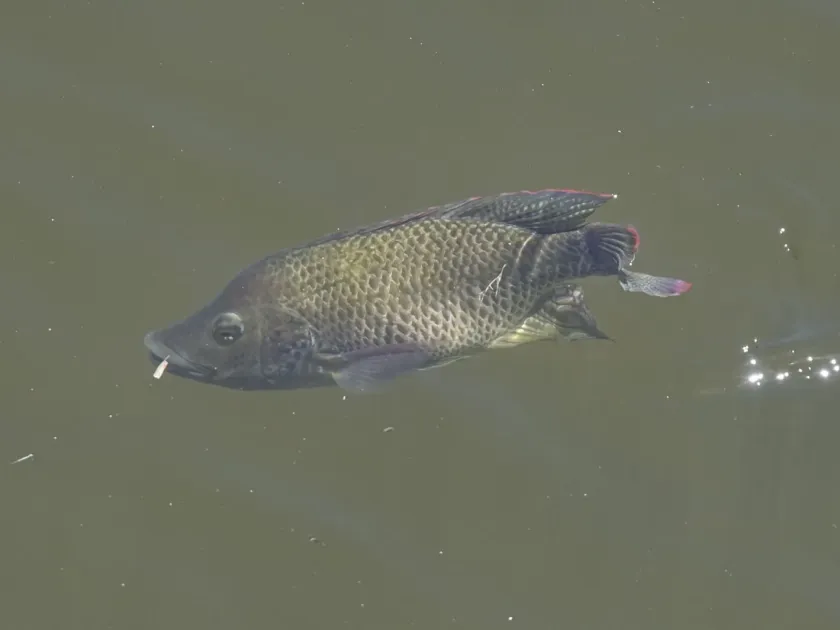
Mozambique tilapia Oreochromis mossambicus is an invasive fish species belonging to the Cichlidae family in the order Perciformes.
Adult fish typically reach lengths of 35–40 cm, with compressed bodies and a color range from silvery-gray to olive-brown.
Males exhibit distinct territorial behavior and color changes during the breeding season, turning darker with reddish edges on their fins.
This species is highly adaptable, capable of surviving in both fresh and brackish water and enduring low oxygen conditions.
Its high reproductive rate and lack of natural predators in many introduced regions make it a significant threat to local ecosystems and agricultural infrastructure.
What it damages
The primary agricultural threat posed by Mozambique tilapia is the structural damage caused to irrigation canals and earth-fill dams.
During the nesting process, fish dig deep crater-like pits into the substrate, which leads to bank erosion and leaks in irrigation channels.
In rice farming, tilapia damage young plants by consuming roots and tender shoots, significantly reducing crop survival rates and yields.
Their invasive nature leads to the displacement of native species that may provide ecological services beneficial to agricultural water management.
The constant burrowing activity causes siltation and sedimentation in water systems, necessitating frequent and costly manual maintenance.
When it appears
In tropical and subtropical climates, Mozambique tilapia remains active throughout the year, as temperature ranges rarely limit their metabolic activity.
The peak of damage occurs during the warmer breeding season when nesting activity is at its highest across irrigation networks.
During heavy rainfall, fish often migrate from main reservoirs into secondary agricultural water systems, expanding their destructive range.
The species thrives at temperatures between 20°C and 30°C, which perfectly aligns with the optimal growing season for rice and other crops.
Because they can breed multiple times a year, the threat to irrigation integrity persists throughout almost every month of the growing season.
Signs of infestation
The presence of numerous circular craters along the bottoms and embankments of irrigation ditches is a primary indicator of a tilapia infestation.
Unexpected water level drops in irrigation systems often point to compromised levee integrity caused by extensive burrowing.
Evidence of crop loss, specifically uprooted seedlings or damaged root systems in flooded fields, often correlates with high tilapia density.
Turbid water conditions in typically clear irrigation channels can indicate fish activity disturbing the bottom sediment.
Visual confirmation of schools of fish or nesting pits in small-scale agricultural irrigation infrastructure confirms the need for immediate control.
Control measures
Mechanical barriers, such as robust screens and gates, are the most effective way to prevent tilapia from entering sensitive irrigation systems.
Regular trapping and professional harvesting programs are essential to keep population numbers low in irrigation reservoirs and secondary canals.
Biological control, such as stocking predator fish that feed on tilapia fry, can help manage populations in semi-closed systems.
Reinforcing canal banks with rocks or specialized geofabrics prevents fish from successfully constructing nesting pits in critical infrastructure areas.
Ongoing monitoring and early removal of observed nesting sites are crucial to preventing large-scale structural failure of irrigation defenses.
Taxonomy
- Latin name
- Tilapia mossambica
- Family
- Cichlidae
- EPPO code
- TILAMO
Discussion
No discussions yet — be the first.