
Tilapia
Tilapia
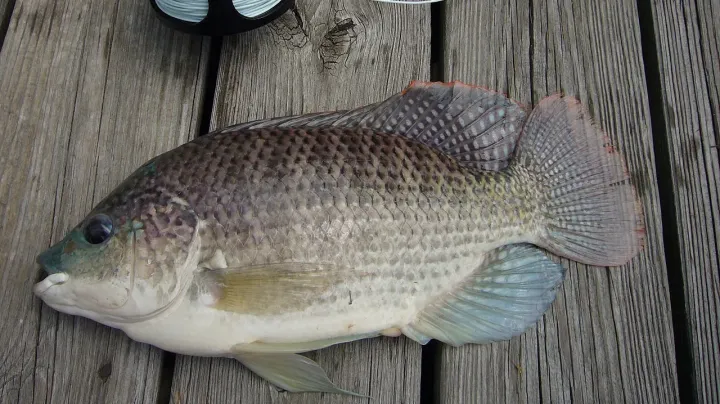
Description
How to identify
Tilapia refers to a group of fish from the family Cichlidae, order Perciformes. In agronomy, they are classified as an invasive threat when they colonize irrigation networks, where their biological traits cause significant management challenges.
These fish are highly resilient, capable of thriving in low-oxygen environments and enduring significant water temperature fluctuations, allowing them to establish populations in agricultural canals.
The morphology consists of a deep-bodied, laterally compressed frame with a long dorsal fin. Their coloration is typically drab, ranging from gray to olive, which serves as camouflage in the muddy waters of irrigation ditches.
Their life cycle includes prolific reproduction, where females exhibit mouthbrooding behavior, ensuring high juvenile survival rates even in degraded or disturbed water bodies.
Because they are adaptable generalists, once they infiltrate an agricultural water supply, they can quickly reach high population densities that disrupt the local ecosystem.
What it damages
Tilapia damage rice paddies by uprooting young seedlings and disturbing the soil substrate. This behavior leads to thin crop stands and decreased overall yields in flooded agriculture systems.
Their burrowing activity erodes the banks and beds of irrigation canals, resulting in heavy siltation. This structural damage impairs water flow efficiency and increases maintenance costs for farmers.
In hydroponic or aquaponic facilities, if tilapia accidentally enter the system, they can aggressively feed on plant roots, leading to root rot and eventual plant collapse.
The waste products excreted by dense populations change the water chemistry, raising nutrient and ammonia levels to the point where it negatively affects the growth of sensitive crops.
- Destruction of young rice root systems
- Erosion and siltation of irrigation infrastructure
- Water quality degradation due to high waste load
- Physical displacement of seedlings
When it appears
Activity peaks during warmer months when water temperatures rise above 20°C, triggering intensive spawning and movement throughout the network of available agricultural waters.
Spring is a critical window, as the fish migrate into irrigation networks just as farmers are planting vulnerable crops, leaving new transplants susceptible to mechanical disruption.
Summer months are characterized by peak foraging activity. During this time, the fish expand their range across all flooded areas, making constant monitoring essential for crop safety.
As autumn temperatures drop, tilapia activity typically slows; however, in warmer climates, they remain active year-round, posing a continuous threat to various agricultural operations.
The timing of tilapia encroachment is heavily synchronized with seasonal water delivery schedules, which provide the primary vector for fish movement into and across farms.
Signs of infestation
Increased water turbidity in irrigation canals is the primary indicator of a tilapia presence, as their foraging behavior constantly stirs up sediment from the canal bottom.
In rice fields, the presence of the pest is signaled by patchiness in the crop stand, missing seedlings, and visible root debris floating on the surface of the flooded paddies.
Erosion patterns along the banks of canals and the presence of excavated nests on the floor of the irrigation system are definitive signs of a well-established population.
Changes in the efficiency of irrigation pumps, often caused by the intake of fish or increased suspended solids, serve as a clear alert that the system is infested.
The smell of organic decay, combined with visible fish activity at the surface, indicates that a large population has concentrated in a specific agricultural water zone.
Control measures
The most effective physical control measure is the installation of fine-mesh screens at all water intake points to prevent the entry of both juvenile and adult tilapia into the farm.
Maintenance practices, such as the complete draining and drying of irrigation canals during the off-season, effectively eliminate the fish population by removing their habitat.
Biological controls, such as the introduction of native predatory fish, can help suppress tilapia numbers, although this requires careful ecological consideration.
Chemical control is rarely recommended due to the risk of contaminating the crop and the broader environment, making mechanical and cultural controls the standard approach.
Integrating regular monitoring of canal water with rigorous maintenance schedules is essential for minimizing the negative impact of tilapia on agricultural productivity.
Taxonomy
- Latin name
- Tilapia
- Family
- Cichlidae
- EPPO code
- TILASP
Discussion
No discussions yet — be the first.