
Oak aphid
Thelaxes dryophila
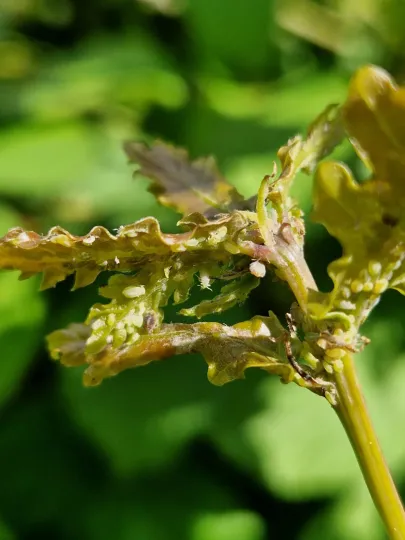
Description
How to identify
The oak aphid (Thelaxes dryophila) is a small insect belonging to the family Thelaxidae. It is a specialized pest that feeds exclusively on various species of oak trees.
These insects are characterized by their flattened bodies, which allow them to remain concealed on the undersides of leaves or within the cracks of young bark. They exist in both wingless and winged forms depending on the stage of the season.
The aphid's lifecycle is strictly synchronized with the phenology of its host plant. They rely on the nutrient-rich sap flow of the oak during the spring and summer growth periods.
They are generally found in colonies. Being highly specialized, they rarely move to other tree species, making them a recurring problem for oak-dominated forests and parklands.
Microscopic examination of the aphid's morphological features is necessary for accurate species identification, as they share many characteristics with other oak-inhabiting aphids.
What it damages
The primary damage is caused by the extraction of phloem sap from the leaves and succulent young shoots of the oak tree. This causes systemic stress to the tree.
As a result of intensive feeding, leaves often curl, turn yellow, and may prematurely wither or drop. This reduces the total leaf surface area available for photosynthesis.
The excretion of honeydew is a significant secondary issue. This sticky substance coats the leaves, creating an ideal environment for the growth of sooty mold, which blocks sunlight.
Young trees and saplings in nurseries are at the highest risk. Heavy infestations can lead to stunted growth, reduced vigor, and increased susceptibility to other environmental stressors.
In ornamental urban settings, the aesthetic value of the trees is severely diminished due to the discolored foliage and the presence of the sticky honeydew residues.
When it appears
The lifecycle typically begins in early spring when the overwintered eggs hatch, giving rise to the founding generation of aphids on the newly emerged leaves.
The peak of population density is usually observed in late spring and early summer, matching the period of the tree's most vigorous leaf development.
Throughout the summer, several generations are produced, allowing the population to expand rapidly if temperatures remain favorable for development.
As autumn approaches, the aphids produce sexual forms that mate and lay dormant eggs, which are usually hidden in bark crevices or near buds for the winter season.
Winged dispersal stages emerge periodically, allowing the aphid population to spread to adjacent trees and colonize new areas within the forest stand.
Signs of infestation
A classic sign of an infestation is the curling or distortion of leaves, often along the midrib, which provides shelter for the aphid colonies.
The presence of a sticky, shiny substance on the surface of the leaves (honeydew) is a clear indicator that aphids are feeding on the canopy above.
The accumulation of black sooty mold on leaves and branches is a visible consequence of long-term aphid presence and honeydew production.
Ant activity is frequently observed on the trunks and branches of infested trees, as ants tend the aphids to collect the nutrient-rich honeydew secretions.
Close observation of young shoots may reveal clusters of these small, sedentary insects clinging to the plant tissue, often clustered near the base of the leaves.
Control measures
Systemic insecticides are the most effective way to control established aphid colonies, as they are absorbed by the tree and poison the aphids as they feed.
Maintaining tree health through proper irrigation and soil management is essential, as healthy trees have better natural defenses against aphid outbreaks.
Encouraging populations of natural predators, such as lady beetles, lacewings, and hoverfly larvae, is an important component of integrated pest management.
Applying sticky bands around tree trunks can prevent ants from reaching the canopy, allowing natural predators to attack the aphid colonies undisturbed.
- Apply horticultural oils to suppress early-season populations.
- Monitor tree health and aphid populations regularly.
- Prune and destroy heavily infested terminal shoots if possible.
- Use pheromone traps for timing the application of control agents.
Taxonomy
- Latin name
- Thelaxes dryophila
- Order
- Hemiptera (bugs, aphids, leafhoppers)
- Family
- Aphididae
- EPPO code
- THLXDR
Discussion
No discussions yet — be the first.