
Pine needle gall midge
Thecodiplosis pinirigidae
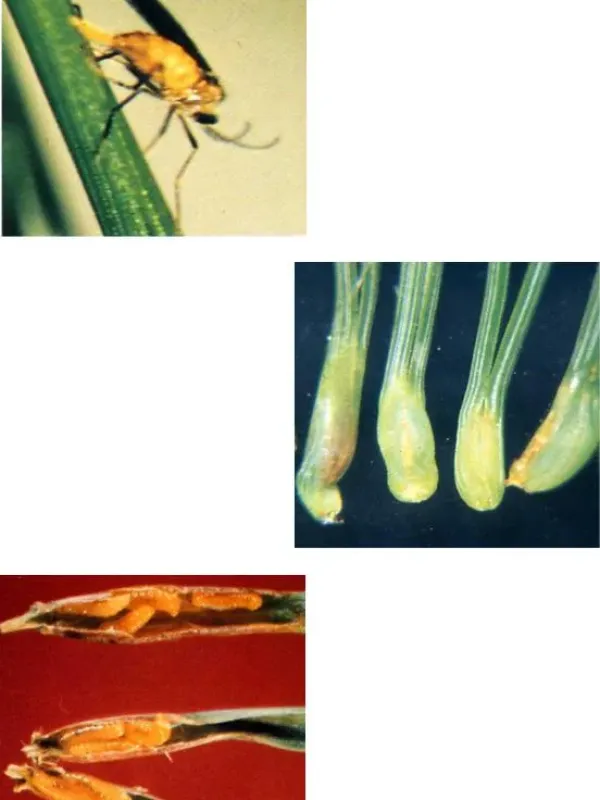
Description
How to identify
The pine needle gall midge (Thecodiplosis pinirigidae) is a tiny fly belonging to the family Cecidomyiidae. Adults are delicate insects, often difficult to observe due to their small size and flight patterns.
The life cycle involves complete metamorphosis, but the larval stage is the one that causes direct harm. Larvae are typically orange or reddish, feeding protected by plant tissue.
They typically produce one generation per year, though specific emergence times depend on local climatic conditions and the synchronization with the host plant's phenology.
Identification is primarily based on the characteristic galls formed at the base of the pine needles where larvae reside and feed throughout the growing season.
Entomologists use microscopic analysis of larvae to distinguish this specific species from other gall midge species that inhabit conifers.
What it damages
This pest specifically targets pine species, including Pinus sylvestris. The larvae feed on the tissues at the base of the needle, interfering with nutrient flow.
This feeding activity causes the needle to swell and eventually turn chlorotic (yellow) or brown, leading to premature needle drop in mid-to-late summer.
Heavy infestations can significantly reduce the tree's photosynthetic capacity, which stunts growth and weakens the overall structure of the canopy.
In forest nurseries and plantations, the midge can cause severe stress to young trees, making them susceptible to secondary pests and various fungal pathogens.
Damage is often cumulative, meaning that several consecutive years of infestation can lead to branch dieback and, in extreme cases, the mortality of young saplings.
Signs of infestation
The most reliable sign of an infestation is the appearance of a distinct swelling or gall at the base of the needle fascicle.
Initial signs include subtle yellowing at the base of the needle, which gradually spreads to the entire length of the needle as the season progresses.
Distortion of the needles, where they may bend or twist in abnormal ways, is another common indicator of the presence of midge larvae.
By late summer, if the larvae have exited the needles to pupate, one might see small exit holes or scars at the location of the former gall.
Premature needle fall, resulting in thin, sparse foliage, is a major visual symptom indicating that the tree has been under attack by the midge population.
Control measures
Effective management begins with monitoring populations during the adult flight period to determine the necessity of intervention.
Chemical control involving systemic insecticides is often used in high-value nurseries or ornamental stands to protect young needles before larvae penetrate the tissue.
Sanitation practices, such as removing and destroying heavily infested branches or fallen needles, can help reduce the local population for the next season.
Biological control relies on conserving natural parasitoids and predators that prey upon midge larvae and eggs within the forest ecosystem.
- Regular forest health surveys and monitoring.
- Targeted application of systemic insecticides.
- Maintaining proper forest stand density and hygiene.
- Promoting biodiversity to support natural enemies.
- Removing infested plant material during the dormant season.
Taxonomy
- Latin name
- Thecodiplosis pinirigidae
- Order
- Diptera (flies)
- Family
- Cecidomyiidae
- EPPO code
- CECIPN
Discussion
No discussions yet — be the first.