
Pine needle gall midge
Thecodiplosis piniresinosae
Description
How to identify
The pine needle gall midge is a tiny insect belonging to the Cecidomyiidae family, order Diptera. Adult midges are small, mosquito-like creatures with delicate bodies and long legs, often going unnoticed due to their ephemeral adult stage.
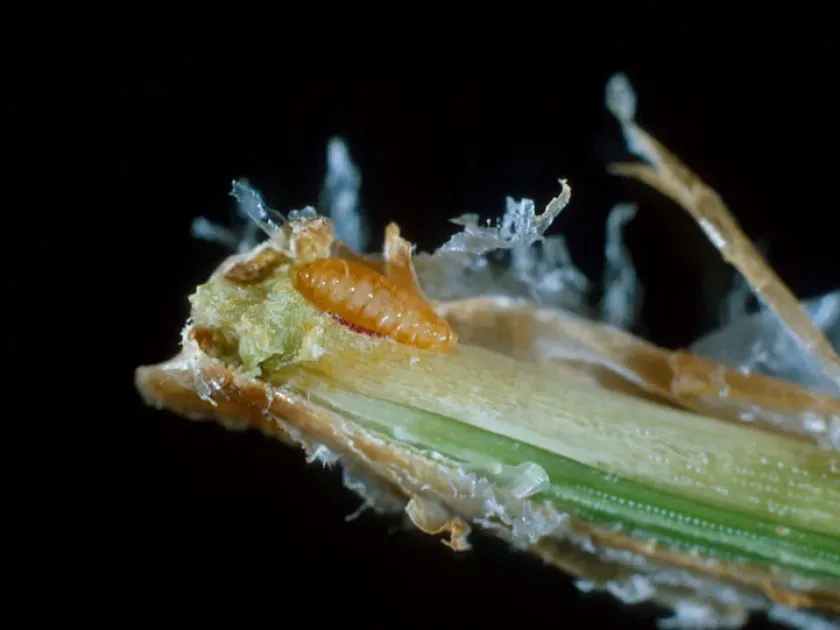
Identification is primarily focused on the larval stage, which is when the damage to the host plant occurs. These larvae are typically small, translucent or yellowish, residing inside the galls they create on the pine needles.
Taxonomically, this species is closely associated with specific pine hosts. Identifying the exact species involves examining the shape and location of the galls on the needles, as different gall midges create distinct formations.
Entomologists rely on the morphology of the galls and host specificity to distinguish this pest from other needle-attacking insects. Magnifying lenses are essential tools for inspecting the base of the needles where larvae hide.
Understanding the biology of this pest is critical for foresters and nursery managers, as it can cause significant stress to young pine trees, impacting both growth rates and visual aesthetics.
What it damages
The pine needle gall midge primarily affects young pines, especially during the growth phase of the new season's needles. The larvae consume fluids from the base of the needles, interrupting normal development.
The plant reacts to larval feeding by forming a gall, which provides a protective chamber for the pest. This deformity prevents the needle from functioning properly, leading to reduced photosynthesis and overall tree weakness.
In cases of heavy infestation, significant needle drop occurs, which is detrimental to the health of young saplings. This defoliation reduces the tree's vigor, making it susceptible to other stressors like drought or disease.
Damage is often most severe on younger, actively growing trees. If left untreated, recurring infestations can stunt the growth of plantations, leading to reduced commercial or ornamental value.
Weakened trees also become more attractive to secondary pests, including bark beetles, which can cause even more lethal damage to the tree's vascular system.
##season##The life cycle of the pine needle gall midge is synchronized with the phenology of the pine tree. Adult midges emerge in the spring, coinciding with the flushing and initial growth of new buds.
After mating, females deposit eggs at the base of newly developing needles. Once the larvae hatch, they immediately bore into the plant tissue, triggering the formation of the gall.
The larval stage spans throughout the summer, during which time the larvae feed and grow. This is the period when the most visible damage appears on the tree's foliage.
By late summer or autumn, the larvae reach maturity. Depending on the species and environmental conditions, they may pupate within the gall or drop to the ground to overwinter in the soil.
Timing control measures requires careful monitoring of the spring emergence to ensure that pesticides are applied before the larvae have safely enclosed themselves within the protective galls.
Signs of infestation
The most reliable sign of an infestation is the presence of swelling or galls at the base of the current year's needles. These structures are often distinct and can cause the needles to bend or discolor.
- Presence of bulbous galls at the needle base.
- Premature yellowing or browning of the needles.
- Distorted, twisted, or curved pine needles.
- Early needle drop before the usual senescence period.
- Reduced vigor and stunted shoot growth.
Upon closer inspection, the needles may appear thinner or less vibrant than healthy foliage. The presence of these midges can lead to a sparse crown, affecting the tree's overall structure.
During the summer, examining these galls can reveal the tiny larvae inside. If the galls have already opened, it often means the larvae have departed, leaving behind a scarred needle base.
Landscape monitoring helps detect these signs early. Identifying the infestation during the growing season allows for better planning of management strategies for the following year.
Control measures
Effective management of the pine needle gall midge is challenging because the larvae are protected inside the plant tissue for most of their development. Control must therefore be proactive.
Systemic insecticides applied during the peak spring emergence of adults are the most effective way to prevent the larvae from establishing themselves within the needles.
For small, ornamental, or nursery settings, physically removing and destroying infested needles or branches can be a practical way to reduce the local population of the pest.
Enhancing natural biodiversity in plantations can encourage the presence of parasitic wasps and other natural enemies, which can help keep the midge populations in check without chemical intervention.
Maintaining optimal tree health through proper fertilization and irrigation helps trees withstand minor infestations and recover more quickly from the physiological stress caused by the midge.
Taxonomy
- Latin name
- Thecodiplosis piniresinosae
- Order
- Diptera (flies)
- Family
- Cecidomyiidae
- EPPO code
- THEOPI
Discussion
No discussions yet — be the first.