
Pine needle gall midge
Thecodiplosis japonensis
Description
How to identify
The pine needle gall midge (Thecodiplosis japonensis) is a small insect belonging to the Cecidomyiidae family. These insects are minute, fragile flies that, in their adult stage, resemble tiny gnats with long legs and a wingspan of only a few millimeters.
The taxonomic position of the species places it within the order Diptera. Its larvae are specialized parasites that inhabit the base of pine needles, inducing the plant to create a gall structure, which provides the larvae with both shelter and nutrition.
Adult midges are rarely seen due to their short lifespan and cryptic behavior. Identification is usually performed by detecting the characteristic swellings on the pine needles rather than observing the adults themselves.
The life cycle involves complete metamorphosis: egg, larva, pupa, and adult. The insect typically has one generation per year, though environmental factors can influence the timing and success rate of its development.
Field monitoring is crucial for identifying outbreaks. Entomologists use specific pheromone traps or sticky yellow traps positioned in pine stands during the spring to track the flight activity of the adults.
What it damages
This midge primarily attacks various pine species, including the Japanese red pine, Scots pine, and Thunberg pine. It is a significant pest in both forestry and ornamental pine landscapes, often causing extensive defoliation.
Larvae feed by sucking juices from the needle base, which disrupts the vascular transport within the needle. This causes the gall formation and restricts the supply of water and nutrients, leading to needle yellowing and necrosis.
As the galls develop, the affected needles begin to wither and drop prematurely. Heavy infestations can cause a tree to lose a significant portion of its needles, leading to a thin, sparse crown and reduced aesthetic value.
Long-term damage significantly weakens the tree's physiological processes, including photosynthesis and carbohydrate storage. This makes the tree less resilient to environmental stressors, such as drought or frost, and susceptible to other diseases.
In high-density stands, persistent infestation can lead to stunted growth or even tree mortality. Furthermore, stressed trees become prime targets for secondary invaders like bark beetles, which can kill a tree within a single season.
When it appears
Adult emergence typically begins in early spring, coinciding with the flushing of new pine needles. The exact timing varies significantly depending on the local climate and temperature trends for the year.
The mating and oviposition phase lasts for a few weeks. During this period, females search for developing needles to deposit eggs. The larvae hatch soon after and migrate to the needle base to initiate gall formation.
Throughout the summer, the larvae grow within the galls. This is the period when damage is most evident, as the galls swell and the surrounding needle tissue begins to change color due to the stress induced by the larvae.
By late summer or early autumn, the larvae complete their development. They then exit the galls and drop into the soil or pine needle litter, where they undergo pupation and enter overwintering.
Climate change and milder winters have been shown to potentially shift these periods. Early springs often lead to earlier adult emergence, which can mismatch with the natural predators that would otherwise control the population.
Signs of infestation
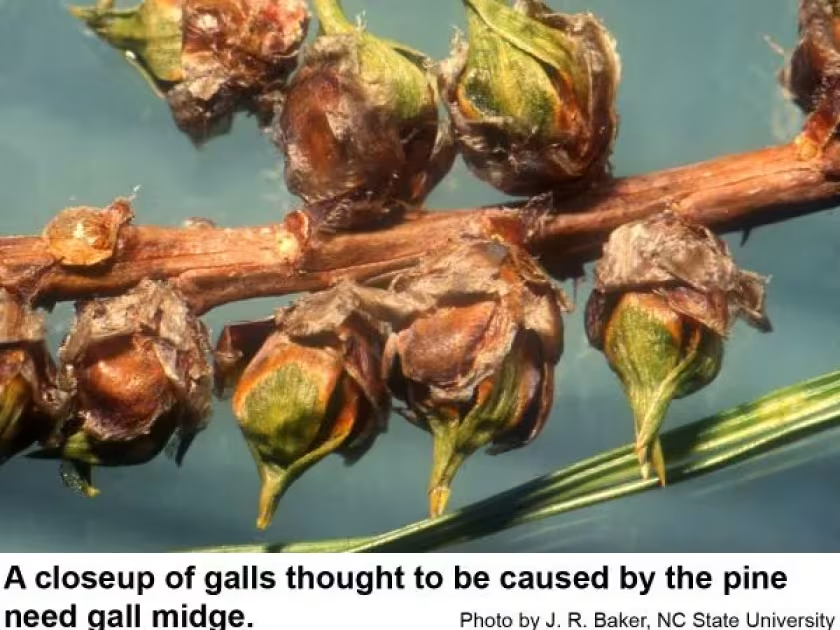
The most distinctive symptom is the presence of small, bulbous swellings, known as galls, at the base of the pine needles. These can be yellowish, greenish, or brown and interrupt the normal needle appearance.
Progressive yellowing and needle drop are common. As the galls reach maturity, the needles lose their turgor pressure and turn bright yellow, eventually browning and falling off the tree, creating a messy litter layer underneath.
Distorted growth of new shoots is another visual indicator. Because the needle development is impaired, the overall architecture of the branch may look unnatural, with shorter or twisted needles grouped near the tips.
Resinosis, or excess resin flow, may occur at the point of infestation as the tree attempts to defend itself. While this is a general reaction to injury, in combination with galls, it confirms a parasitic attack.
If you inspect the galls, you will find tiny, pale orange or translucent larvae hidden inside. This is the definitive diagnostic feature used by foresters to confirm the presence of Thecodiplosis japonensis.
Control measures
Managing the pine needle gall midge requires a strategy centered on timing. Chemical controls are ineffective once the larvae are protected inside the galls, so application must occur before or during adult egg-laying.
Cultural practices include the removal and destruction of fallen needles during the autumn and winter months, as this material contains the dormant pupae. This sanitation step effectively reduces the local pest reservoir.
Chemical control usually involves the use of systemic insecticides, which are absorbed by the plant and kill the larvae as they feed on the internal juices of the needle. Monitoring traps are essential to time these sprays correctly.
Promoting a healthy ecosystem in your garden can help. Encouraging natural enemies like parasitic wasps and predatory beetles is a sustainable way to keep midge populations below the threshold that causes economic or aesthetic damage.
- Monitor flight activity with pheromone traps in spring.
- Apply systemic insecticides during the adult flight window.
- Clean up and burn infested needle litter to remove pupae.
- Maintain tree vigor with balanced fertilization and proper irrigation.
- Encourage beneficial predatory insects within the landscape.
Taxonomy
- Latin name
- Thecodiplosis japonensis
- Order
- Diptera (flies)
- Family
- Cecidomyiidae
- EPPO code
- THEOJA
Discussion
No discussions yet — be the first.