
Tettigometra
Tettigometra
Description
How to identify
Tettigometra is a genus of insects in the order Hemiptera, belonging to the family Tettigometridae. These are relatively small, often overlooked planthoppers that play a specific role in the agricultural ecosystem.
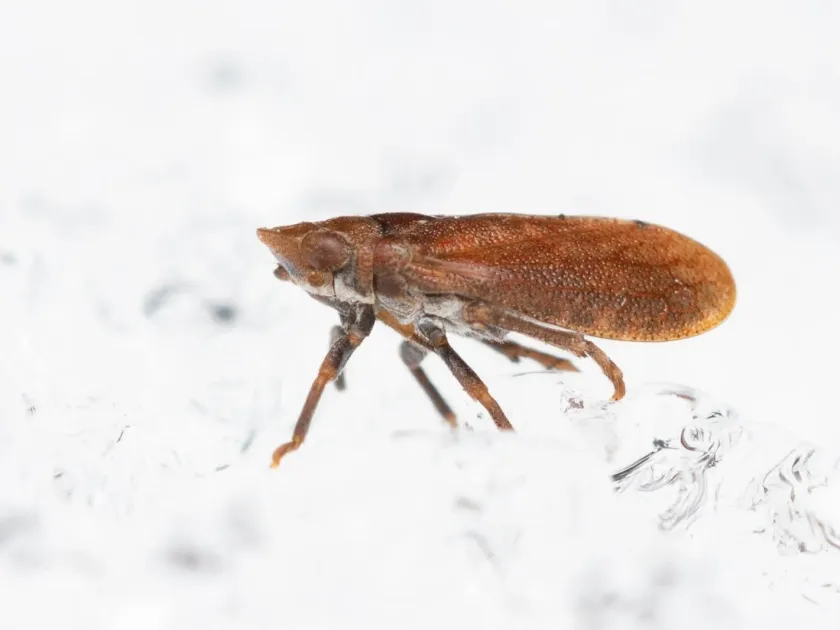
The adult Tettigometra has a rounded or oval body shape. Their coloration is typically cryptic, ranging from brown to grayish-brown, which provides excellent camouflage against soil and plant debris.
The head is short and wide, fitting closely against the pronotum. When at rest, the wings are folded tightly against the body, creating a smooth and robust appearance that is characteristic of the family.
Nymphs resemble smaller, wingless versions of the adults. They are generally sedentary and are often found at the base of plants or inside ant nests, where they benefit from protection.
With a wide distribution, the genus includes many species that are most active in temperate and subtropical climates, thriving in diverse habitats from grasslands to crop fields.
What it damages
These insects are polyphagous, meaning they feed on a wide variety of host plants. Their primary targets include cereal crops, legumes, and various root vegetables.
Feeding occurs by piercing plant tissues and extracting cell sap. This feeding behavior drains nutrients from the plant, causing reduced vitality, stunted development, and overall loss of yield.
Beyond the mechanical damage, Tettigometra species act as vectors for various plant pathogens. They can transmit viruses and phytoplasmas, which are often far more destructive than the insects themselves.
The feeding sites serve as entry points for secondary infections, including fungal and bacterial pathogens that can cause necrosis and rot in the stem and root zones.
In periods of environmental stress, such as drought, the damage caused by these insects becomes significantly more apparent as weakened plants struggle to recover from the sap loss.
When it appears
The lifecycle of Tettigometra is highly dependent on seasonal temperature variations. They typically overwinter as either nymphs or adults in the soil or under protective debris.
Activity begins in early spring, as temperatures rise. The insects move to the root or lower stem areas of host plants to begin feeding and preparing for the mating season.
Depending on the climatic zone, the pest may complete one or more generations per year. Peak adult population density is frequently recorded during the mid-to-late summer period.
As autumn temperatures drop, the insects seek shelter in protected locations. They are often found overwintering in aggregations near the root systems of perennial weeds or in soil crevices.
A notable biological trait is their myrmecophily. The nymphs often live in a mutualistic relationship with ants, which protect the nymphs in exchange for the sugary honeydew they secrete.
Signs of infestation
Detecting Tettigometra is difficult due to their nocturnal or hidden behavior and their tendency to remain close to the ground, concealed by foliage or soil.
Visible signs of infestation include general chlorosis (yellowing) of leaves, curling of leaf margins, and an overall lack of vigor in the crop compared to neighboring plants.
The presence of high numbers of ants around the base of the plant is a strong indicator of a potential infestation, as ants are frequently attracted to the insect's honeydew.
Close inspection of the stem base may reveal tiny puncture marks, which are the feeding sites of the insects. Over time, these spots can turn dark or necrotic.
The presence of sooty mold on the foliage is a secondary sign, caused by the buildup of honeydew secreted by the feeding insects, which creates a substrate for fungal growth.
Control measures
Agricultural management should focus on cultural practices such as crop rotation, effective weed control, and the removal of plant debris that serves as winter habitat.
Tillage practices, particularly deep plowing after harvest, can effectively disrupt the overwintering stages of the pest and reduce population numbers for the next season.
Chemical intervention should be considered only when populations exceed economic thresholds. Systemic insecticides are generally the most effective way to control sap-sucking pests.
Biological control is supported by preserving natural enemies, such as parasitic wasps and predatory beetles, which help maintain the pest population at a low level.
- Conduct regular inspections of the plant root zones.
- Remove and destroy crop residues post-harvest.
- Manage ant populations to discourage symbionts.
Taxonomy
- Latin name
- Tettigometra
- Order
- Hemiptera (bugs, aphids, leafhoppers)
- Family
- Tettigometridae
- EPPO code
- TTTISP
Discussion
No discussions yet — be the first.