
Hilda patruelis
Hilda patruelis
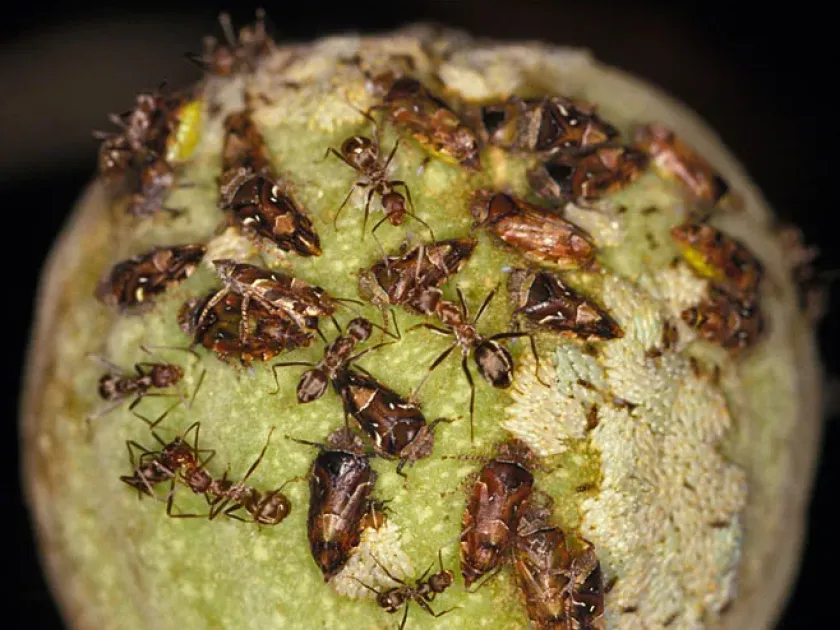
Description
How to identify
Hilda patruelis is a species of planthopper belonging to the family Cicadellidae, within the order Hemiptera. This pest is characterized by its close association with ant colonies.
The insect possesses a specialized sucking mouthpart adapted for piercing plant tissues and extracting nutrient-rich phloem sap, which is essential for its survival.
Its coloration acts as natural camouflage, blending in with the stems and bark of host plants, which makes it difficult to detect during the early stages of infestation.
The lifecycle includes several nymphal stages before reaching adulthood; all mobile stages are active feeders that cause significant physiological stress to the plant.
Symbiosis with ants is a key biological factor, as ants protect the insects from predators in exchange for honeydew, complicating traditional monitoring efforts.
What it damages
This pest affects a wide range of host plants, including groundnuts (peanuts), various legumes, and several fruit tree species, causing considerable economic damage.
They preferentially feed on young, succulent shoots and flower stalks, which are the most critical parts for the plant's future development and fruit set.
In groundnut cultivation, feeding by Hilda patruelis leads to reduced yield and stunted plant growth due to the diversion of energy towards wound recovery.
Indirect damage is caused by the secretion of honeydew, which promotes the growth of sooty mold, blocking sunlight and hindering photosynthesis in affected leaves.
Heavy infestations weaken the plant's overall vitality, making it more susceptible to opportunistic secondary infections, viral diseases, and environmental stressors.
Signs of infestation
A sticky residue on leaves and stems, accompanied by high ant activity, is the most common early sign indicating the presence of a Hilda patruelis colony.
Affected plants often show signs of leaf curling, shoot deformation, and restricted growth in the areas where the insect population is most concentrated.
The development of a black, powdery coating known as sooty mold on the foliage is a late-stage symptom indicating significant honeydew accumulation.
Careful inspection of stems, particularly near branching points, often reveals clusters of the insects that tend to hide upon physical contact.
Chlorosis and premature yellowing of leaf tissues are common physiological indicators that the plant is being depleted by the massive extraction of sap.
Control measures
Control strategies must prioritize the management of associated ant populations, as they provide protective cover for the pest and hinder natural biological control.
Systemic insecticides are generally the most effective way to manage heavy outbreaks, as they reach the insects through the plant's internal sap system.
Organic farming practices include the use of insecticidal soaps and horticultural oils, which provide physical control by suffocating the insects on contact.
Cultural management involves the timely removal of infested plant parts and rigorous weed control to eliminate alternative habitats for the pest's reproduction.
Encouraging the presence of natural predators, such as lady beetles, lacewings, and parasitic wasps, helps maintain pest populations below the economic injury level.
Taxonomy
- Latin name
- Hilda patruelis
- Order
- Hemiptera (bugs, aphids, leafhoppers)
- Family
- Tettigometridae
- EPPO code
- HILDPA
Discussion
No discussions yet — be the first.