
Root aphid
Tetraneura nigriabdominalis
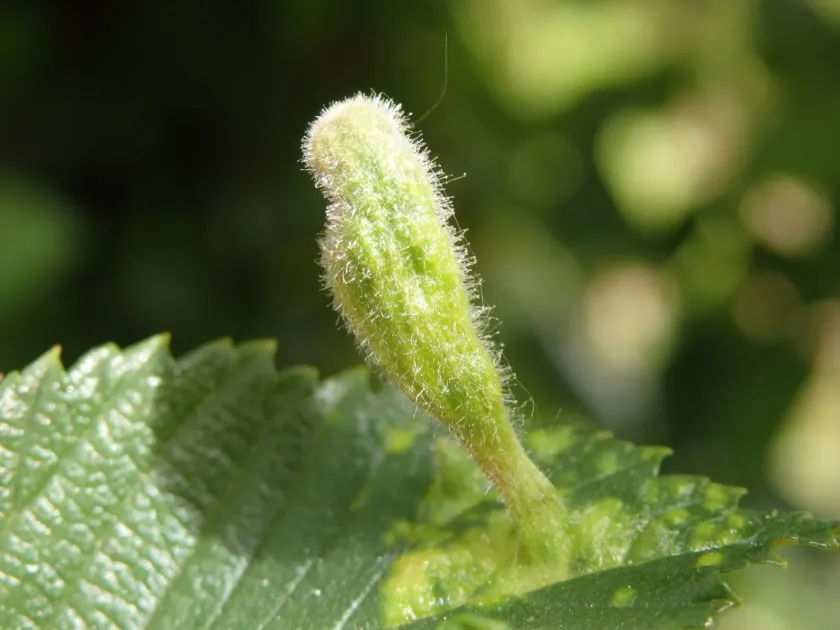
Description
How to identify
The root aphid (Tetraneura nigriabdominalis) belongs to the Hemiptera order and the Aphididae family. It is a specialized pest that exhibits a complex life cycle with an alternation of hosts between trees and grasses.
The insects living on roots are typically pear-shaped, pale yellow or light brown, and often covered in a protective white waxy substance that acts as a shield against humidity.
This species is heteroeceous, meaning it migrates between primary woody hosts (Elm trees) and secondary herbaceous hosts (various cereal and grass species).
In the soil, the aphids form underground colonies. They are frequently tended by ants, which protect the aphids from predators and facilitate their movement across the root zone of the host plant.
Field identification requires digging up the roots of suspected plants, particularly during the growing season, to observe the aphids and their characteristic waxy secretions.
What it damages
The primary hosts of this aphid include a wide range of grasses and cereals such as wheat, barley, maize, millet, and sorghum. It poses a threat to both cultivated crops and wild grasses.
The damage occurs when aphids feed on the root sap. By sucking nutrients from the root system, they severely impair the plant's ability to absorb water and essential minerals.
Symptoms of infestation include stunted growth, chlorosis of the lower leaves, and a general loss of vigor, which is often misdiagnosed as simple nutrient deficiency.
Severe infestations can lead to significant yield losses, especially under drought conditions, as the weakened roots cannot support the water requirements of the aerial parts.
Furthermore, the physical damage to root tissues often facilitates the entry of soil-borne pathogens, leading to root rot and further plant deterioration.
When it appears
In the spring, winged aphids migrate from their primary woody hosts to the roots of grasses and cereals as temperatures begin to rise to suitable levels.
During the summer, the population grows exponentially in the soil. Colonies are most active and numerous during the warm months of June and July.
As autumn temperatures drop, a portion of the population develops into winged forms and migrates back to the woody hosts to lay eggs for the winter.
Environmental factors such as soil temperature and moisture content play a critical role in determining the rate of reproduction and the number of generations per season.
Hot and dry summers often favor the proliferation of root aphid populations, making constant monitoring during these periods essential for effective crop management.
Signs of infestation
The most visible sign of infestation is an uneven stand of crops, characterized by patches where plants are significantly smaller and appear yellowed.
Plants affected by root aphids are easily pulled out of the soil because their root systems are often stunted, deformed, or partially decayed compared to healthy plants.
The presence of white, powdery waxy material on the roots or in the surrounding soil is a clear indicator of the presence of an aphid colony.
Increased ant activity around the base of cereal plants is a reliable ecological indicator that aphids are present and being protected by ants.
In periods of water stress, infested fields will show signs of wilting much faster than healthy fields, indicating a compromised root system.
Control measures
Crop rotation remains the most effective long-term management strategy to break the life cycle of the root aphid and prevent population build-up in the soil.
Thorough soil cultivation, including deep ploughing after harvest, helps to disrupt the environment for aphids and destroys potential overwintering sites for the population.
The management of grassy weeds around field margins is crucial, as these plants serve as reservoir hosts for the aphids during the inter-crop period.
The use of systemic insecticide seed treatments can provide early-season protection for young crops, significantly reducing the initial infestation rate.
Regular monitoring of field soil and root samples is recommended to evaluate population density and apply targeted control measures before significant damage occurs.
Taxonomy
- Latin name
- Tetraneura nigriabdominalis
- Order
- Hemiptera (bugs, aphids, leafhoppers)
- Family
- Aphididae
- EPPO code
- SCHZNI
Discussion
No discussions yet — be the first.