

Douglas EC, (dimefox, 400 g/l)
China Chemical Industrial & Rice Co. Ltd
Insecticides
0
0
·
58
1 offer
8.16 €per 1 l
Buy
Tetanops myopaeformis
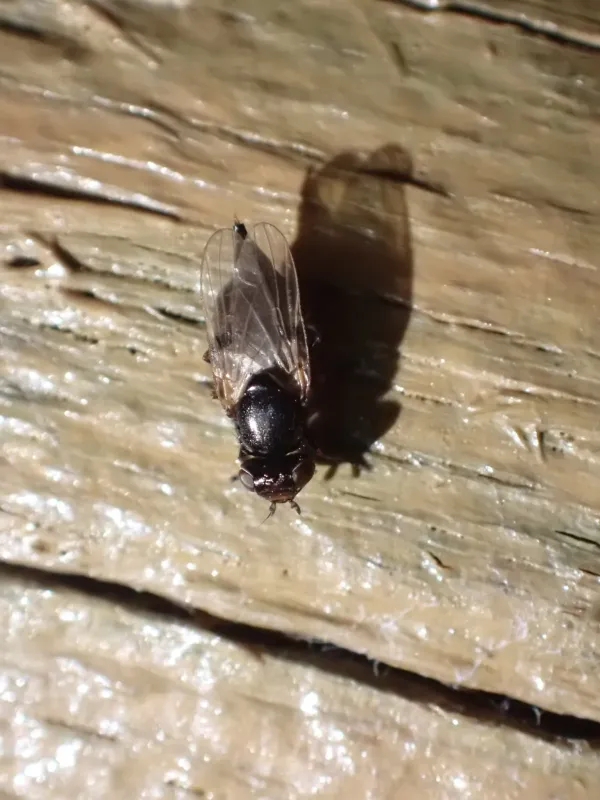
The sugarbeet root maggot (Tetanops myopaeformis) belongs to the Otitidae family within the order Diptera. Adult flies are approximately 5 to 7 mm long.
Their body color is dark brown to black. They have transparent wings with a distinct dark apical spot, which is a key identification feature for this species.
The larvae are legless, cylindrical, and reach up to 10 mm in length. They are creamy-white in color and feed primarily on the roots of host plants.
The life cycle consists of the egg, three larval instars, pupa, and adult stages. Overwintering occurs in the pupal stage deep within the soil profile.
Emergence typically coincides with the germination and early growth stages of sugarbeet plants, presenting a major threat to crop establishment.
This pest primarily affects sugar beets, table beets, and mangels. Damage is caused by the larval stage feeding on the root system.
Larvae create tunnels in the taproot, leading to severe root deformation and stunting of the plant's overall growth and development.
Heavy infestations can result in the loss of up to 80% of seedlings, often forcing farmers to replant large sections of their fields.
Beyond the direct physical damage, the injured roots lose their vigor and are highly susceptible to secondary pathogens, causing root rot.
Plants struggling with larval damage are significantly less efficient at taking up water and nutrients, leading to reduced yield and sugar content.
Adult fly activity generally begins in late spring, triggered by soil temperatures rising to approximately 10-12 degrees Celsius at the pupal depth.
The peak emergence usually occurs in May, when females begin searching for suitable egg-laying sites near the base of host plants.
Environmental conditions, particularly soil moisture levels, play a critical role in the rate of pupal development and subsequent fly survival.
Depending on the climatic zone, the pest may complete one or two generations per year, with variations driven by seasonal weather patterns.
While adult flies prefer cooler periods of the day for activity, the larvae remain active in the soil regardless of surface temperature fluctuations.
The first observable sign of an infestation is sudden wilting, particularly during the warmest hours of the day, followed by rapid leaf yellowing.
Inspecting the roots will reveal distinct tunnel patterns and necrotic lesions on the surface of the root caused by feeding larvae.
In severely damaged areas, the plants may die off, leaving gaps in the rows, which are clearly visible from a distance during the early stages.
The presence of larvae can be confirmed by gently digging into the soil around the base of a wilting plant to find the cream-colored maggots.
Crop rotation is the most effective cultural practice, as it disrupts the life cycle of the pest by removing the host crop from the field.
Deep fall tillage is recommended to expose overwintering pupae to the surface, where they become vulnerable to predation and environmental stressors.
Chemical control often involves the use of systemic insecticidal seed treatments, which provide an essential shield during the early seedling stage.
Monitoring using sticky traps can help track the adult fly population and time necessary foliar insecticide applications more effectively.
Effective weed management, focusing on goosefoot family weeds, is crucial to minimize alternative food sources and breeding sites for the flies.


No discussions yet — be the first.