
Cadelle beetle
Tenebroides mauritanicus
Description
How to identify
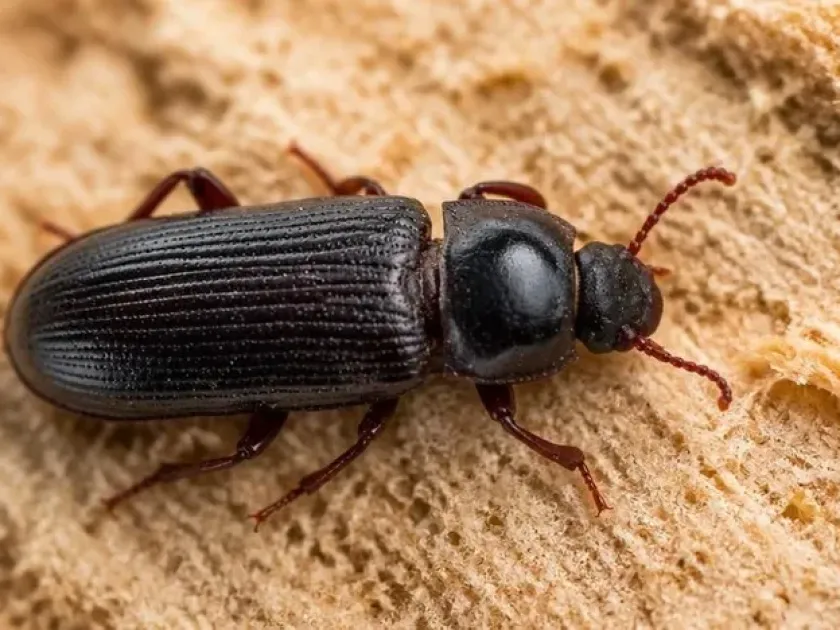
The Cadelle beetle (Tenebroides mauritanicus) belongs to the Trogositidae family of the order Coleoptera. Adult beetles are elongated, typically 6–10 mm long, with a dark brown or black appearance and a distinct shiny surface.
The larvae are approximately 15–20 mm long with a pale, whitish body, a dark head, and two prominent dark chitinous spines on the posterior end of the abdomen, which makes them easily recognizable under close inspection.
These insects are elusive and typically prefer dark, sheltered areas within storage facilities, such as cracks and crevices in wooden floors, walls, and structural supports of warehouses and silos.
Reproduction takes place within the storage environment. A single female can lay up to 1,000 eggs, depositing them in groups within cracks or directly into the grain mass to ensure the larvae have immediate access to food upon hatching.
The life cycle from egg to adult varies significantly based on environmental conditions, typically lasting between 50 to 100 days. In heated storage facilities, the beetle can maintain continuous breeding cycles throughout the year.
What it damages
This beetle is a specialist in stored product infestations, primarily impacting grain elevators, flour mills, and processing plants. It infests various grains including wheat, corn, barley, rye, and rice, as well as flour, meal, and dried fruits.
Both adults and larvae cause economic damage by consuming the germ of the seed. This destroys the viability of the seed, making it useless for planting and reducing the nutritional value and marketability of the overall grain batch.
A notable behavior of the larvae is their tendency to burrow into wooden structures to pupate. This action creates tunnels that provide shelter for other stored product pests, effectively increasing the overall infestation level of the facility.
While primarily granivorous, in high-density populations, the larvae have been observed exhibiting predatory behavior towards other stored grain pests, including their larvae and pupae, adding complexity to pest management.
Economic losses are cumulative, caused not only by the consumption of grain but also by the contamination of the product with frass, larval skins, and debris, which results in strict rejection of batches by quality control standards.
Control measures
Sanitation is the cornerstone of Cadelle beetle management. Thorough mechanical cleaning of storage facilities, including the removal of residual grain from all hidden cracks and crevices, is essential to deprive the beetle of habitat.
Regular disinfestation of warehouses using authorized contact insecticides is a standard professional procedure. It is crucial to ensure that all structural cracks are treated, as these serve as primary breeding sites.
Temperature management is a highly effective control measure. Maintaining the grain mass at temperatures below 10°C (50°F) significantly inhibits the biological activity of the beetles and prevents their reproductive cycles.
Monitoring moisture levels is equally important, as keeping grain moisture between 12% and 14% creates an environment that is significantly less hospitable for larval development and beetle survival.
- Sealing all warehouse gaps to prevent cross-infestation.
- Deploying pheromone traps for early detection of adult populations.
- Utilizing professional fumigation treatments for heavily infested bulk grain.
- Inspecting all transport vehicles and shipping containers for cleanliness.
Taxonomy
- Latin name
- Tenebroides mauritanicus
- Order
- Coleoptera (beetles)
- Family
- Trogossitidae
- EPPO code
- TEBRMA
Discussion
No discussions yet — be the first.