
Temnochila
Temnochila
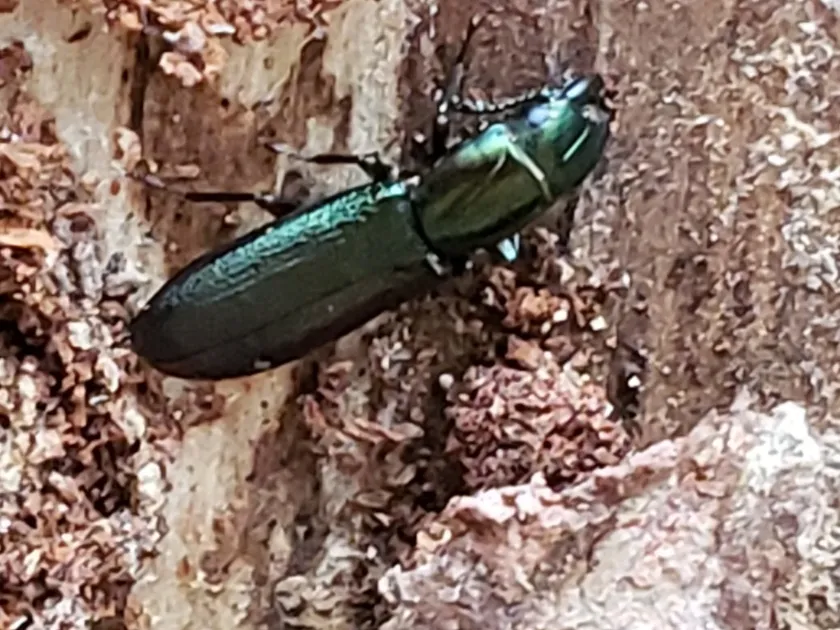
Description
How to identify
The genus Temnochila belongs to the family Temnochilidae, a group of beetles within the order Coleoptera. These insects are characterized by their elongated, flattened bodies and a distinctive metallic sheen, which can range from deep blue to vibrant green.
Adult beetles possess robust mouthparts, designed for both predation on other bark-dwelling insects and general maintenance. Their heads are relatively large with prominent eyes, allowing them to navigate complex tunnels beneath the bark of host trees.
Larvae are typically mobile and possess heavily sclerotized body segments, providing protection as they move through the galleries created in the wood or under the bark. Their well-developed jaws allow for efficient burrowing.
Biological development is closely linked to woody vegetation. While some species serve as important biological control agents by feeding on bark beetle larvae, their ecological role can shift depending on population density and tree health.
Accurate identification requires careful examination of the pronotum and wing venation. Due to the high similarity between related species, professional taxonomic keys are necessary for precise classification.
What it damages
Temnochila beetles are primarily associated with weakened coniferous and deciduous trees. They often exploit galleries and entry points already created by primary pests like bark beetles.
Although many are considered beneficial predators, their presence in high numbers can indicate an underlying physiological stress in the forest stand, making the trees susceptible to secondary infections.
In some instances, particularly during population outbreaks, larvae may feed on the cambium layer. This disrupts the tree's nutrient transport, leading to localized dieback or, in severe cases, the death of young saplings.
The extent of the damage is highly dependent on the overall vigor of the host plant and environmental conditions such as prolonged drought, which often triggers infestations.
Secondary damage often occurs through the introduction of fungal spores into the tree tissue, which the beetles carry as they move between different parts of the trunk.
When it appears
Adult flight activity typically begins in the spring, coinciding with the first stable warm temperatures that stimulate the activity of wood-boring insects.
The peak mating and oviposition season occurs in late spring and early summer. During this time, females actively seek suitable host trees, preferring those with existing bark damage or stress symptoms.
Larval development proceeds throughout the warm summer months. Depending on the geographical location and climate, the life cycle may be completed within a single season or span across multiple years.
Overwintering usually occurs in the adult stage or as mature larvae. They seek refuge under the bark, within deep crevices, or in the leaf litter at the base of the tree to survive freezing conditions.
Activity tapers off as autumn temperatures drop, at which point the beetles enter a state of diapause, effectively shutting down their metabolic processes until the following spring.
Signs of infestation
The most visible sign of an infestation is the presence of small, circular exit holes on the bark, created by emerging adult beetles once they have completed their development.
Underneath loosened patches of bark, one can observe larval galleries filled with frass, the appearance of which helps distinguish Temnochila activity from other wood-boring pests.
In conifers, heavy resinosis (resin flow) is a common defensive response. Large amounts of sticky sap exuding from the trunk often point to recent attempts by insects to penetrate the bark.
Deteriorating crown condition, including yellowing or thinning foliage, serves as a secondary indicator that the tree's vascular system has been compromised by insect galleries.
Increased bird activity, particularly by woodpeckers, is a frequent sign of hidden infestations. When birds repeatedly peck at a tree, they are often targeting the larvae or adults sheltered inside the bark.
Control measures
The most effective strategy for managing Temnochila is maintaining high forest hygiene, which involves the prompt removal and disposal of dead or dying trees that serve as breeding grounds.
Pheromone-based monitoring systems can be used to track adult beetle populations and determine if control measures are necessary to prevent localized outbreaks.
In forest nurseries, systemic insecticides may be applied preventively during the peak flight season to protect young or high-value trees from colonization.
Regular site inspections, especially following extreme weather events like droughts or storms, are crucial for early detection and management of potential pest buildup.
- Sanitary logging of infested trees.
- Preservation of natural predator and parasitoid habitats.
- Monitoring of site-specific population thresholds.
Taxonomy
- Latin name
- Temnochila
- Order
- Coleoptera (beetles)
- Family
- Trogossitidae
- EPPO code
- TEMNSP
Discussion
No discussions yet — be the first.