
Blue bark beetle
Temnoscheila caerulea
Description
How to identify
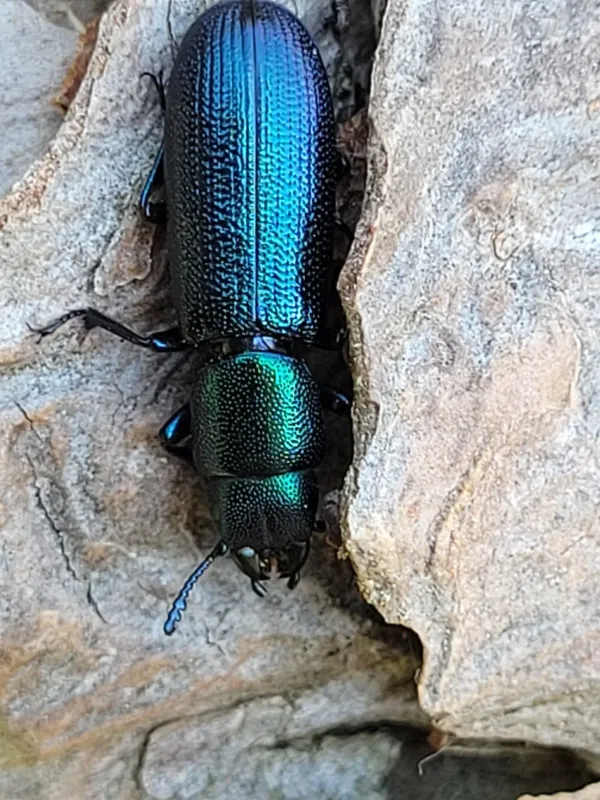
The Blue bark beetle, scientifically known as Temnoscheila caerulea, belongs to the family Trogossitidae within the order Coleoptera. This beetle is distinguished by its vivid metallic blue or greenish-blue coloration, which acts as an aesthetic identifier in forest and orchard environments.
Adults typically reach 10 to 15 mm in length and possess strong mandibles adapted for navigating through bark layers. They have a flattened body shape, which allows them to easily slide into crevices and tunnels beneath the bark of host trees.
Larvae are pale with sclerotized plates on their thoracic segments, providing protection as they navigate wood tissues. They are highly specialized to consume internal bark components, often following galleries created by other wood-boring insects or carving their own.
The taxonomic classification places this species within a group known for complex ecological roles. While often considered a predator of other insects, its adaptability allows it to consume plant tissues when preferred prey is scarce or environmental conditions promote shifts in diet.
The life cycle involves complete metamorphosis, usually spanning one year. Adults are commonly found emerging in the spring, looking for suitable nesting sites in weakened or decaying wood, where they lay eggs that eventually hatch into larvae.
What it damages
The primary damage occurs when adult beetles and their larvae feed on the cambium and phloem of trees. This destructive feeding interferes with the tree's vascular system, potentially slowing growth and reducing the vitality of the affected specimen.
Fruit-bearing trees, particularly pome and stone fruit species, are most at risk. The beetle targets areas where the bark has been compromised by mechanical stress, pruning wounds, or environmental factors like frost cracks, making these sites entry points for further degradation.
Physical evidence of infestation includes small entry holes and excavated galleries underneath the bark. If the population density is high, the girdling effect caused by their feeding can disrupt nutrient transport to the canopy, causing branches to wilt or die back.
The presence of these beetles often signals an underlying issue with the tree's health. Their feeding activities create secondary sites for fungal infections and bacterial pathogens to thrive, which can cause more long-term damage than the insect itself.
In high-density orchard settings, the spread of this beetle can be rapid. Without intervention, trees with compromised structural integrity become hubs for the pest, leading to cumulative losses across the orchard blocks over multiple growing seasons.
Control measures
Effective management begins with rigorous cultural practices. Maintaining tree health through balanced fertilization and proper hydration ensures that trees possess thicker, more resilient bark, making them less susceptible to beetle entry.
Sanitation is vital in the control process. Dead or dying branches should be pruned promptly and removed from the site to eliminate breeding habitats. Pruning tools should be cleaned and sanitized to prevent the spread of opportunistic pathogens.
For trees showing signs of light infestation, mechanical scraping of dead bark followed by the application of horticultural wound sealants can help prevent further damage. This physical barrier stops the beetles from settling in vulnerable spots.
Biological control, including the encouragement of native insectivorous birds and parasitic wasps, can help keep beetle populations in check. These natural predators significantly reduce the numbers of beetles moving along the bark surface.
- Regular monitoring of tree trunks during early spring.
- Application of reflective white paint or whitewash to prevent sunscald.
- Installation of sticky barriers on trunks if pest activity is detected.
- Use of entomopathogenic fungi as a preventative biological treatment.
- Prompt sealing of all mechanical wounds on tree trunks.
Taxonomy
- Latin name
- Temnoscheila caerulea
- Order
- Coleoptera (beetles)
- Family
- Trogossitidae
- EPPO code
- TEMNCO
Discussion
No discussions yet — be the first.