
Yew gall midge
Taxomyia taxi
Description
How to identify
The yew gall midge (Taxomyia taxi) is a minute insect belonging to the family Cecidomyiidae within the order Diptera. It is a highly specialized pest that exclusively targets members of the genus Taxus.
The adult midge is a very small, fragile fly that is rarely seen in the garden due to its small size and short lifespan. They are most active during the spring when they emerge to mate and lay eggs.
The larval stage is the most significant part of the midge's life. Larvae live hidden within the host plant tissue, which protects them from predators and environmental hazards.
These insects are well-adapted to the growth cycle of yew trees, making them a recurring problem in areas where yew is used for hedging or ornamental landscaping.
Understanding their classification and specific host relationship is the first step in managing their impact on valuable coniferous specimens.
What it damages
The primary host plant for this pest is the English yew (Taxus baccata). The larvae burrow into the developing buds of the yew, which triggers the formation of distinct galls.
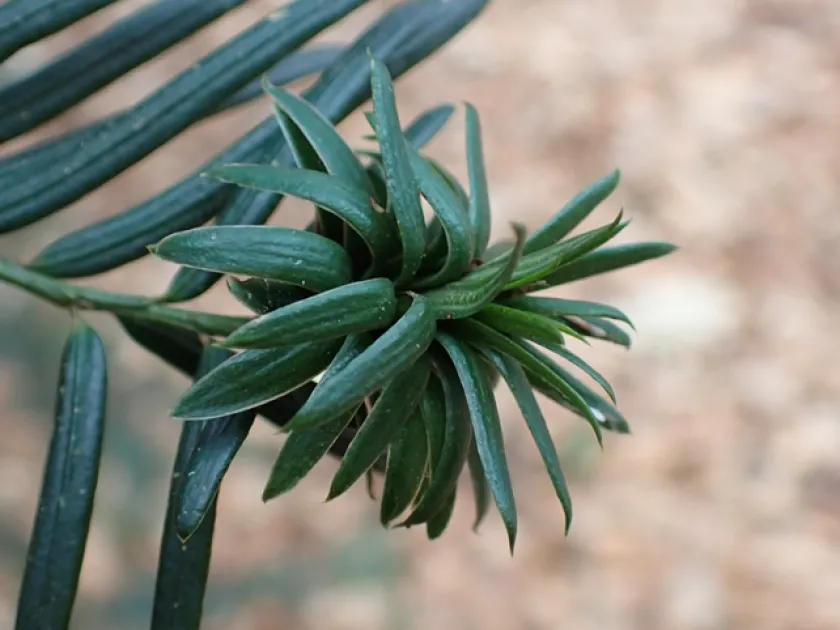
The gall is essentially a swollen, distorted cluster of bud scales that looks like a small cone or an abnormal growth at the tip of the shoot. It serves as both a feeding site and a protective shelter for the larva.
Heavy infestations prevent normal shoot growth, leading to stunted and deformed branches. This severely compromises the aesthetic appeal of the tree or hedge.
In addition to physical deformation, the constant draining of nutrients weakens the overall vigor of the yew, making it more susceptible to environmental stress and secondary fungal infections.
In managed landscapes, large-scale gall midge outbreaks can necessitate heavy pruning, which alters the intended shape and structure of the yew plantings.
When it appears
The lifecycle of the yew gall midge is strictly seasonal. Adult midges emerge in late spring, typically around May, coinciding with the tree's budding phase.
Females deposit their eggs into the newly forming buds. Once the eggs hatch, the larvae begin to feed, causing the bud to transform into the characteristic gall structure.
The larvae remain inside the galls throughout the entire summer and autumn, slowly developing while being sheltered within the host tissue.
The insect overwinters as a larva inside the gall. Pupation takes place inside the same gall early the following spring, just before the cycle repeats.
Because the larvae are enclosed for most of the year, timing for any chemical intervention is critical and must be aligned with the brief adult emergence window.
Signs of infestation
The most obvious sign of an infestation is the presence of swollen, distorted buds at the tips of the current year's growth. These structures often look like small, scaly artichokes or cones.
Gardeners should inspect their yew trees in late spring and summer to identify these clusters. If the growth looks thickened, pale, or malformed, it is a strong indicator of midge activity.
By carefully opening one of these galls, one can find the small, usually orange-colored larvae inside, which confirms the presence of Taxomyia taxi.
If the entire hedge or tree displays a widespread loss of vigor, with numerous stunted shoots, it suggests that the infestation has been present for at least one full season.
Consistent monitoring during the early growth period is essential for catching the infestation before it spreads throughout the entire yew population.
Control measures
Physical removal is the most reliable control measure for small infestations. Pruning off the infested shoot tips and disposing of them before the adults emerge in spring is highly effective.
Chemical control can be attempted, but it must be applied at the correct timing — during the brief period when adults are emerging and laying eggs in May.
- Prune and destroy all galled shoots before spring
- Apply systemic insecticides during the adult flight period
- Encourage healthy growth with balanced fertilizers
- Maintain good airflow through regular trimming
- Ensure proper hydration to keep the yew resilient
Since the larvae are effectively insulated within the gall for most of the year, systemic insecticides are only useful during the limited time the adults are active on the exterior of the plant.
Biological control through natural predators may help regulate populations in diverse gardens, but in dense yew hedges, mechanical intervention remains the gold standard.
Taxonomy
- Latin name
- Taxomyia taxi
- Order
- Diptera (flies)
- Family
- Cecidomyiidae
- EPPO code
- TAXMTA
Discussion
No discussions yet — be the first.