
Taxomyia
Taxomyia
Description
How to identify
Taxomyia (Taxomyia taxi) is a small dipteran insect belonging to the Cecidomyiidae family. These insects are commonly known as gall midges.
Adults are tiny, fragile flies that are rarely seen due to their small size and cryptic nature within the dense yew foliage.
The larvae are legless, maggot-like, and typically creamy white or yellowish. They undergo complete metamorphosis throughout their life cycle.
The species is highly specialized, completing its entire development within the buds of Taxus baccata (European yew).
Successful identification usually relies on spotting the characteristic gall structures rather than the insects themselves.
What it damages
This pest is strictly monophagous, feeding exclusively on the European yew (Taxus baccata) and occasionally other related yew species.
Damage occurs when larvae feed on the meristematic tissues of the buds, causing the plant to produce abnormal growths known as galls.
The growth of the shoot is disrupted, which significantly affects the visual quality and density of the yew shrub or hedge.
Severe infestations can lead to stunted growth, loss of needles, and increased susceptibility to secondary fungal infections or environmental stress.
While rarely fatal to mature, healthy trees, it can significantly weaken young plants and reduce their aesthetic value in landscape design.
Signs of infestation
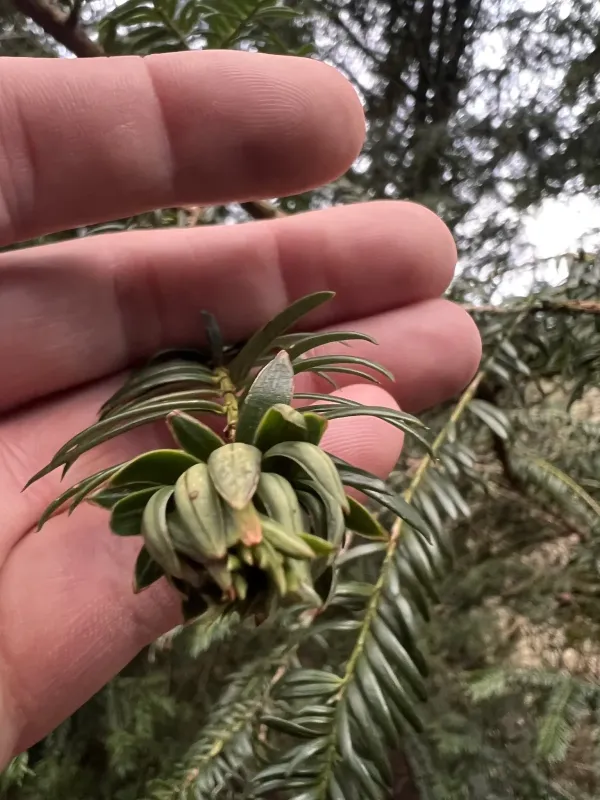
The primary indicator of a Taxomyia infestation is the presence of distinctive, artichoke-shaped galls on the tips of the shoots.
Inside these green, fleshy galls, one can find the developing larvae that are protected from external predators and many pesticides.
During the summer, these galls blend in well with the surrounding foliage, but they become more apparent and drier as winter approaches.
Distorted tips and a "bumpy" appearance of the branch extremities are clear signs that the insect has colonized the plant.
- Formation of characteristic terminal galls.
- Distorted and thickened needle clusters.
- Reduced annual shoot elongation.
- Discolored or brown gall structures in late autumn.
Control measures
Pruning and destroying the infested shoot tips is the most effective cultural method to reduce the pest population in small-scale gardens.
Systemic insecticides applied at the right time—usually when larvae are active or just before adult emergence—can provide effective control.
Maintaining optimal plant health through proper watering and fertilization helps the yew recover from the stress caused by the gall midge.
Biological control, including the protection of natural predators such as parasitic wasps, can play a role in managing population levels.
Regular inspection of yew plants, especially in spring when growth resumes, is crucial for detecting early signs of infestation before it spreads.
Taxonomy
- Latin name
- Taxomyia
- Order
- Diptera (flies)
- Family
- Cecidomyiidae
- EPPO code
- TAXMSP
Discussion
No discussions yet — be the first.