
Tapir
Tapirus
Description
How to identify
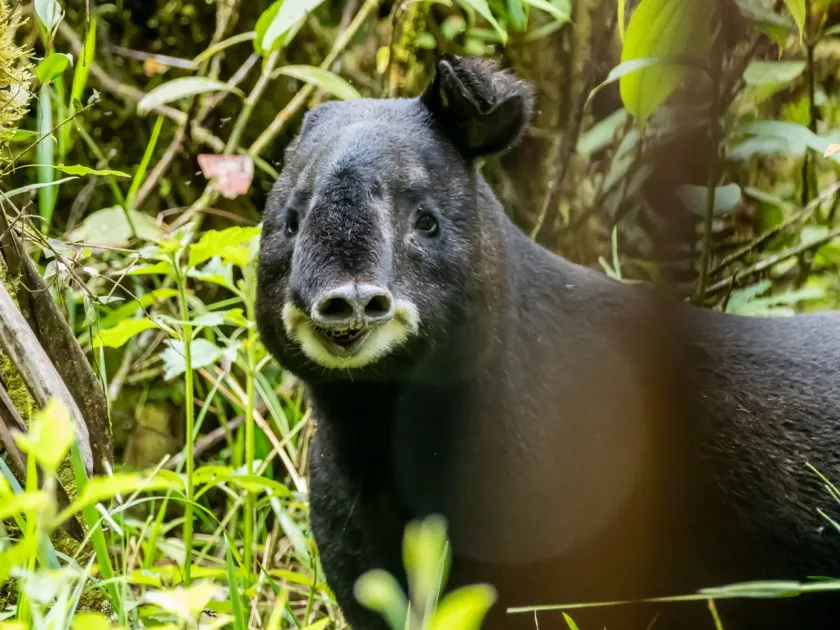
Tapirs (Tapirus) are large, herbivorous mammals belonging to the family Tapiridae in the order Perissodactyla. They are easily recognized by their unique prehensile snout, which they use to grasp leaves, twigs, and fruit.
An adult tapir can weigh between 150 and 300 kilograms. They have a sturdy, barrel-shaped body covered with coarse, dark fur. Their feet have four toes on the front and three on the back, leaving distinctive tracks in soft soil.
These animals are primarily nocturnal and crepuscular, spending most of the daylight hours resting in dense forest cover or submerged in water to stay cool and avoid insects.
Tapirs are solitary animals by nature, though they may move in small groups consisting of a mother and her offspring. Their shy temperament makes them difficult to observe in their natural habitat.
They possess an exceptional sense of smell and hearing, which helps them navigate through thick vegetation to find food sources, including agricultural crops located on the forest fringes.
What it damages
While not traditional agricultural pests, tapirs can cause significant damage to crops when farming encroaches on their natural range. They are opportunistic feeders that consume a wide variety of plant material.
Crops such as sugarcane, maize, and young fruit trees are particularly susceptible to tapir feeding. They strip bark, eat young shoots, and consume fruits, which can stunt the growth or kill the affected plants.
The sheer size and weight of a tapir lead to extensive trampling damage. When moving through a field, they often create wide, beaten-down paths, destroying a considerable portion of the harvest in their trail.
Repeated visits by a tapir to a single field can result in cumulative economic losses for the farmer. The damage is often more severe during times of drought when natural forest forage becomes scarce.
Unlike insect pests that consume crops at specific stages, tapirs can cause damage throughout the growing season, particularly if the farm provides easy access to succulent food sources.
When it appears
Tapirs do not follow a strictly seasonal cycle like insects, but their interaction with agricultural land fluctuates throughout the year based on food availability and climate conditions.
During the dry season, when natural food sources in the forest decline, tapirs are more likely to seek out agricultural fields. The moisture and nutrition provided by cultivated crops become attractive incentives.
The maturation of specific fruit crops can also attract tapirs, leading to localized spikes in farm raids. They are particularly active during the ripening phases of various tropical crops.
As the animals are permanent residents in their forest habitats, there is no migratory period that farmers can predict with high accuracy, making vigilance necessary throughout the year.
The presence of water sources near agricultural areas also influences their movement patterns, as tapirs rely on water for their daily thermoregulation and comfort.
Signs of infestation
The most reliable sign of a tapir's presence is the identification of their large, characteristic hoof prints along the edges of the field. Their track pattern is distinct from those of livestock or wild boars.
Evidence of feeding includes ragged edges on foliage and broken stems, as tapirs forcefully pull at plants rather than cutting them cleanly. Bark stripped from trees at a height of about one meter is a common indicator.
Fecal matter found near the field serves as clear evidence of the animal's recent activity. The droppings often contain large, undigested seeds and fibrous plant material from the consumed crops.
Well-worn paths through dense vegetation or standing crops signify established trails used by tapirs to enter and exit the fields. These paths often persist for weeks if the animal feels safe.
On quiet nights, an experienced observer may hear the characteristic whistles or snorting sounds that tapirs use to communicate, alerting the farmer to their immediate presence.
Control measures
The most effective strategy for managing tapirs is the installation of robust physical barriers. Strong wire fencing is usually sufficient to discourage them from entering the plantation.
Clearing the perimeter of the field of overgrown shrubbery and tall grasses reduces the cover that tapirs require to feel secure. A buffer zone can discourage them from venturing into open, well-lit fields.
Non-lethal deterrents, such as motion-activated lights or sound alarms, can be used temporarily. However, these methods often see diminished returns as the animals adapt to the stimuli.
Given the conservation status of tapirs, they are often protected by law. Lethal control is strictly prohibited in most jurisdictions, requiring farmers to focus on exclusion and integrated management practices.
Collaborating with local wildlife conservation groups can help farmers implement sustainable solutions, such as establishing wildlife corridors or alternative feeding stations that keep the tapirs away from valuable crops.
Taxonomy
- Latin name
- Tapirus
- Family
- Tapiridae
- EPPO code
- TPIRSP
Discussion
No discussions yet — be the first.