
Sylvicola
Sylvicola
Description
How to identify
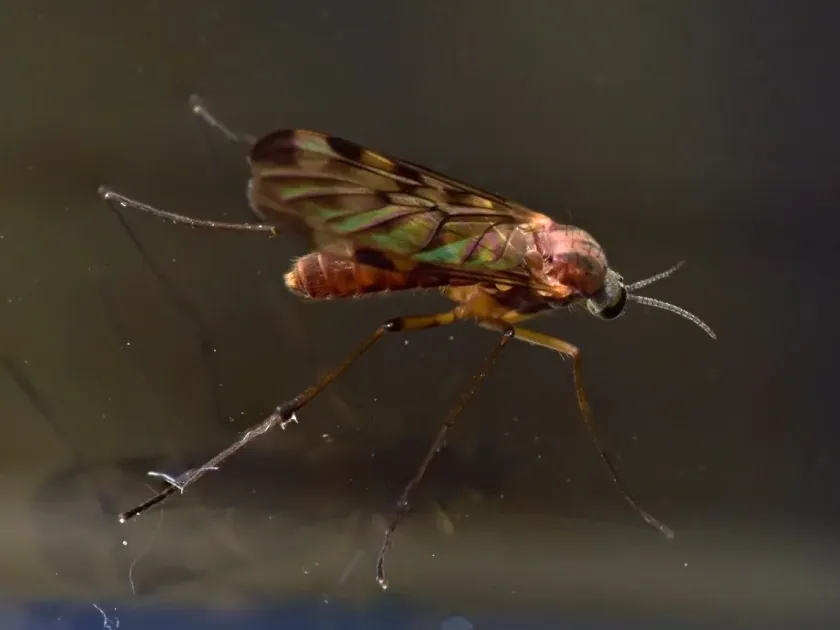
Sylvicola is a genus of insects belonging to the family Anisopodidae, commonly known as window flies or wood gnats.
These flies are characterized by their spotted wings and a general appearance that resembles small crane flies, often found in moist or forested areas.
The larvae are typically vermiform, slender, and legless, with a brownish or yellowish-gray body and a sclerotized, darker head capsule.
They are classified within the order Diptera, and their presence is often associated with decaying organic matter in soil or leaf litter.
Proper identification usually requires taxonomic examination of the wing venation and abdominal structure of the adult specimens.
What it damages
Sylvicola larvae primarily act as saprophages, feeding on rotting vegetable matter, but they can become pests in agricultural settings.
They pose a threat to germinating seeds, especially when weather conditions delay seedling emergence and cause the seeds to soften in the soil.
Damage involves the consumption of the endosperm and embryo, leading to seedling failure and patchy crop stands in the field.
Vegetable and cereal crops are most susceptible during the early spring period, particularly if the soil remains waterlogged.
While not primary parasites of living plants, their feeding on damaged or decaying seeds can significantly reduce plant density.
When it appears
Adult flies emerge in the early spring, coinciding with the peak of planting season for many field crops and vegetables.
The life cycle is heavily influenced by temperature and humidity, with the highest activity levels occurring during cool, damp spring weather.
Multiple generations may occur throughout the growing season, though their economic impact is usually greatest during the initial seedling stage.
They overwinter as larvae or pupae, hiding in compost, soil, or organic debris to survive the colder months of the year.
Optimal conditions for larval development include high soil moisture, which slows plant development and promotes decay in seeds.
Signs of infestation
The primary symptom of infestation is the discovery of empty, eaten-out seeds during soil inspections in areas with poor germination.
Seedlings may fail to emerge or collapse shortly after germination, showing internal damage to the roots or seed remnants.
The presence of small, brownish larvae in the immediate vicinity of damaged seeds is a clear indicator of the pest's involvement.
A foul, rotting smell near the seeds often accompanies the damage, caused by the microbial activity fostered by larval feeding.
Increased populations of adult flies hovering over freshly prepared seedbeds may serve as a precursor to larval infestations.
Control measures
Effective management begins with improving soil drainage to ensure rapid germination and reduce the time seeds remain vulnerable in the soil.
Avoiding the use of uncomposted or fresh organic manure directly before planting can significantly decrease attraction for egg-laying adults.
Seed treatment with systemic insecticides provides a robust defense against larvae, ensuring the protection of seedlings during the sensitive stage.
Proper crop rotation practices help disrupt the lifecycle of the pest, reducing the local population density in the soil over time.
- Use of high-vigor seeds.
- Optimal planting depth and timing.
- Soil aeration practices.
- Removal of plant debris before planting.
Taxonomy
- Latin name
- Sylvicola
- Order
- Diptera (flies)
- Family
- Anisopodidae
- EPPO code
- SYLVSP
Discussion
No discussions yet — be the first.