
Stylops bipunctatus
Stylops bipunctatus
Description
How to identify
Stylops bipunctatus is a species of insect belonging to the order Strepsiptera, characterized by extreme sexual dimorphism and an endoparasitic lifestyle.
The adult males are free-living, winged insects with a short lifespan, while the females are wingless, legless, and spend their entire lives inside their host.
The development of this species involves hypermetamorphosis, where the first-instar larvae are highly active and designed for locating a specific bee host.
These parasites are primarily found within the bodies of solitary bees, particularly those belonging to the genus Andrena.
The taxonomic classification places them in the family Stylopidae, highlighting their specialized evolutionary path as specialized insect parasites.
What it damages
The primary impact of Stylops bipunctatus on agriculture is indirect, as it causes significant physiological damage to wild bee pollinators.
By parasitizing bees, the parasite can cause sterility and behavioral changes, effectively removing these important pollinators from the ecosystem.
A reduction in pollinator populations directly correlates with decreased pollination success for various enthomophilous crops.
This biological pressure complicates the management of wild bee populations, which are essential for sustainable crop yields in many regions.
While the pest does not feed on the plants themselves, its negative effect on pollinator health represents a significant agricultural concern.
Signs of infestation
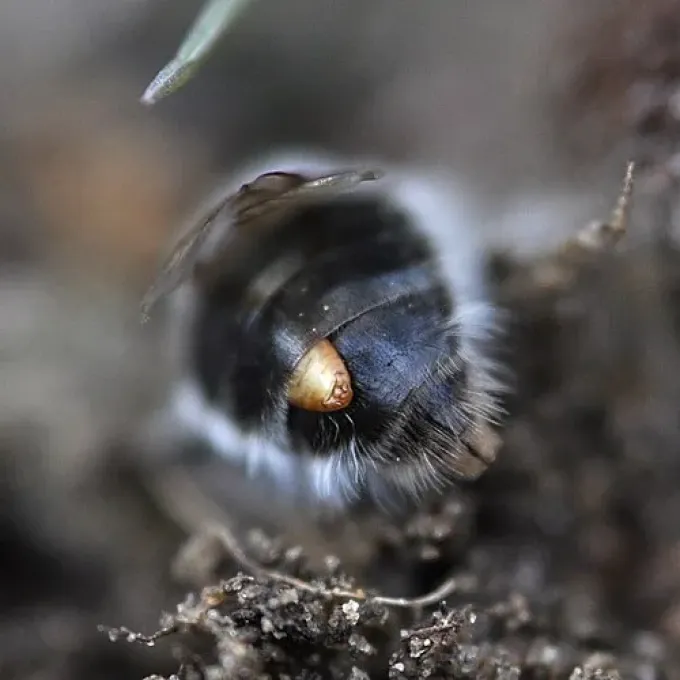
The presence of the parasite is most visible when the cephalothorax of the female protrudes between the abdominal tergites of the host bee.
Infested bees often display physical deformities in the abdomen and show signs of lethargy or reduced flight activity during foraging.
Researchers observe that stylopized bees may lose their ability to forage effectively, which is a major indicator of infestation in the field.
The lack of characteristic healthy behavior in bee populations, despite favorable environmental conditions, often points to internal parasitism.
Laboratory examination remains the most accurate way to verify the presence of Stylops within a collected sample of solitary bees.
Control measures
Effective management focuses on habitat preservation and reducing chemical impact rather than direct eradication of the parasite.
Limiting the use of broad-spectrum pesticides is the most critical step in maintaining healthy populations of beneficial wild bees.
Maintaining floral diversity near farmland provides essential resources for bees, helping them maintain the vigor needed to survive parasitic pressure.
Integrated Pest Management (IPM) practices should prioritize the safety of wild pollinators during the critical flowering periods of crops.
Regular monitoring of bee populations helps agronomists detect trends and adjust agricultural activities to support healthy ecosystems.
Taxonomy
- Latin name
- Stylops bipunctatus
- Family
- Stylopidae
- EPPO code
- STYSBI
Discussion
No discussions yet — be the first.