
Strepsiptera
Stylops
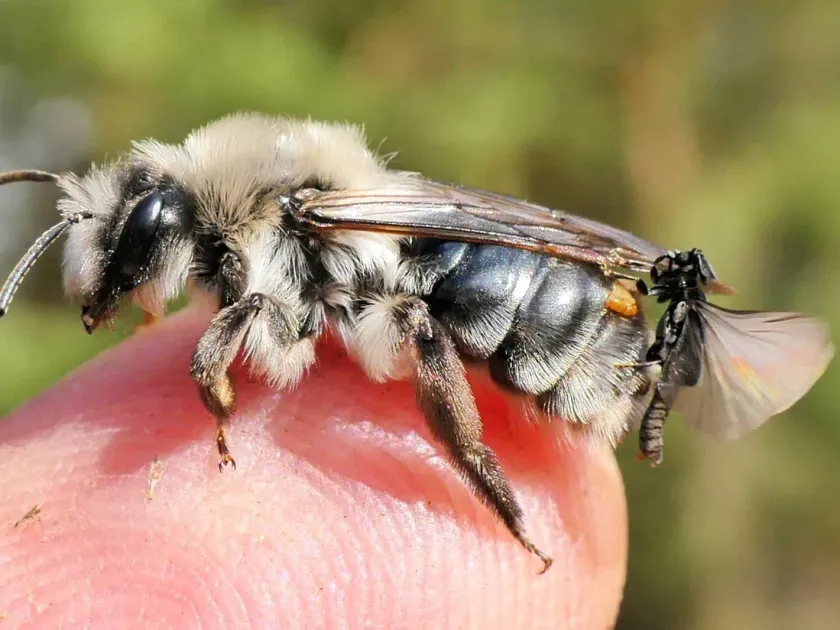
Description
How to identify
Strepsiptera, commonly known as twisted-wing parasites, are a unique order of insects (family Stylopidae) characterized by extreme sexual dimorphism and specialized life history.
The adult males are free-living, possessing fan-like hindwings, while females are permanently endoparasitic, remaining inside the bodies of their hosts throughout their adult lives.
The life cycle begins with the emergence of triungulins, highly mobile first-instar larvae that actively seek out new hosts to penetrate their cuticle and establish themselves.
Taxonomically, the genus Stylops resides within the Strepsiptera order, which is distinct due to their peculiar anatomical adaptations that facilitate their parasitic lifestyle.
They are not plant pests; rather, they are natural insects that exist in a delicate balance with their hosts, such as bees, wasps, and certain leafhoppers.
What it damages
Strepsiptera do not cause any direct damage to agricultural crops. They are strictly parasitic on other insects and do not feed on plant tissue, sap, or foliage.
The harm they cause is restricted to the host insect, often leading to a physiological state known as "stylopization," which can render the host sterile or weakened.
In an agro-ecosystem, their impact on crop yields is negligible, as they do not target the crops themselves, nor do they destroy plants or harvestable produce.
Some researchers view them as natural biological regulators, as they can limit the populations of certain insects, though this rarely reaches the level of commercial pest control.
Therefore, they are not considered pests in agronomic science and require no management or eradication programs in standard agricultural settings.
When it appears
The activity of Strepsiptera is tightly synchronized with the life cycle of their hosts, typically peaking during the warmer months when host activity is at its highest.
Adult males have a very short lifespan, sometimes lasting only a few hours or days, primarily focused on finding a female for reproduction before they perish.
The emergence of triungulin larvae coincides with the flight periods of their host insects, ensuring that the next generation successfully finds a suitable host to parasitize.
Most of the development time is spent inside the body of the host, protecting the parasite from external environmental fluctuations and seasonal temperature extremes.
Depending on the species and the regional climate, they may have one or more generations per year, consistently following the seasonal availability of their insect hosts.
Signs of infestation
The primary sign of infection is the protrusion of the cephalothorax of the female parasite from between the abdominal sclerites of the host insect.
Infected hosts may exhibit behavioral changes or physical abnormalities, such as the reduction of reproductive organs, which is a hallmark of stylopization.
Detection often requires close observation or dissection, as the bulk of the parasite's body remains hidden beneath the host's outer shell for development.
While these signs are interesting for entomological studies, they generally do not serve as a warning of crop danger or a trigger for pesticide application.
Observing these signs in a field environment is usually an indicator of a diverse and stable ecosystem where natural insect-parasite relationships are maintained.
Control measures
There are no control measures for Strepsiptera in agriculture because they are not pests of crops and provide no threat to agricultural productivity or yield.
Broad-spectrum insecticide use is discouraged as it can disrupt natural ecosystems and harm beneficial insect populations, including pollinators and natural enemies.
Sustainable agronomic practices that protect biodiversity naturally ensure the health of insect communities, including the presence of specialized parasites like Stylops.
Field management should prioritize maintaining ecological balance, recognizing that most insects found in fields are not threats but components of a larger, functioning environment.
No specific intervention is necessary or recommended, as the interactions between these parasites and their insect hosts are natural and pose no risk to commercial cultivation.
Taxonomy
- Latin name
- Stylops
- Family
- Stylopidae
- EPPO code
- STYSSP
Discussion
No discussions yet — be the first.