
Halictoxenos
Halictoxenos
Description
How to identify
Halictoxenos is a genus of insects belonging to the order Strepsiptera, specifically the family Stylopidae. These insects are highly specialized endoparasites that primarily target bees of the genus Halictus.
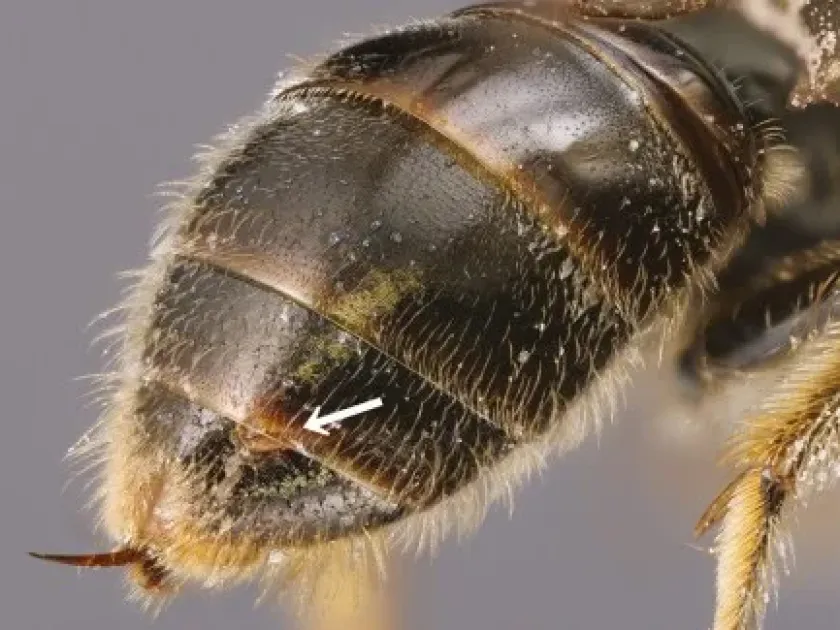
The life cycle exhibits sexual dimorphism: males are free-flying insects with wings, while females remain permanently inside the host bee, appearing only as a cephalothorax protruding between the abdominal segments.
Identification of the parasite is typically achieved by examining host bees. The protruding end of the female, which is often light-colored or brownish, is the most reliable sign of a stylopized bee.
The larvae of Halictoxenos are free-living in their first instar, actively searching for a suitable host bee to invade. Once they penetrate the host's cuticle, they transition into sedentary endoparasites.
Their biological complexity and reliance on a specific host species make them an interesting subject for entomological study within the context of agroecology and pollinator conservation.
What it damages
Halictoxenos does not directly attack crops, but its presence is detrimental to the health and functionality of wild bees, which are essential pollinators for various agricultural crops.
The process of stylopization causes significant physiological shifts in the host bee, often leading to reduced foraging activity, sterility, and in some cases, premature mortality of the insect.
In agricultural settings, a high infestation rate within local wild bee populations directly correlates with decreased pollination efficiency, resulting in lower yields or reduced fruit quality.
The economic impact is indirect but significant in regions where smallholder farming relies on the services of native wild bees rather than managed honeybee colonies for crop production.
Monitoring the prevalence of these parasites helps agronomists estimate the "pollination deficit" and determine if supplemental pollination methods are necessary during the flowering period.
Control measures
There are no chemical controls specifically designed to eliminate Halictoxenos, as any pesticide application would likely be far more toxic to the beneficial bee hosts themselves.
Effective management strategies focus on habitat restoration and the promotion of healthy bee populations that are resilient enough to maintain pollination services despite internal parasitism.
Practices such as establishing wildflower corridors, reducing tillage in nesting areas, and minimizing the use of broad-spectrum insecticides are crucial for protecting pollinator health.
Integrated Pest Management (IPM) should incorporate assessments of pollinator activity, ensuring that pesticide applications do not coincide with the peak foraging times of wild bee populations.
Maintaining a diverse landscape is the best defense, as it provides a refuge for bees and ensures that local populations remain robust even when faced with natural parasitic threats like Halictoxenos.
Taxonomy
- Latin name
- Halictoxenos
- Family
- Stylopidae
- EPPO code
- HALXSP
Discussion
No discussions yet — be the first.