
Strophosoma melanogrammum
Strophosoma melanogrammum
Description
How to identify
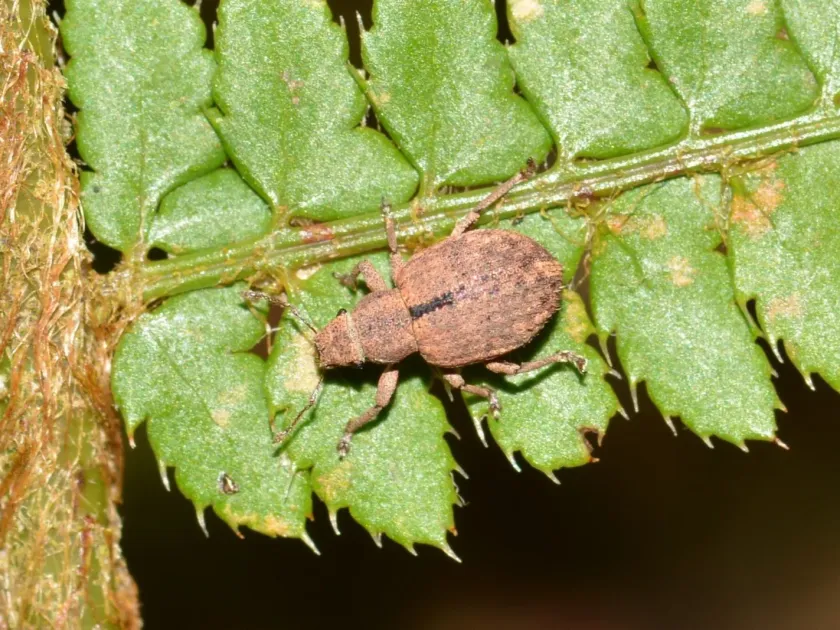
Strophosoma melanogrammum, commonly known as a leaf-notching weevil, is a small beetle measuring approximately 4 to 6 millimeters in length. Its body is covered with dense, greyish-brown scales, and it typically features distinct dark longitudinal lines on its elytra.
This species belongs to the family Curculionidae, the largest family of beetles, known for their elongated snouts or rostra. It is a common polyphagous pest that affects a variety of woody plants.
The larvae are legless, white to cream-colored, with a C-shaped body and a darker head capsule. They live primarily beneath the soil surface, which makes them difficult to observe during standard inspections.
Adult beetles are nocturnal, spending their daylight hours hidden in leaf litter, mulch, or crevices in the soil. This behavior is a key adaptation for avoiding avian predators during the day.
The distribution of this species spans across forest regions and nurseries, where it finds ample opportunities to feed on the foliage of diverse broad-leaved trees and shrubs.
What it damages
Adult beetles are highly polyphagous, feeding on the leaves of a wide range of host plants, including birch, oak, hazel, beech, and various orchard fruit trees. They consume the leaf tissue starting from the margins, creating characteristic notches.
Larval stages live in the soil and feed on the roots of young plants and seedlings. This root damage can be severe in nurseries, leading to stunted growth, reduced vigor, and in extreme cases, the death of young saplings.
In addition to foliage damage, the beetles can feed on the buds of trees in early spring, potentially impacting the flowering and fruiting capacity of the affected plants.
For young woody plants, repeated defoliation by adults reduces the plant's ability to photosynthesize, which stresses the plant and makes it more susceptible to environmental factors or diseases.
Large populations of this weevil can lead to significant aesthetic and physiological damage, especially in young tree plantations where the canopy is still developing.
When it appears
The emergence of overwintering adults typically occurs in the spring, coinciding with the budburst of deciduous trees. This is when they start their primary feeding phase.
Reproduction follows, with females laying eggs in the soil near the host plants. The eggs hatch after a relatively short period, depending on soil temperature and moisture levels.
Larvae develop throughout the summer, feeding on roots in the soil. The larval period consists of several instars, during which the larvae grow significantly.
New adults emerge from the soil in late summer or autumn. They continue to feed on foliage before seeking winter shelter in the soil or under organic debris.
Overwintering takes place in the adult stage, as the beetles become inactive and bury themselves into the soil to survive the cold winter months.
Signs of infestation
The most recognizable sign of infestation is the notched appearance of leaves. The beetles chew irregular shapes into the edges of the leaf blades, often leaving the central veins intact.
Severe infestations can lead to significant defoliation, where the tree canopy appears sparse and tattered. In such cases, the foliage may look skeletal due to the extensive feeding.
If larval root damage is suspected, plants may show signs of general weakness, such as wilting, yellowing leaves, or a complete lack of new annual growth, despite sufficient watering.
To confirm the presence of adult beetles, inspections should be conducted at night using a flashlight. Searching the foliage after dusk often reveals the beetles in the act of feeding.
Shaking branches over a white sheet or tray at night will often cause the weevils to drop. They will usually remain motionless for a few minutes as a defense mechanism, making them easy to identify.
Control measures
Cultural control is essential. Regular soil cultivation around the base of the plants during autumn and early spring can help disrupt the life cycle by exposing larvae and pupae to predators.
In forest nurseries, targeted applications of approved insecticides during the period of peak adult emergence can effectively reduce the population and protect young foliage.
The use of sticky barriers or mechanical traps on the stems of young trees can prevent adult beetles from climbing up to feed, particularly for smaller, vulnerable saplings.
Biological control options, such as the application of entomopathogenic nematodes or fungi (e.g., Beauveria bassiana), can be used to target soil-dwelling larvae without chemical residue.
- Promote biodiversity to encourage natural predators like ground beetles and birds.
- Remove weeds around host plants to reduce alternative food sources.
- Monitor the population using nocturnal light traps or physical shaking methods.
- Ensure proper plant health and nutrition to improve tolerance to damage.
Taxonomy
- Latin name
- Strophosoma melanogrammum
- Order
- Coleoptera (beetles)
- Family
- Curculionidae
- EPPO code
- STROME
Discussion
No discussions yet — be the first.