
Striglina scitaria
Striglina scitaria
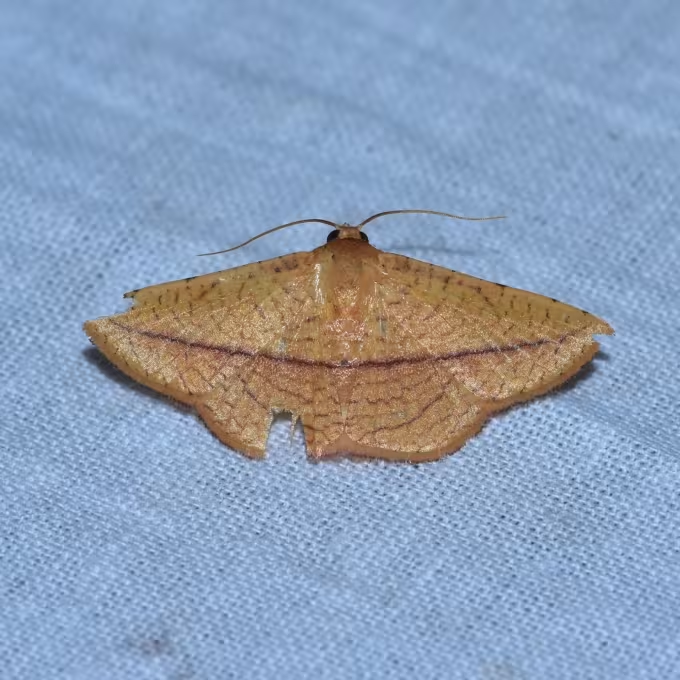
Description
How to identify
Striglina scitaria is a species of moth belonging to the family Thyrididae, often characterized by their intricate wing patterns and nocturnal behavior.
The adult moth has a wingspan typically ranging from 20 to 30 mm, with coloration that can vary from pale yellowish to brownish, often adorned with dark transverse lines.
The larvae are typical caterpillars with chewing mouthparts, adapted for consuming significant amounts of plant tissue during their growth phase.
This species undergoes a complete metamorphosis, moving through egg, larval, pupal, and adult stages within a single generation cycle.
Known for its presence in Asian tropical regions, this moth has established itself in various agricultural ecosystems, impacting cultivated plants.
What it damages
The larvae of Striglina scitaria are recognized pests that feed primarily on the foliage of diverse horticultural and agricultural host plants.
By consuming leaves, the caterpillars reduce the plant's photosynthetic capacity, which directly hampers the development of new shoots and overall plant vigor.
Heavy infestations can lead to significant defoliation, particularly in young plants or tea bushes, resulting in reduced crop yields and quality.
Wounds caused by larval feeding serve as entry points for secondary pathogens, such as fungi or bacteria, which can exacerbate the damage to the host.
Persistent feeding leads to stunted growth, which is a major concern for commercial growers who rely on leaf biomass for production.
When it appears
The moth is most active during the warmer months, with its life cycle highly correlated with favorable climatic conditions and host plant growth stages.
Multiple generations can occur within a single growing season, necessitating ongoing vigilance to prevent exponential increases in population density.
Adult moths are primarily nocturnal, making them active at night and often attracted to artificial light sources, which aids in monitoring efforts.
Overwintering typically occurs in the pupal stage, with the insects hiding in leaf litter or soil, waiting for the return of favorable spring temperatures.
The emergence of the spring generation usually coincides with the flush of new growth on host plants, providing immediate food for the larvae.
Signs of infestation
The primary symptom of an infestation is the presence of irregular holes and chewed edges on the leaves, which are telltale signs of larval feeding activity.
Caterpillars often use silk to roll or web leaves together, creating protective shelters where they feed and hide from predators during the day.
- Presence of larval frass on leaves below the feeding sites.
- Leaves rolled or folded and held together by silken threads.
- Skeletalized sections of the leaf where only veins remain.
- Presence of visible larvae when opening folded leaves.
- Early leaf senescence in areas with high feeding pressure.
Identifying these signs early is crucial for implementing control measures before the population reaches a level that causes economic threshold damage.
Control measures
Biological control agents, including parasitic wasps and microbial insecticides, are recommended for sustainable management of Striglina scitaria populations.
Chemical control involving selective insecticides should be applied during the early larval stages, as younger larvae are more susceptible to treatment.
Cultural practices, such as clearing fallen leaf debris, are essential to destroy overwintering pupae and interrupt the life cycle of the moth.
Pruning and removing infested branches or shoots can help physically reduce the number of caterpillars and mitigate the spread within the field.
Integrated Pest Management (IPM) strategies, combining monitoring with trap crops and timely pesticide application, are the most effective ways to manage this pest.
Taxonomy
- Latin name
- Striglina scitaria
- Order
- Lepidoptera (butterflies)
- Family
- Thyrididae
- EPPO code
- STGLSC
Discussion
No discussions yet — be the first.