
Striglina
Striglina
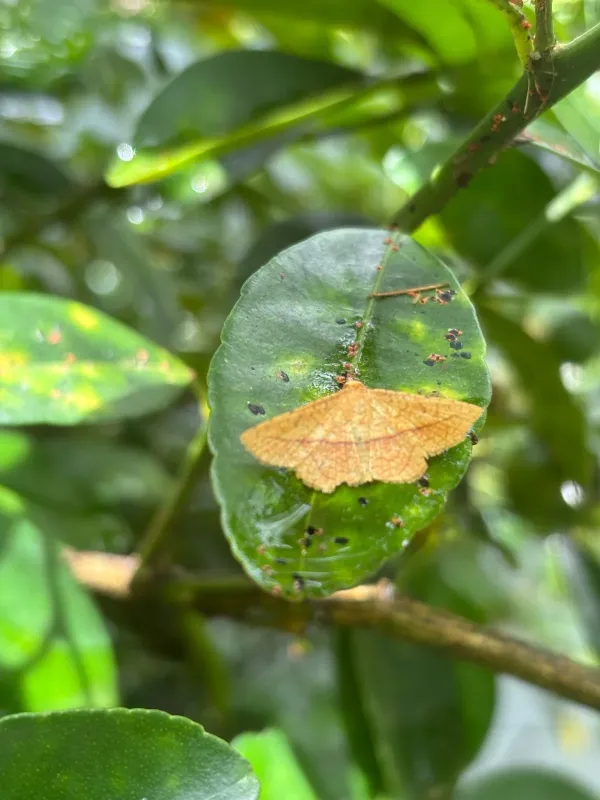
Description
How to identify
Striglina is a genus of moths belonging to the family Thyrididae, which are commonly known as window-winged moths. These insects are distinguished by their complex wing patterns, often resembling textured wood or dry foliage.
Adult moths typically have a wingspan ranging from 20 to 35 mm. Their coloration varies from ochre to dark brown, serving as excellent camouflage against tree bark during the daylight hours.
The larvae of Striglina are chewing insects that develop within protected microhabitats, such as rolled leaves secured by silk threads. Their body structure is adapted to a concealed lifestyle.
Taxonomically, they are part of the order Lepidoptera. While they are often overlooked due to their nocturnal nature, they are distinct from other common agricultural pests like leaf rollers or pyralid moths.
Precise identification of specific species within the genus requires examination of anatomical features, as many species exhibit high external similarity.
What it damages
The damage is caused primarily by the larval stage, which feeds on foliage, buds, and young shoots. This feeding activity can lead to significant defoliation in woody plant species.
Affected plants often show reduced growth rates and compromised health, particularly when infestation levels are high during the peak growing season.
The larvae typically skeletonize leaves or consume large patches, leaving only the primary veins, which disrupts the photosynthetic ability of the plant.
In nursery settings, damage to terminal buds can lead to stunted growth or deformed development of young trees and ornamental shrubs.
- Consumption of leaf tissue (window-feeding).
- Deformation of leaves caused by silk webbing.
- Damage to floral buds and tender new growth.
When it appears
The life cycle of Striglina begins in late spring, following the emergence of adults from overwintering pupae. Mating and egg-laying occur shortly after emergence.
The larval stage is most active during the early and mid-summer months when host plants are producing new, succulent foliage suitable for rapid development.
Pupation typically takes place within a protective cocoon constructed of silk and leaf fragments, either within the foliage canopy or in the ground litter.
Environmental factors such as temperature and humidity significantly influence the duration of each life stage, with warmer seasons potentially leading to two or more generations.
As autumn approaches, the final generation of the season prepares for overwintering, seeking shelter in protected areas to survive the cold months.
Signs of infestation
A primary indicator of infestation is the presence of webbed or rolled leaves, which serve as shelters for the developing larvae during the day.
Frass (larval excrement) is often visible on lower leaves or on surfaces beneath the infested tree, providing a clear sign of active feeding nearby.
Visual inspection of the canopy reveals irregular holes in leaves or entire sections of foliage missing, indicating where larvae have recently been active.
The appearance of adults around outdoor lighting at night is an early warning sign that a new generation has emerged and egg-laying may be in progress.
Severe infestations manifest as noticeable thinning of the canopy and, in extreme cases, the premature browning of leaves due to high tissue loss.
Control measures
Sanitation is a critical control measure, involving the systematic pruning and removal of infested shoots or branches to reduce the population density.
Biological control using microbial insecticides, such as Bacillus thuringiensis (Bt), is highly effective against young larvae and poses minimal risk to the environment.
Encouraging natural predators, including insectivorous birds and parasitic wasps, can provide long-term regulation of the moth population within garden landscapes.
Chemical intervention should be reserved for severe outbreaks where economic damage is imminent, using selective, contact-based insecticides to minimize harm to beneficial insects.
Monitoring populations with light traps allows growers to time interventions effectively, ensuring that treatments are applied when the pest is most vulnerable.
Taxonomy
- Latin name
- Striglina
- Order
- Lepidoptera (butterflies)
- Family
- Thyrididae
- EPPO code
- STGLSP
Discussion
No discussions yet — be the first.