
Stratiolaelaps
Stratiolaelaps scimitus
Description
How to identify
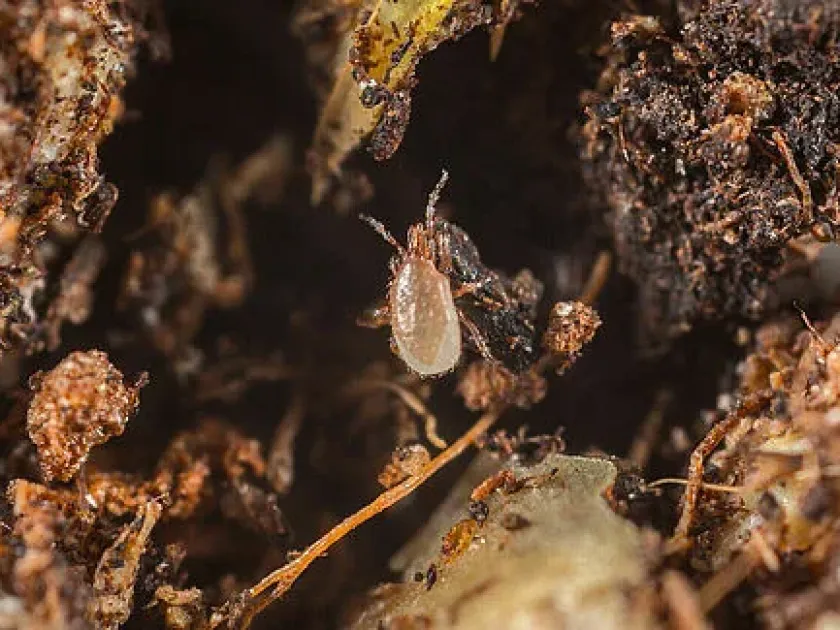
Stratiolaelaps scimitus is a predatory soil mite belonging to the Laelapidae family. Adult individuals are approximately 0.5–1 mm in size, have a light brown color, and an oval body shape.
This mite leads a predominantly soil-dwelling lifestyle, inhabiting the upper layers of substrate rich in organic matter. They are highly mobile and actively move in search of prey.
It is important to emphasize that this species is not a plant pest. On the contrary, it is a valuable biological control agent used by agronomists to suppress populations of phytophagous insects.
In the natural environment, the mite lives in leaf litter and soil, preferring moist and warm conditions. It does not damage the roots or leaves of cultivated plants, as it feeds exclusively on soil-dwelling organisms.
Identification under laboratory conditions requires a microscope due to the small size of the mite and its tendency to hide within the substrate.
What it damages
This organism does not damage cultivated plants. Its misclassification as a pest is often due to its presence in the root zone, where it actively hunts for prey.
On the contrary, this species is a predator that eliminates larvae of sciarids (fungus gnats) and pupae of the western flower thrips found in the soil.
In the absence of its primary food source, the mite can temporarily feed on organic debris, soil nematodes, or smaller mites without causing any harm to plant organs.
Using this entomophage in greenhouses contributes to the health of the root system by reducing the population density of root-damaging pests.
Therefore, its "harmfulness" is zero, while its economic value in the agroecosystem is high, as it helps reduce pesticide reliance for crop protection.
When it appears
The activity of the mite directly depends on the temperature and moisture of the substrate. The optimal conditions for its life cycle are in the range of +20 to +30 degrees Celsius.
In protected cultivation, the life cycle continues year-round if sufficient soil moisture is maintained, which is necessary for the survival of eggs and larvae.
In winter, mite activity may decrease as temperatures drop in greenhouses, although it can survive moderate temperature fluctuations within the depth of the substrate.
If the soil dries out, the predator population drops sharply, making it impossible to effectively use the mite in arid conditions without an irrigation system.
Entomophage introduction should be conducted early, before the mass emergence of pests, to establish a stable predatory population in the plant root zone.
Signs of infestation
There are no signs of plant damage caused by this mite, as it is a beneficial predator.
If you discover clusters of these mites in the root zone, it indicates the presence of sufficient prey in the substrate, most likely larvae of soil-dwelling flies.
The absence of phytophagous pests in the soil following the introduction of the mite is the primary indicator of the species' effectiveness in biological control.
Externally, the presence of a population can only be detected through the use of traps or by analyzing substrate samples, as the mite does not move onto the surface of stems or leaves.
Any root damage or plant wilting should be attributed to other factors, rather than the presence of Stratiolaelaps scimitus, which acts as an assistant rather than an adversary to the agronomist.
Control measures
No protection measures against this object are needed, as it is not a pest. It must be protected, and conditions should be created to foster its reproduction.
The use of broad-spectrum insecticides (especially soil-applied ones) is discouraged, as they have a detrimental effect on the predatory mite population.
To preserve the entomophage, maintain moderate substrate moisture and avoid extreme temperature fluctuations in the root zone.
If chemical application is necessary, choose pesticides compatible with biological control agents to avoid destroying the greenhouse's beneficial fauna.
In integrated pest management programs, Stratiolaelaps is a fundamental component that provides control over the soil-dwelling stages of many dangerous pests.
Taxonomy
- Latin name
- Stratiolaelaps scimitus
- Order
- Mites
- Family
- Laelapidae
- EPPO code
- STTLSC
Discussion
No discussions yet — be the first.