
Stratiolaelaps miles
Stratiolaelaps miles
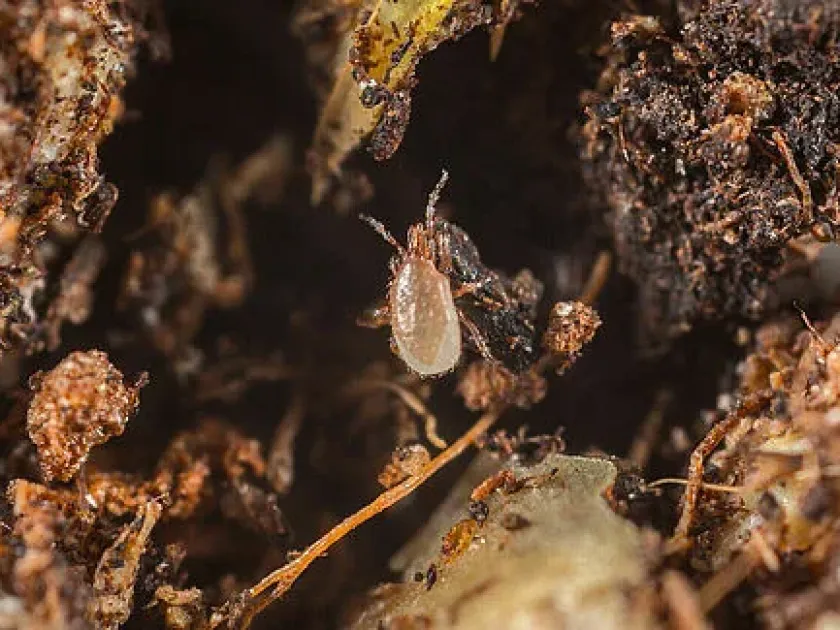
Description
How to identify
It is crucial to clarify that Stratiolaelaps miles (formerly known as Hypoaspis miles) is not a plant pest. Instead, it is a well-known predatory mite that serves as a vital tool in integrated pest management (IPM) for greenhouse crops.
Adult mites are small, measuring approximately 0.5 to 1 mm in length, and exhibit a light tan or brownish color. They possess a robust, oval-shaped body with agile legs, allowing them to navigate efficiently through the top layers of soil, potting media, or compost.
The life cycle of the mite includes egg, larva, protonymph, deutonymph, and adult stages. Under optimal greenhouse temperatures of about 25°C, the entire life cycle can be completed in approximately 10 to 12 days, allowing for rapid population growth.
These mites are cosmopolitans, found in various organic substrates. They are highly adaptable and can thrive in diverse greenhouse environments, provided there is adequate moisture and food sources, such as larvae of fungus gnats or thrips pupae.
Accurate identification of this species typically requires microscopic examination of dorsal shield characteristics. In a professional agricultural setting, it is often confused with harmful soil-dwelling mites, leading to unnecessary and harmful control attempts.
What it damages
Scientific consensus indicates that Stratiolaelaps miles does not inflict damage on plant tissues, root systems, or fruit. It lacks the specialized mouthparts required for feeding on plant sap or boring into plant tissue, as it is strictly a predator.
Mistaking this beneficial mite for a pest often leads to the overuse of broad-spectrum insecticides. Such chemical treatments kill off beneficial predatory populations, inadvertently leaving the crop more vulnerable to future outbreaks of genuine plant pests.
The confusion regarding its status often arises from a superficial visual similarity to bulb or root mites. Unlike those pests, which cause necrotic patches and stunted growth, the presence of Stratiolaelaps miles is a sign of a healthy, active soil ecosystem.
Rather than causing damage, this mite performs a cleaning role in the rhizosphere. By feeding on the developmental stages of sciarids and other minor soil pests, it helps maintain the vigor and health of young plant cultures.
Therefore, classifying this object as a pest is scientifically incorrect and agronomically detrimental. In greenhouse horticulture, it is regarded as a valuable asset that reduces the reliance on synthetic chemicals for soil pest control.
When it appears
In temperature-controlled greenhouses, Stratiolaelaps miles remains active year-round. This constant presence allows it to serve as a continuous biological barrier against soil-borne pests without the need for seasonal adjustments.
In outdoor environments, the activity of the mite is dependent on soil temperatures. It generally begins its activity in the spring as soil temperatures rise above 10-12°C and continues throughout the growing season until late autumn.
Humidity is the most important factor influencing their presence and behavior. These mites require moist soil environments to thrive and hunt effectively. Drought conditions significantly decrease their metabolic rate and population density.
During winter months in unheated settings, the mites may undergo a period of dormancy or seek shelter in deeper, more insulated layers of the soil to protect themselves from frost and extreme temperature drops.
Agricultural practices, such as the introduction of organic fertilizers or mulch, create a seasonal increase in their population. By providing a stable food source and habitat, growers can effectively sustain these predators throughout the year.
Control measures
No control measures are necessary for Stratiolaelaps miles because it is a beneficial organism. Instead, the focus for agronomists should be on conservation and environmental management to encourage the mite to thrive.
Growers are strongly advised to avoid using harsh soil-applied insecticides, as these chemicals are toxic to beneficial predatory mites. Implementing a selective pest management strategy ensures that these biological allies remain in the greenhouse.
If chemical intervention is unavoidable for other pests, researchers recommend using products with minimal residual effects on soil-dwelling arthropods. Integrated Pest Management protocols are the best way to protect the mite population.
Maintaining proper soil moisture and good aeration are the most effective ways to manage the mite's environment. A well-hydrated, oxygenated, and nutrient-rich potting medium will naturally support a healthy predator population.
For operations utilizing sterile growing media, the deliberate release of Stratiolaelaps miles is a standard and recommended practice to prevent the establishment of fungus gnat populations and to restore the biological balance of the system.
Taxonomy
- Latin name
- Stratiolaelaps miles
- Order
- Mites
- Family
- Laelapidae
- EPPO code
- STTLMI
Discussion
No discussions yet — be the first.