
Jerusalem cricket
Stenopelmatus fasciatus
Description
How to identify
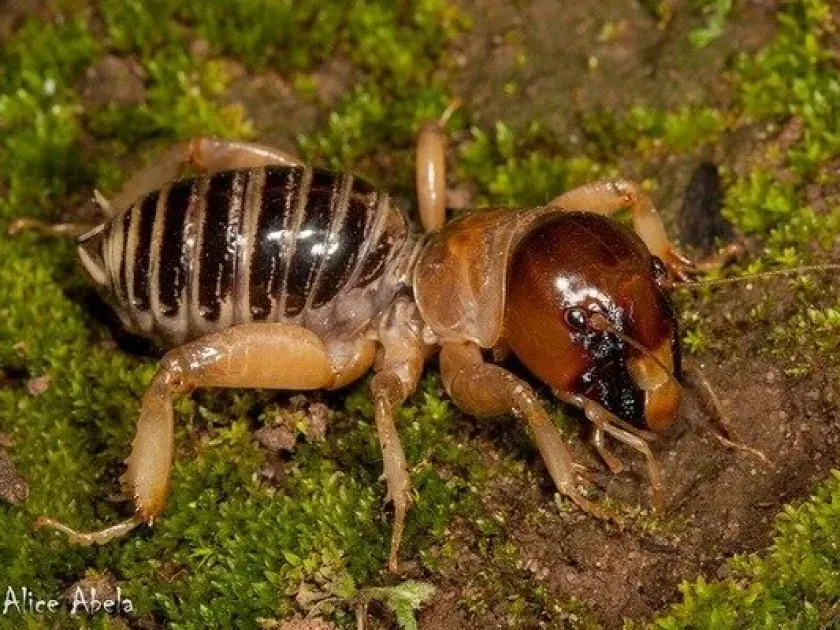
The Jerusalem cricket (Stenopelmatus fasciatus) belongs to the order Orthoptera, family Stenopelmatidae. It is a large insect characterized by a massive head, powerful mandibles, and a wingless body that resembles a human finger in shape.
Its coloration ranges from yellowish-tan to dark brown, featuring distinctive dark bands across the abdomen. Adults can reach 5 centimeters in length and possess strong, digging forelegs that allow them to move rapidly through the soil.
This insect is primarily nocturnal, preferring moist and hidden habitats under rocks or deep within soil layers. Despite their intimidating appearance, they are not venomous, although they can deliver a painful bite if handled improperly.
The biology of this species is closely tied to the soil environment, where most of its life cycle occurs. Nymphs resemble adults but are smaller in size and undergo several molting stages, gradually increasing in body mass.
Reproduction takes place in the soil, where females lay eggs in small chambers. The complete life cycle may take up to two years, depending on climatic conditions and the availability of nutrients in their habitat.
What it damages
This pest poses a significant threat to a wide range of agricultural crops, particularly vegetables. Most damage occurs to the underground parts of plants, often going unnoticed until the crop begins to wilt or die.
Jerusalem crickets actively damage potato tubers, carrots, beets, and radishes. By feeding on succulent tissues, the insect leaves deep cavities that often become entry points for secondary fungal and bacterial infections.
When populations are high, the pest can destroy entire young plantings by severing the taproots or stems at the soil surface. This leads to rapid wilting and collapse of the plant.
Plants are especially vulnerable during the seedling and root-formation phases. During dry periods, these crickets shift their diet to the roots of cultivated plants because of the scarcity of moisture in the surrounding soil.
In addition to crops, these insects may feed on decaying organic matter and other soil organisms, making them facultative predators, though their primary economic impact is due to their phytophagous nature.
Signs of infestation
The main sign of a Jerusalem cricket infestation is the sudden wilting of healthy-looking plants without any visible cause on the foliage. Upon inspection of the root system, signs of gnawing are usually evident.
On the soil surface near the base of the plant, one might notice small entrance holes or tunnels leading into the ground. These are the direct result of the insect's active burrowing behavior.
During the night, using a flashlight may reveal specimens on the soil surface, especially after heavy rains. During the day, they can generally only be found by digging or turning over debris.
Damaged tubers often exhibit ragged edges and specific indentations. If vegetables in the ground start to rot from within, primary trauma caused by cricket feeding is a frequent culprit.
The presence of distinct droppings near the base of affected plants can also indicate active pest activity in that specific area of your garden or field.
Control measures
Effective management begins with agrotechnical measures, such as regular deep tilling of the soil. This practice disrupts underground tunnels and nesting chambers, exposing the insects to predators and the sun.
It is recommended to maintain field sanitation by removing plant debris, boards, and rocks. These items provide the dark, moist shelters that crickets require for daytime resting and breeding.
As a barrier measure, one can use traps consisting of damp boards or plywood, under which the insects tend to congregate. Once gathered, the specimens can be manually collected and destroyed.
Chemical control involves the use of soil-applied insecticides, such as those containing diazinon or other contact-stomach poisons. It is crucial to strictly follow label instructions to prevent toxic residues in the final harvest.
Implementing proper crop rotation and avoiding excessive irrigation in areas of high density helps reduce the overall population by making the environment less suitable for this insect's life cycle.
Taxonomy
- Latin name
- Stenopelmatus fasciatus
- Order
- Orthoptera (locusts)
- Family
- Stenopelmatidae
- EPPO code
- STEEFA
Discussion
No discussions yet — be the first.