
Jerusalem cricket
Stenopelmatus
Description
How to identify
The Jerusalem cricket (Stenopelmatus) belongs to the Stenopelmatidae family within the order Orthoptera, representing a unique group of soil-dwelling insects.
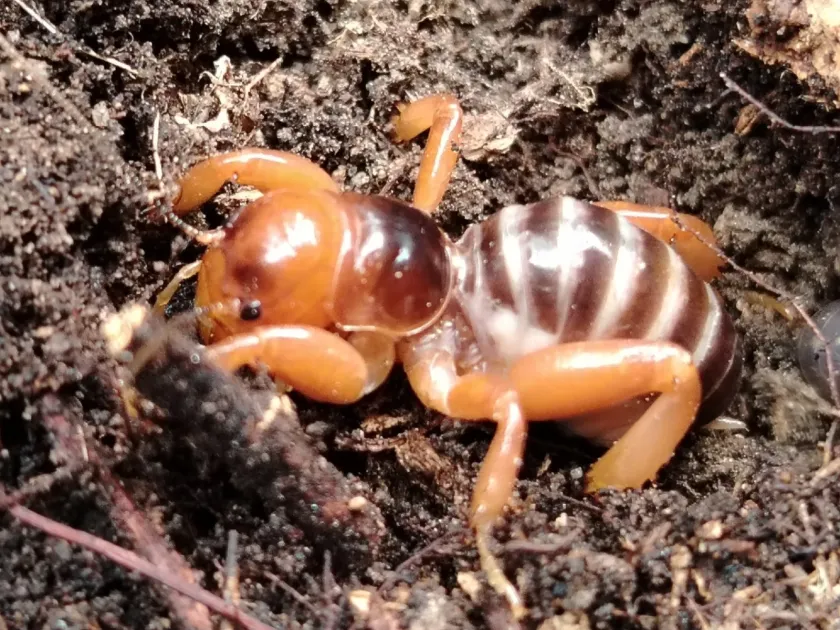
Despite their name, they are not true crickets and originate from the Americas, characterized by their large heads, powerful mandibles, and wingless bodies.
Adult insects usually have a tan or brownish coloration with dark bands across the abdomen, making them look somewhat intimidating and distinct.
They are primarily nocturnal creatures that live in moist soil, spending most of their lifecycle burrowing beneath the surface to avoid heat and predators.
Their biological development is slow, and it can take several years for the insect to reach the adult stage, making it a persistent resident in infested soils.
What it damages
Jerusalem crickets act as significant pests when they feed on the underground parts of plants, causing direct harm to the vascular systems of crops.
Vegetable crops such as potatoes, carrots, onions, and various root vegetables are common targets, as the insects chew large cavities into their tissues.
This feeding activity significantly reduces the quality of the harvest and invites rot-causing pathogens to infiltrate the damaged plant tissues.
Young seedlings are particularly vulnerable, as the destruction of their root systems by a single cricket can lead to the rapid death of the entire plant.
Irrigated gardens and moist, loamy soil environments provide the perfect conditions for these insects to thrive and inflict damage on growing root crops.
Signs of infestation
One of the primary indicators of a Jerusalem cricket infestation is the sudden yellowing and wilting of plants that appear otherwise healthy above ground.
Upon inspecting harvested root vegetables, you may notice deep, irregular holes and tunnels that penetrate deep into the flesh of the produce.
During the night or early morning hours, you might observe the insects themselves or their surface-level entry points, particularly in high-moisture garden beds.
The presence of disturbed soil or small, mound-like openings can also signify that these pests have been actively digging and feeding in the area.
Finding the insects during mechanical soil tillage or routine garden bed preparation is the most reliable way to confirm their presence on your property.
Control measures
Deep cultivation and soil turning are effective manual methods to expose larvae and adults to predators like birds and to destroy their underground tunnel systems.
Cultural practices, such as removing dense weed cover and managing soil moisture levels, can make your garden environment less attractive to these insects.
Mechanical traps, such as containers buried flush with the soil surface containing organic bait, can effectively capture adults and monitor population density.
In cases of severe infestation, targeted soil insecticides may be used, though these should be applied cautiously following all label safety and environmental precautions.
Consistent observation and maintaining a clean, well-drained garden environment are key components of a successful long-term management strategy for this pest.
Taxonomy
- Latin name
- Stenopelmatus
- Order
- Orthoptera (locusts)
- Family
- Stenopelmatidae
- EPPO code
- STEESP
Discussion
No discussions yet — be the first.