
Stenodiplosis
Stenodiplosis
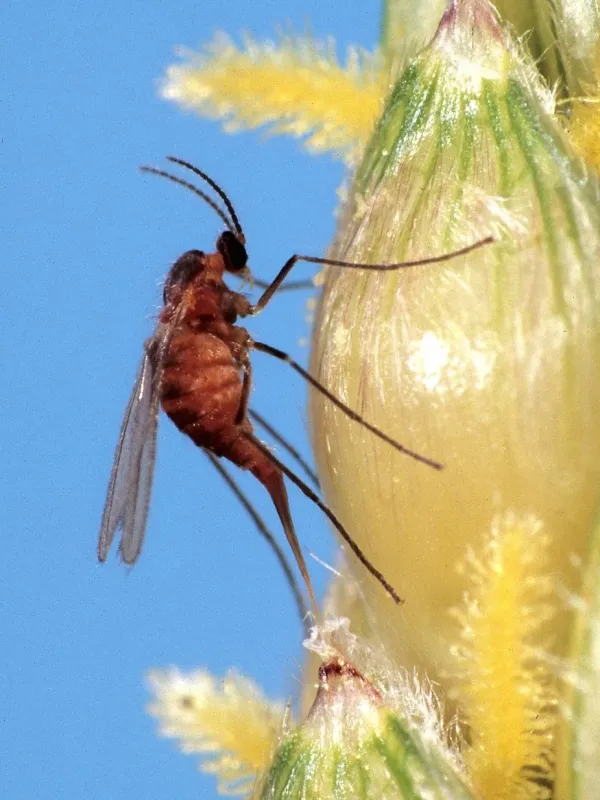
Description
How to identify
Stenodiplosis is a genus of gall midges belonging to the family Cecidomyiidae in the order Diptera. These are minute insects, with adults typically measuring only 2 to 4 millimeters in length.
The insect's lifecycle is highly synchronized with the phenology of cereal crops, ensuring that the larval stage coincides with the availability of preferred reproductive tissues.
Larvae are legless, spindle-shaped, and display colors ranging from creamy white to orange or bright red, depending on the specific species and their developmental stage.
Overwintering occurs primarily in the larval stage within plant residues, stubble, or the top layer of the soil, allowing the pest to survive harsh environmental conditions.
Precise identification in the field requires close inspection of wheat or cereal ears during the flowering period, often using a hand lens to detect the presence of larvae.
What it damages
Stenodiplosis affects a wide range of cereal crops, including wheat, barley, sorghum, and various forage grasses, which serve as hosts for the larvae.
The damage is caused by larvae feeding on the ovaries and developing grains, which extracts vital nutrients and prevents proper grain filling.
Infected crops often exhibit stunted grain development, resulting in shriveled kernels and significantly reduced test weights, which impacts both yield and market value.
Heavy infestations can lead to substantial crop failure, as damaged heads are susceptible to secondary fungal infections that further degrade the quality of the harvest.
Agricultural losses can be severe, necessitating proactive monitoring and management strategies to protect the economic viability of the cereal production system.
When it appears
The emergence of adult Stenodiplosis typically aligns with the heading and flowering stages of cereals, which are the most vulnerable periods for successful egg-laying.
Warm and humid weather conditions are optimal for the insect's reproduction, favoring the survival and rapid development of larvae on the surface of the heads.
Depending on local climate conditions, the pest may complete one or multiple generations during the growing season, posing a continuous threat to fields.
Adult activity is most prevalent in the evening hours or during cloudy, damp days, which are the critical times to observe the field for incoming infestations.
Once the developmental cycle is completed, larvae migrate to soil or debris to enter diapause, ensuring survival until the return of favorable environmental conditions.
Signs of infestation
Early signs of infestation involve the presence of tiny, brightly colored larvae located within the floral glumes of the cereal heads, visible upon careful inspection.
Visually, affected heads may appear deformed or stunted, and in cases of severe infestation, a lack of grain development (empty glumes) becomes apparent.
Premature bleaching or drying of the ears, which does not correlate with drought or root disease, is a common indicator of larval feeding activity within the glumes.
During harvest, an unusual volume of shriveled or lightweight grain in the sample is a definitive indicator of previous damage by the gall midge larvae.
The observation of adult midges swarming over the crop during the flowering stage is a strong warning sign of a potential infestation that requires immediate attention.
Control measures
Integrated Pest Management (IPM) practices, such as crop rotation, are essential to disrupt the lifecycle of Stenodiplosis and reduce the population pressure on fields.
Deep plowing after harvest helps bury plant residues and destroy the larvae hibernating in the soil, effectively lowering the pest density for the following season.
Chemical control is effective when using systemic insecticides applied during the brief window before the larvae penetrate the protective structures of the cereal heads.
Selecting resistant or tolerant crop varieties can mitigate the impact of the pest, as these varieties often have tighter glumes that hinder egg-laying by adult midges.
- Utilizing pheromone traps for population monitoring.
- Removing weed grasses that act as alternative hosts.
- Applying insecticides at the boot to flowering stage.
- Ensuring proper post-harvest cleaning of seed lots.
Taxonomy
- Latin name
- Stenodiplosis
- Order
- Diptera (flies)
- Family
- Cecidomyiidae
- EPPO code
- STEISP
Discussion
No discussions yet — be the first.