

Pest · Coleoptera (beetles) · affects Common hop, Melon, Wild cabbage
Poppy root weevil
Stenocarus ruficornis
Description
How to identify
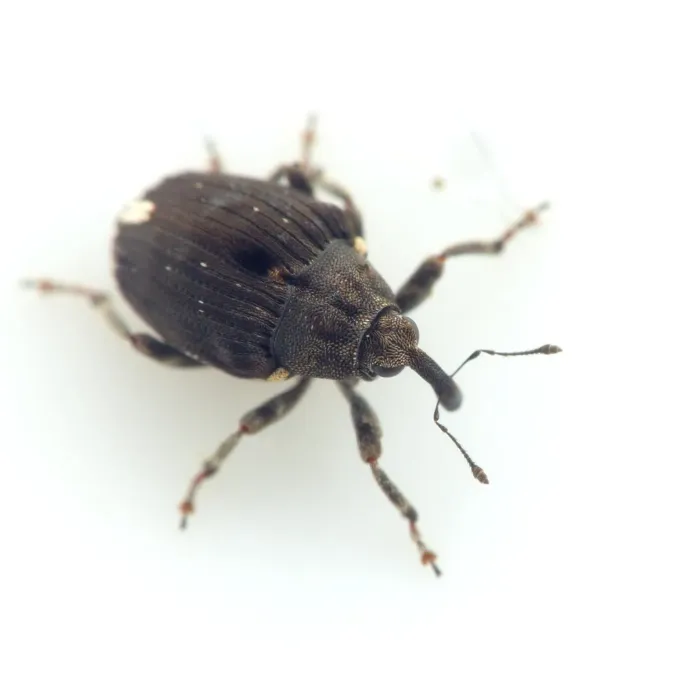
The poppy root weevil (Stenocarus ruficornis) is a small beetle belonging to the Curculionidae family, which is one of the most diverse beetle families in the world.
Adult weevils are small, typically measuring between 2.5 and 3 mm in length. Their bodies are dark brown or black, often covered in subtle scales that provide camouflage.
The larvae of this pest are legless and have a pale, yellowish-white body with a distinct, hardened brown head capsule, specialized for boring into plant tissues.
Poppy root weevils overwinter as adults, seeking refuge in the upper layer of soil, under leaf litter, or within field debris near where poppies were previously cultivated.
The life cycle consists of four distinct stages: egg, larva, pupa, and adult. They complete one generation per year, making the timing of monitoring crucial for agricultural management.
What it damages
The primary host plants for this species are members of the Papaveraceae family, specifically the opium poppy and various wild poppy species.
Adult weevils primarily damage seedlings by feeding on leaves and cotyledons, leaving small, characteristic holes that can retard growth or kill young plants.
The larvae are considered the most destructive stage, as they tunnel into the stems, leaf stalks, and developing poppy capsules, disrupting the plant's vascular system.
As a result of larval feeding, poppy capsules often become deformed, fail to mature properly, and suffer from reduced seed production and overall quality.
High infestations can lead to significant economic loss, potentially destroying a large percentage of the crop if control measures are not implemented promptly.
When it appears
Adult weevils emerge from their overwintering sites in early spring, usually as soon as the soil temperatures rise and the first poppy seedlings appear.
Mating and egg-laying occur over an extended period throughout late spring, coinciding with the rapid vegetative growth phase of the poppy plants.
Larvae are most active during the late spring and early summer months, feeding extensively inside the plant structures during the stem elongation and budding stages.
After completing their feeding cycle, the larvae exit the host plant and pupate in the soil, transitioning into the next adult generation by mid-summer.
Newly emerged adults may feed on weeds or plant remnants for a short period before entering a period of diapause to prepare for the winter months.
Signs of infestation
Initial signs of a poppy root weevil infestation include small, needle-like perforations on the leaves, indicating the presence of adult feeding activity.
Dark, necrotic spots or lesions appearing on stems and the bases of leaves are strong indicators that larvae have bored into the plant tissues.
Stunted growth or wilting in specific patches of the field, combined with misshapen or blackened poppy capsules, are key field observations of heavy larval damage.
Inspecting the interior of fallen or deformed capsules often reveals the presence of white larvae or their waste products within the damaged plant material.
- Perforated seedling leaves.
- Discolored stem lesions.
- Deformed and stunted capsules.
- Visible larval tunnels inside plant stems.
Control measures
Integrated Pest Management begins with cultural practices, such as maintaining a strict crop rotation and avoiding poppy cultivation in the same field for consecutive years.
Deep fall tillage is an effective mechanical control method, as it disrupts the soil and exposes the overwintering pupae and adults to harsh conditions.
Effective weed management is essential, particularly the removal of wild poppy species that serve as alternate hosts for the weevil during the off-season.
Chemical control should be applied based on scouting thresholds, using insecticides at the onset of adult emergence before significant egg-laying occurs.
Systemic insecticides are generally preferred as they provide better protection against larvae that have already bored into the plant tissues.
Content graph
Connections · Poppy root weevil
Most often together:
Marketplace
Products · 1
Biology
Taxonomy
- Latin name
- Stenocarus ruficornis
- Order
- Coleoptera (beetles)
- Family
- Curculionidae
- EPPO code
- STESFU
Community
Discussion
No discussions yet — be the first.