
Spanolepis
Spanolepis
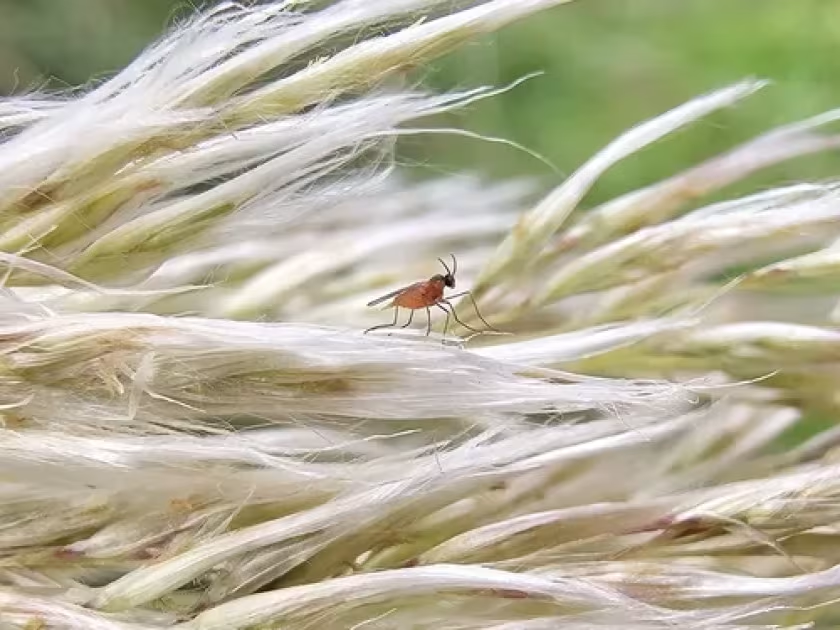
Description
How to identify
The genus Spanolepis belongs to the Gracillariidae family, known as leaf-miner moths. These insects are specialized pests that primarily target the foliage of specific woody plants.
Adult moths are characterized by their small size and narrow wings, usually featuring distinct color patterns that help in classification. However, microscopic examination of genital structures is often required for precise identification.
The systematic position of the species reflects its evolutionary adaptation to specific host plants, making it a specialist feeder in forest or orchard ecosystems.
Larvae develop through several instars, with physiological and morphological changes that allow them to thrive within the leaf tissue.
Pupation generally occurs inside the leaf mines or in protective silken structures on the leaf surface, marking the final stage of the immature development cycle.
What it damages
The primary hosts for Spanolepis are various tree species, making them significant pests in forestry, nurseries, and specialized plantations.
The larvae are internal feeders, mining the leaf parenchyma, which directly interferes with the host plant's photosynthetic efficiency.
High population densities can cause severe defoliation, leading to premature leaf drop and overall vigor loss in the infested trees.
Stressed trees exhibit reduced growth rates and become highly susceptible to secondary attacks from pathogens and wood-boring insects.
In nursery settings, damage to foliage can render seedlings unsalable, causing direct economic impacts for producers.
When it appears
The life cycle of Spanolepis is closely synchronized with the host plant's phenology, ensuring larvae have access to fresh, nutrient-rich leaf tissue.
Active adult flight typically occurs during the spring and summer months when plants are in their peak vegetative growth phase.
The species may complete multiple generations within a single growing season, depending on local climate conditions and available resources.
The population enters a diapause state as the season ends, often overwintering as pupae in the leaf litter or bark crevices.
Environmental variables like temperature and humidity are critical, influencing the speed of egg hatching and subsequent larval development.
Signs of infestation
The most diagnostic sign of infestation is the appearance of leaf mines, which vary in shape and color based on the specific species activity.
Early-stage infestations appear as subtle pale patches or trails, which may darken as the larvae deposit frass within the mine galleries.
Heavily infested trees show generalized leaf discoloration, wilting, or unnatural curling of the foliage, significantly affecting the aesthetic value of the site.
Tiny exit holes on the surface of the leaf provide clear evidence that the larvae have completed their development and emerged.
- Presence of characteristic trails or blotch-shaped mines.
- Premature yellowing or browning of foliage.
- Visible silk strands on the undersides of damaged leaves.
Control measures
Cultural control measures, such as the removal and destruction of leaf litter in the fall, are effective in reducing the overwintering pupal population.
The use of pheromone traps is essential for monitoring population levels and timing insecticide applications for maximum effect.
Biological control agents, including specialized parasitic wasps or microbial insecticides, can effectively suppress outbreaks without damaging the ecosystem.
Systemic insecticides should be applied during the early larval stage, when the insects are most actively feeding and vulnerable to chemical intake.
Maintaining optimal tree health through balanced fertilization and irrigation practices increases the tree's natural defense and recovery capabilities.
Taxonomy
- Latin name
- Spanolepis
- Order
- Diptera (flies)
- Family
- Cecidomyiidae
- EPPO code
- SPAOSP
Discussion
No discussions yet — be the first.