
Sorhagenia janiszewskae
Sorhagenia janiszewskae
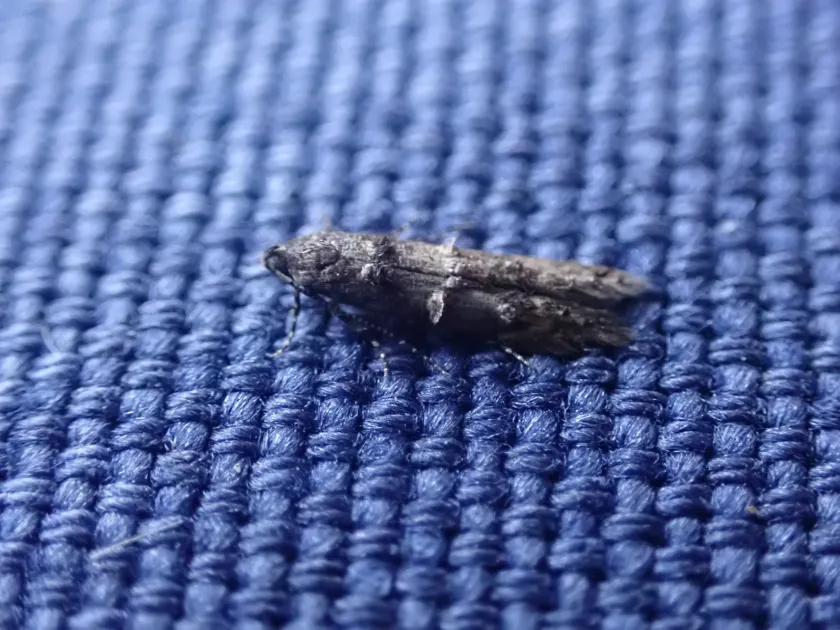
Description
How to identify
Sorhagenia janiszewskae belongs to the family Cosmopterigidae within the order Lepidoptera. This species is recognized as a specialized herbivore with a secretive lifestyle throughout its larval stage.
Adult moths are relatively small, with a wingspan of approximately 10–12 mm. Their coloration is adapted to provide camouflage while resting on the branches of their host plants, making them difficult to spot.
The larvae are typically slender and exhibit a chewing mouthpart structure, allowing them to penetrate the tissues of young shoots and buds. Their developmental biology is closely tied to the phenology of their primary host.
The life cycle encompasses four main stages: egg, larva, pupa, and adult. Environmental factors, particularly seasonal temperature fluctuations, significantly influence the timing of emergence for each generation.
Proper identification usually involves examining specific host plant symptoms or, in scientific contexts, analyzing morphological traits of the genitalia to distinguish the species from related moths.
What it damages
The primary host plant for Sorhagenia janiszewskae is Frangula alnus, commonly known as the alder buckthorn. The pest is specifically adapted to feed on this shrub.
Larval activity primarily targets the vegetative parts of the plant, including young leaves and growing shoots. Feeding inside these tissues inhibits normal plant development and slows down overall growth.
The destruction of terminal buds is a significant form of damage, as it prevents the plant from extending its branches correctly, affecting the shrub's architectural structure.
Heavy infestations reduce the photosynthetic capacity of the plant due to leaf damage. This makes the host more susceptible to secondary environmental stresses like drought or heat.
In landscaping and ornamental gardening, the aesthetic decline caused by the pest is a major concern, as deformed leaves and shoots significantly decrease the plant's ornamental value.
Signs of infestation
The most prominent sign of infestation is the curling and distortion of young leaves. Larvae often spin silk to tie leaf edges together, creating protected shelters for feeding.
Visible traces of larval excrement, appearing as small dark pellets, can often be found within the leaf folds or near the entry points where the larva has tunneled into the plant tissue.
Light-colored spotting or mine-like patterns on leaves indicate that larvae have been feeding between the leaf layers, disrupting the internal structure of the foliage.
In the early spring, damaged buds that fail to open or appear stunted are a clear warning sign. Monitoring these areas is essential for detecting the presence of the larvae early on.
- Curled and deformed terminal leaves.
- Silk webs binding leaves together.
- Accumulation of larval frass on shoots.
- Stunted or dried-up flower and leaf buds.
- Discolored, mined patches on leaf surfaces.
Control measures
Management of Sorhagenia janiszewskae relies on an integrated pest management (IPM) approach. Mechanical control, such as pruning and disposing of infested shoots, is the most direct way to reduce the population.
Biological control methods, particularly the use of Bacillus thuringiensis-based products, provide an effective and environmentally friendly way to target larvae without harming beneficial insects.
Chemical intervention should be reserved for severe cases. Contact-stomach insecticides applied when larvae are in their early developmental stages can significantly minimize the spread of the pest.
Maintaining high plant vigor through proper fertilization and irrigation helps the buckthorn plants better withstand the pressure of infestation and recover more quickly from damage.
Regular monitoring starting in early spring is crucial for timely detection. Taking preventive actions at the first sign of pest activity is much more successful than trying to manage a fully established population.
Taxonomy
- Latin name
- Sorhagenia janiszewskae
- Order
- Lepidoptera (butterflies)
- Family
- Cosmopterigidae
- EPPO code
- SORHJA
Discussion
No discussions yet — be the first.