

Pest · Lepidoptera (butterflies) · affects Winter wheat, Winter rapeseed, Apple
Especially harmful
Soybean pod borer
Leguminivora glycinivorella
Description
How to identify
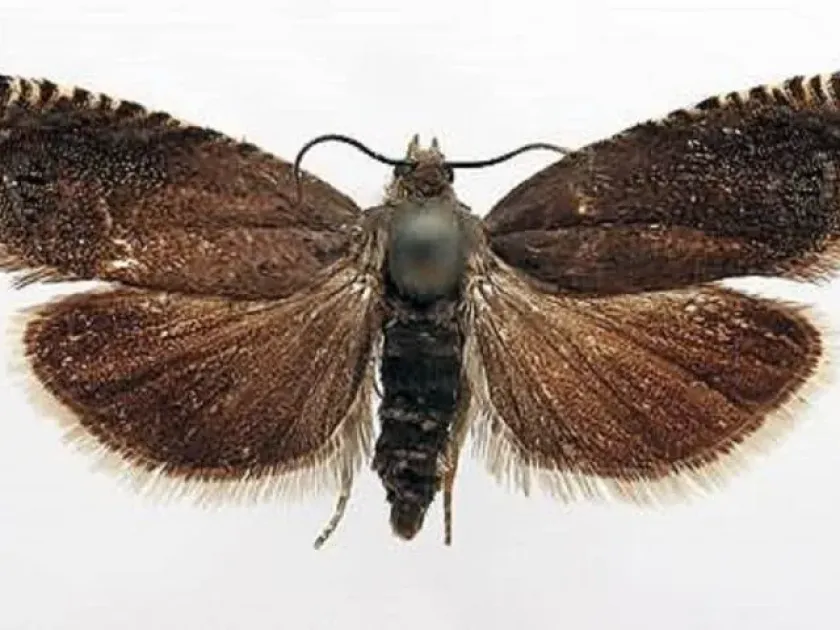
The soybean pod borer (Leguminivora glycinivorella) is a moth species belonging to the Tortricidae family. The adult moth has a wingspan of approximately 12–15 mm and is characterized by dark brown wings with a subtle metallic sheen.
The larvae, or caterpillars, are easily recognizable by their bright crimson-red body color. They go through several larval stages and are the primary cause of damage to the host plant's reproductive organs.
The species overwinters as a mature larva inside a silk cocoon within the top layer of the soil. As temperatures rise in the spring, the larvae pupate, eventually emerging as adults when soybean pods start to develop.
Adult females typically lay eggs on the pods of the soybean plant. The incubation period lasts about one week, and upon hatching, the young larvae immediately bore into the pod to begin feeding on the developing seeds.
The biological development of the pod borer is strictly synchronized with the soybean's phenological stages. This synchronization ensures that the larvae have access to their only food source during their critical growth period.
What it damages
The soybean pod borer is a specialized pest that exclusively affects soybean crops. It does not infest unrelated crops such as sugar beet, rapeseed, barley, apple, tobacco, wheat, or grapes; these plants are not part of its host range.
The damage is caused by the larvae burrowing into the pods and consuming the seeds. This leads to direct yield losses, as individual seeds can be partially or completely destroyed by the feeding activity.
Beyond the reduction in seed weight, the activity of the larvae significantly degrades seed quality. Damaged seeds often suffer from reduced germination rates and are rendered unsuitable for high-quality seed production.
The entry points created by the larvae provide an entry route for various secondary pathogens, including fungi and bacteria, which can cause rotting of the pods and further diminish the harvest value.
In cases of severe infestation, farmers may experience yield losses exceeding 30–50%. Protecting the crop from this pest is crucial for maintaining both the quantity and the economic value of the soybean harvest.
Signs of infestation
Initial signs of infestation include the appearance of silk webbing on the surface of soybean pods and small entry holes often marked by larval frass. These indicators are crucial for early detection.
When pods are opened, the presence of bright red larvae inside is a definitive sign of infestation. Feeding damage is often visible as hollowed-out sections or deep grooves on the surface of the beans.
The use of pheromone traps during the flowering and pod-filling stages is the standard method for monitoring adult flight activity. A sudden increase in moth counts signals the need for timely intervention.
Deformed or prematurely yellowing pods can indicate internal larval activity. Such plants usually show signs of stunted development because the seed nutrition is being depleted by the feeding larvae.
Towards the end of the season, exit holes on the dried pods indicate that the larvae have completed their development and have exited the plant to burrow into the soil for winter diapause.
Control measures
Crop rotation is a fundamental cultural control measure. Planting soybeans in fields that have not hosted the crop for at least 3–4 years helps reduce the overwintering population of the pest.
Deep autumn tillage is highly effective in controlling the pod borer. This practice buries the cocoons deep in the soil, preventing the adults from successfully emerging in the following spring.
Chemical control must be timed precisely with the period of larval hatching, before they successfully bore into the pods. Once inside, the larvae are protected from most contact-based insecticides.
Biological control methods, such as the release of the parasitic wasp Trichogramma, are effective in parasitizing the eggs of the soybean pod borer, thereby reducing the number of larvae before they cause damage.
Utilizing short-season soybean varieties can also be a viable strategy. Early harvesting helps interrupt the life cycle of the final larval generation, limiting the number of insects that successfully enter the soil for hibernation.
In brief
8
Damages crops
Content graph
Damages crops · 8
Content graph
Connections · Soybean pod borer
Most often together:
Marketplace
Products · 1
Biology
Taxonomy
- Latin name
- Leguminivora glycinivorella
- Order
- Lepidoptera (butterflies)
- Family
- Tortricidae
- EPPO code
- LASPGL
Community
Discussion
No discussions yet — be the first.