
Bean root aphid
Smynthurodes betae
Description
How to identify
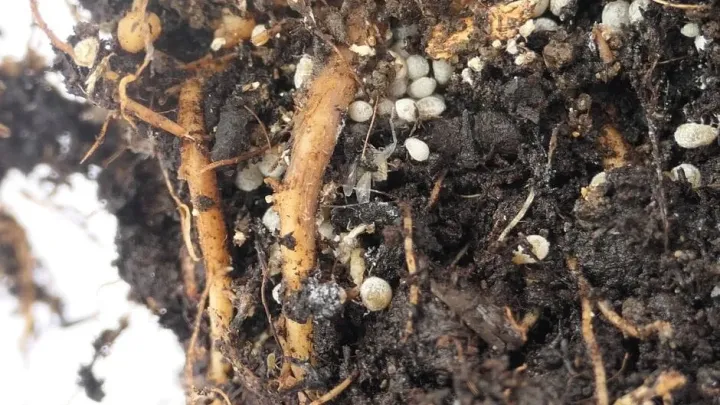
The bean root aphid (Smynthurodes betae) is a small insect belonging to the family Pemphigidae. These aphids are easily identified by their creamy-white or yellowish appearance and the characteristic white waxy powder covering their bodies.
The adults are approximately 2 mm long. They possess short antennae and are usually found in clusters on the roots of host plants, where they feed protected by the soil environment.
What it damages
The pest primarily targets the root systems of various plants, causing significant economic losses in sugar beet, fodder beet, and red beet production. It can also attack beans and other leguminous crops.
By feeding on the sap of the roots, the aphid weakens the plant, leading to stunted development and, in cases of severe infestation, the death of the plant due to root rot and nutrient deficiency.
When it appears
This aphid species overwinters in the soil as eggs or nymphs. As soil temperatures rise in the spring, the nymphs begin to feed on the root systems of available weeds before moving to agricultural crops.
The population reaches its peak during the mid-to-late summer months. Winged forms develop when the colony density becomes too high or the host plant quality declines, facilitating migration to new host plants.
Signs of infestation
Above-ground symptoms often include yellowing, wilting, and uneven growth of the foliage. These signs become particularly noticeable during hot, dry weather when the roots are stressed by the aphids' feeding activity.
To confirm the presence of the pest, one must carefully pull the plant and inspect the roots. The hallmark sign is the presence of pale-colored aphid clusters embedded in a white, cottony waxy secretion.
Control measures
Effective management strategies focus on preventing the build-up of aphid populations through sound agricultural practices. Deep tillage in the autumn is essential to destroy the overwintering sites.
- Crop rotation with non-host plants to interrupt the life cycle.
- Strict weed management, focusing on host plants like Chenopodium.
- Monitoring soil moisture levels, as water-stressed plants are more susceptible to damage.
- Applying systemic insecticides as seed treatments or granular soil applications for early-season control.
Taxonomy
- Latin name
- Smynthurodes betae
- Order
- Hemiptera (bugs, aphids, leafhoppers)
- Family
- Aphididae
- EPPO code
- SMYNBE
Discussion
No discussions yet — be the first.