
Lucerne flea
Sminthurus viridis
Description
How to identify
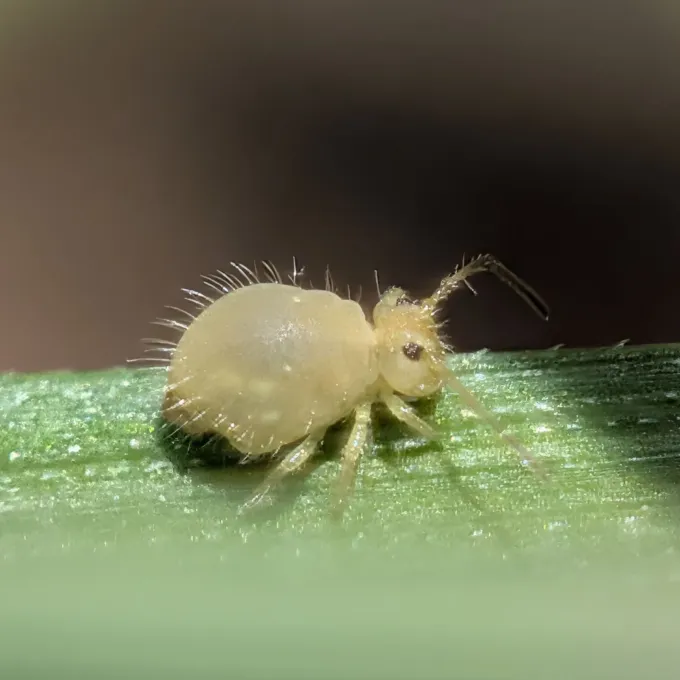
The lucerne flea (Sminthurus viridis) is a small, globular springtail belonging to the family Sminthuridae. Adults are approximately 2-3 mm long, typically bright green or yellowish-green with dark mottled markings on their bodies.
A distinctive anatomical feature is the furcula (springing organ) attached to the abdomen, which allows the insect to leap significant distances when disturbed. They lack wings and rely on these jumps as their primary defense mechanism.
These insects are moisture-loving and thrive in cool, damp environments. They are often found in the leaf litter or near the base of plants, using their coloration to blend into the surrounding vegetation.
The lifecycle consists of several moults. Eggs are laid in clusters, usually on the soil surface or the underside of leaves, and are often covered with a protective layer of fecal material by the female to prevent desiccation.
Environmental factors significantly influence their development rate. While they thrive in moist conditions, extreme heat or dry spells will force them to retreat into soil cracks or die off, often shifting into a diapause stage during unfavorable seasons.
What it damages
While named for its preference for lucerne (alfalfa), the lucerne flea is a polyphagous pest. It infests a wide range of crops including clover, various legumes, grasses, and occasionally garden vegetables.
Damage is caused by the insect rasping the surface of the leaves. This feeding method creates characteristic small, irregular holes or "windows" where the epidermis is removed, leaving the underlying tissue exposed.
Under heavy infestations, these individual windows coalesce, causing leaves to become severely skeletonized. This results in significant loss of green photosynthetic area, leading to stunted plant growth and eventual leaf drop.
Seedlings and young plants are the most vulnerable. Feeding damage at this early developmental stage can destroy the growing point, leading to high mortality rates within the crop stand.
Beyond quantity, the quality of the fodder is compromised. The nutritional value decreases, and the plant becomes susceptible to secondary bacterial or fungal infections due to the extensive surface damage to the leaves.
When it appears
Activity usually peaks in early spring when weather conditions are cool and wet. This corresponds with the emergence of the first generation from overwintering eggs stored in the soil.
As temperatures rise above 25°C and moisture levels drop, the insect population tends to crash. They enter a period of inactivity or remain in the soil to survive the heat of mid-summer.
A second period of activity often occurs in autumn as temperatures cool down and rainfall increases. This peak is particularly dangerous for newly emerged autumn-sown crops that are just establishing.
Overwintering is primarily in the egg stage. These eggs are remarkably resilient and can survive dry summers and cold winters, ensuring the re-emergence of the pest when the first favorable conditions appear.
Monitoring should be most intensive during the morning hours or in cloudy, damp weather when the insects are most active above the soil and visible on the foliage.
Signs of infestation
Initial signs of infestation appear as small, white or bleached spots on the foliage. These marks are the first evidence of the insects rasping away the green layer of the leaf.
Close inspection of the underside of the leaves often reveals the presence of small, dark fecal pellets, which are a strong indicator of an active colony of springtails.
Mechanical disturbance of the foliage causes the insects to jump, which is the most reliable way to confirm their presence in the field. Using a sweep net is standard practice for assessing population density.
Affected fields may show areas of yellowing or scorched appearance. In severe cases, the crop looks withered and lacks vigor, with clearly defined patches of damage spreading across the field.
The presence of stunted plants with shredded leaf margins confirms that the pest population has reached a level that threatens the economic viability of the crop.
Control measures
Cultural control, such as deep tillage after harvest, is effective in burying and destroying egg deposits, which helps reduce the potential population density for the following season.
Crop rotation helps by breaking the lifecycle of the pest, as the lucerne flea is less likely to establish in fields where non-host crops are cultivated in succession.
Chemical control is required when insect numbers exceed the economic threshold. Insecticides should be applied during periods of peak activity to ensure maximum contact with the pests.
Integrated Pest Management (IPM) encourages the preservation of natural predators, such as predatory mites, beetles, and spiders, which can provide significant biological control if broad-spectrum insecticide use is minimized.
Timely application of systemic or contact insecticides during the early growth stages of the crop is critical to preventing permanent damage and ensuring proper stand establishment.
Taxonomy
- Latin name
- Sminthurus viridis
- Family
- Sminthuridae
- EPPO code
- SMINVI
Discussion
No discussions yet — be the first.