
Sminthurus
Sminthurus
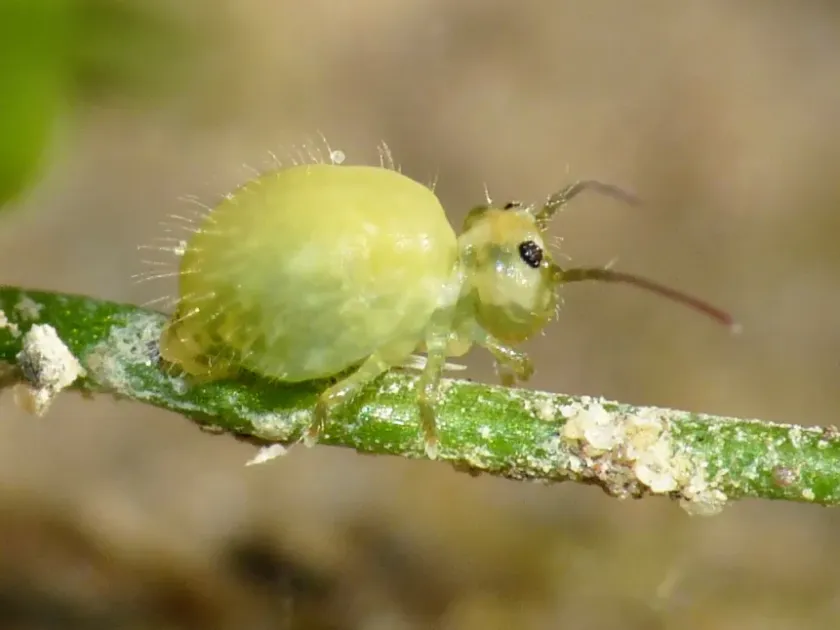
Description
How to identify
Sminthurus belongs to the subclass of springtails or Collembola. These are tiny arthropods that resemble miniature fleas due to their unique ability to make sudden leaps using a specialized organ known as a furcula.
The body of these organisms is typically rounded or slightly elongated. Adult individuals usually measure no more than 2–3 millimeters in length. Their coloration ranges from yellowish and greenish to dark, almost black, often featuring fine spots or patterns on the dorsal side.
Unlike true insects, springtails do not undergo a metamorphosis involving a pupal stage, but develop through a series of molts. They prefer humid habitats, as their thin cuticles are highly sensitive to desiccation.
Their respiratory systems are poorly developed, making air humidity a critical factor for their survival. They are highly active on soil surfaces and the lower parts of plant stems.
Scientifically, Sminthurus species are part of the order Sminthurida. In agronomy, they are classified as pests that become particularly active under conditions of high humidity and stagnant air in greenhouses.
What it damages
Sminthurus species affect a wide range of crops, including vegetables, ornamentals, and certain field plants. Young seedlings, nursery stock, and plants with delicate leaf tissue are particularly vulnerable to attack.
Adults and their nymphs scrape the epidermis of leaves, feeding on the underlying plant tissue. This feeding behavior causes specific types of damage that significantly reduce the vitality of the crop.
The greatest economic impact is observed in greenhouses and nurseries, where the microclimate is ideal for the rapid reproduction of this pest. In cases of mass infestation, they can destroy entire plant populations in a very short time.
Damage often affects not only the above-ground parts but also the root collar, potentially leading to plant death due to the disruption of nutrient transport pathways.
Beyond direct mechanical damage, the feeding sites serve as entry points for fungal and bacterial infections, which further complicates the phytosanitary status of the affected area.
When it appears
The activity of Sminthurus is directly linked to temperature and humidity levels. They most frequently appear in the spring when soil in greenhouses and indoor growing areas becomes waterlogged.
Population peaks typically occur during cool, rainy weather when the substrate remains moist for extended periods. In heated greenhouses, the pest can remain active throughout the entire growing season.
The life cycle of this pest is characterized by high reproductive rates under favorable conditions. Females lay eggs directly into the soil or onto the undersides of leaves near the ground.
Development from egg to sexually mature adult involves several molts, the duration of which is highly dependent on ambient temperature. The optimal temperature range for their development is 15–20 degrees Celsius.
During drought conditions, the population decreases sharply as these springtails cannot withstand direct sunlight or low air humidity for extended periods.
Signs of infestation
The primary sign of infestation is the appearance of small holes or "windows" on leaves, caused by the pest scraping away the epidermis. Leaves may appear as if they have been dusted with fine black pepper.
If you carefully examine the soil surface or the underside of leaves, you may notice chaotic jumping of tiny dots. This is a direct indication of the presence of a springtail colony.
When seedlings are infested, plant growth slows significantly, and leaf margins may deform or turn a yellowish hue. In severe cases, complete defoliation of cotyledons can be observed.
A characteristic sign is the accumulation of small organisms near the base of the stem or on moist soil surfaces immediately after irrigation.
The presence of necrotic spots on young tissues is also an indirect indication that the plant has been targeted by these types of pests.
Control measures
The most important protection measure is regulating irrigation and ensuring proper ventilation of growing areas. Reducing air humidity and allowing the top layer of soil to dry out effectively suppresses pest activity.
Agronomic control methods include regular soil cultivation, which disrupts the living conditions for larvae and eggs, thereby preventing their successful development.
The use of chemical plant protection products is justified only in cases of high population density. It is recommended to use contact insecticides specifically authorized for greenhouse use.
Biological control methods include the use of entomopathogenic nematodes or predatory mites that feed on Collembola, maintaining a natural ecological balance within the soil.
Prevention involves thorough disinfection of soil and growing containers prior to planting, as well as the removal of weeds that can serve as refuges for the pests during the off-season.
Taxonomy
- Latin name
- Sminthurus
- Family
- Sminthuridae
- EPPO code
- SMINSP
Discussion
No discussions yet — be the first.