
Sisyra terminalis
Sisyra terminalis
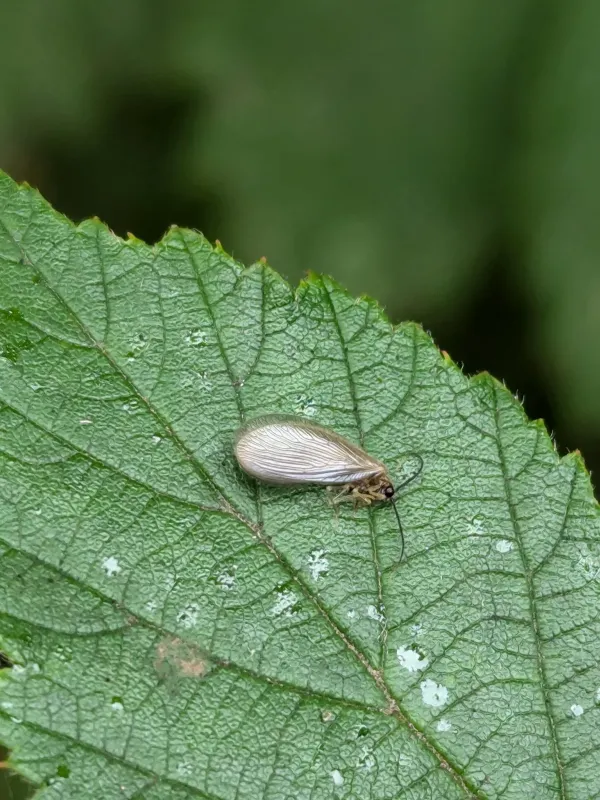
Description
How to identify
Sisyra terminalis is a species belonging to the family Sisyridae, within the order Neuroptera. These insects are commonly referred to as spongeflies due to their larvae's feeding habits.
Adult specimens measure approximately 5–7 mm in length and possess brownish wings that are folded tent-like over the abdomen. They are generally crepuscular or nocturnal in activity.
The larvae are uniquely adapted for an aquatic lifestyle, possessing specialized mouthparts for piercing and sucking the fluids from their hosts, which are freshwater sponges.
The life cycle undergoes complete metamorphosis, including egg, larval stages, pupation in a silk cocoon, and the adult stage. Eggs are typically laid on vegetation overhanging water bodies.
Identification is based on wing venation patterns and morphological characteristics typical of the Sisyridae family, distinguishing them from other net-winged insects.
What it damages
The primary hosts of Sisyra terminalis larvae are freshwater sponges (Spongillidae). They do not feed on terrestrial crops, so they are not direct agricultural pests.
Their negative impact is ecological; by feeding on sponges, they can reduce the population density of these organisms, which play a role in water filtration.
In irrigation systems drawing water from ponds or slow-moving streams, the degradation of sponge colonies may influence the overall biological water quality.
Although they are not direct threats to field crops, understanding their presence is vital for managers of hydroponic systems that rely on natural water sources.
Control is rarely necessary for commercial farming, as the damage is limited to specific aquatic environments rather than cultivated plant life.
When it appears
Adult activity is most pronounced during the warm season, typically from late spring through the summer months, depending on regional temperature variations.
The timing of egg-laying is correlated with the availability of healthy sponge colonies, which serve as the essential food source for the developing larvae.
Larval growth accelerates during peak summer temperatures when metabolic rates are highest in the aquatic environment.
Pupation occurs in a silken cocoon located on land, usually near the water's edge, towards the end of the summer season.
The species overwinters as pupae, emerging as adults in the following spring once conditions become suitable for reproduction.
Signs of infestation
Adult presence can be detected by monitoring vegetation near water bodies during the evening, as they are often attracted to artificial light sources.
Visible damage to sponge colonies, such as localized necrosis or thinning of the sponge matrix, serves as a clear indicator of larval infestation.
The presence of abandoned pupal cocoons on rocks, wood, or stems near the shoreline provides evidence of a recent successful emergence.
Monitoring changes in water clarity and biological composition in farm ponds can help in assessing the prevalence of these insects.
Regular visual inspections of the aquatic environment are the most effective way to track the population dynamics of this species.
Control measures
Chemical control is generally unnecessary and discouraged, as these insects are part of the natural aquatic food web and not crop pests.
Maintaining a balanced ecosystem with diverse predators is the best way to prevent any single aquatic insect population from becoming overly dominant.
If adult numbers become a nuisance near infrastructure, light management or physical exclusion methods can be employed.
- Preservation of riparian vegetation.
- Water quality monitoring in irrigation ponds.
- Avoidance of chemical runoff into water sources.
Practicing sustainable agriculture ensures that the natural balance in and around water sources remains stable, minimizing any indirect risks.
Taxonomy
- Latin name
- Sisyra terminalis
- Family
- Sisyridae
- EPPO code
- SSYRTE
Discussion
No discussions yet — be the first.