
Grain ground beetle
Silo
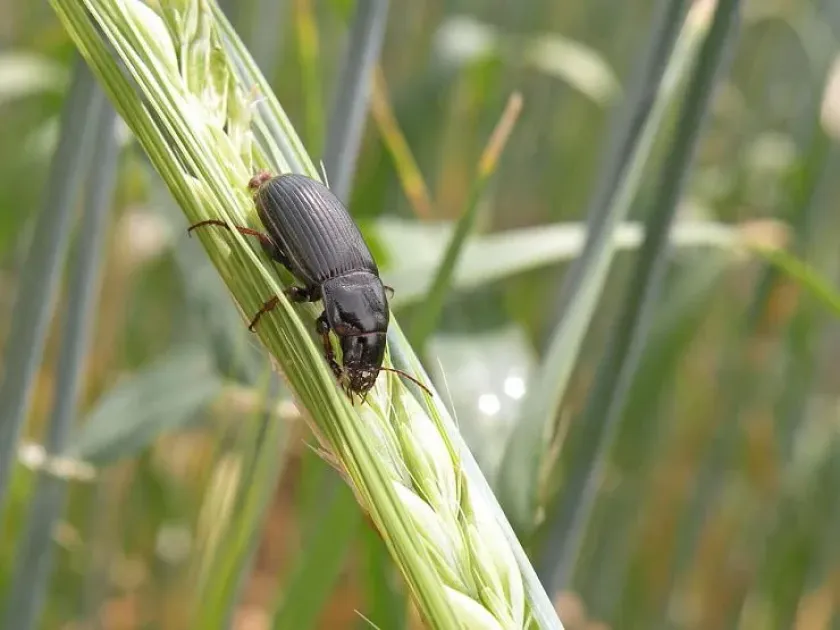
Description
How to identify
The grain ground beetle (Zabrus tenebrioides) belongs to the Carabidae family and is a significant pest of winter cereal crops across Europe and Asia.
Adult beetles are typically 12–16 mm long, characterized by a black, slightly metallic exterior, and are primarily active during the night.
The larvae are whitish-grey, reaching up to 30 mm in length, and possess strong mandibles designed for feeding on plant tissue.
Life cycle development is closely tied to the wheat growing cycle, involving eggs laid in the soil and a larval stage that overwinters.
Their subterranean lifestyle makes them difficult to spot without digging into the soil or utilizing nocturnal field surveys.
What it damages
Winter wheat, rye, and barley are the primary hosts, suffering from both larval feeding in autumn/spring and adult damage during grain filling.
Larvae feed on seedling leaves, shredding them and often dragging parts of the plant into their soil burrows, leading to stand reduction.
Adult beetles climb the stems during the milk or dough stage to consume kernels directly from the ear, significantly reducing harvest yields.
Severe infestations create noticeable bare spots in fields where seedlings have been entirely eradicated by larval feeding.
Economic damage is most pronounced when high larval populations coincide with slow crop development during early autumn.
When it appears
Egg laying usually occurs in early autumn, followed by the hatching of larvae that immediately begin feeding on young winter wheat shoots.
Larvae continue to feed during favorable winter days and increase their intensity in early spring as temperatures rise.
By early summer, the adults emerge, and their activity becomes concentrated on ripening ears of grain for nutritional supplementation.
Summer is a period of migration where beetles seek suitable conditions and crop residues to initiate the next generation.
The synchronization between the beetle's life cycle and the cereal planting schedule determines the severity of the infestation in any given year.
Signs of infestation
The most distinctive signs are shredded, twisted leaves on seedlings that appear as if they have been chewed into fibers.
Presence of small burrows in the soil near damaged seedlings often indicates the localized activity of the ground beetle larvae.
Empty glumes or partially eaten grains in the head are characteristic evidence of adult beetle feeding during the harvest period.
Clusters of wilting or missing plants in a field are typical indicators of an established larval colony underground.
Visual confirmation of adults on heads during twilight hours confirms the presence of the beetle population within the cereal crop.
Control measures
Crop rotation is the most effective preventative measure; avoiding continuous cropping of winter cereals prevents the buildup of beetle populations.
Deep plowing with moldboard inversion effectively buries larvae and eggs, causing high mortality rates by disrupting their underground environment.
Seed treatment with systemic insecticides provides excellent protection for germinating crops against early-stage larval damage.
Foliar insecticide applications should be timed according to local economic thresholds to protect crops during periods of high adult activity.
- Prompt harvesting to reduce adult food sources.
- Effective control of volunteer cereals and weeds.
- Stubble cultivation immediately following the grain harvest.
Taxonomy
- Latin name
- Silo
- Family
- Goeridae
- EPPO code
- SILOSP
Discussion
No discussions yet — be the first.