
Goera
Goera
Description
How to identify
Goera is a genus of caddisflies within the order Trichoptera and the family Goeridae. Adult insects are characterized by their hairy, non-descript wings and nocturnal activity patterns.
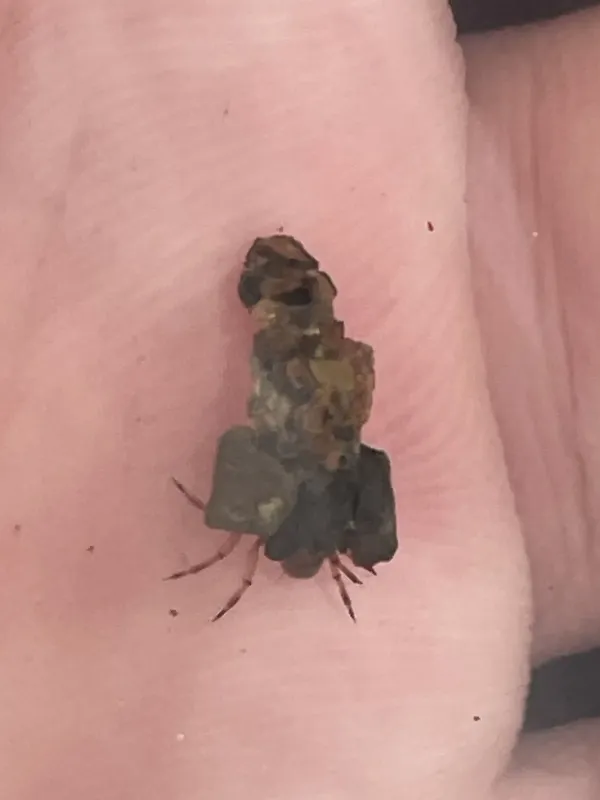
The larvae of the Goera genus are recognized by their unique portable cases, which they construct from sand grains and small mineral fragments gathered from the aquatic environment.
The larval anatomy is robust, featuring a sclerotized head designed for survival in flowing waters and a body structure optimized for anchorage within their cases.
Adults do not feed as they possess vestigial mouthparts, focusing entirely on mating and oviposition near freshwater sources.
The life cycle undergoes complete metamorphosis, consisting of the egg, larva, pupa, and adult stages, with the larval phase being the most impactful for agriculture.
What it damages
While primarily aquatic, Goera larvae can pose a risk to crops cultivated in flooded conditions, such as rice paddies, by feeding on submerged plant structures.
They target the roots and the base of the stems, causing structural damage that hinders nutrient uptake and water transport within the plant.
Mechanical damage caused by larval grazing often creates entry points for secondary infections, including various fungal and bacterial pathogens.
Increased larval populations can lead to stunted growth, reduced plant vigor, and potentially significant stand loss in irrigation-based farming systems.
Economic impact is most significant in areas where stable water levels persist throughout the growing season, providing ideal habitats for larval development.
When it appears
Larval activity and development are highly dependent on water temperature and the flooding cycles of the agricultural fields.
Feeding peaks typically occur during the spring and early summer months, coinciding with the rapid growth stages of crops when they are most vulnerable.
Adult emergence and subsequent mating take place in warmer weather, which facilitates the deposition of eggs in aquatic habitats for the next generation.
A single generation typically spans one year, making the presence of larvae a persistent factor in water-logged agricultural environments.
Unseasonably warm periods can accelerate the metabolic rate of larvae, leading to earlier or more intense crop damage than observed in cooler years.
Signs of infestation
The presence of Goera is most easily identified by the observation of their characteristic tube-shaped mineral cases attached to the roots of submerged plants.
Visual symptoms on plants include general chlorosis, drooping leaves, and uneven maturation of the crop in affected areas.
When examining the root zones, farmers may find visible tissue damage and the larvae themselves, often camouflaged by their sand-grain cases.
Stunted plant growth and localized patches of dying seedlings in flooded fields often indicate an infestation of caddisfly larvae.
Adult caddisflies may be observed in large numbers near artificial light sources or water bodies adjacent to crop fields during the evening.
Control measures
Management strategy relies heavily on agronomic practices, particularly the manipulation of water levels to disrupt the larval aquatic habitat.
Periodic drainage of rice paddies or irrigation ditches is an effective, non-chemical method to significantly reduce larval populations.
Biological controls, such as the use of selective entomopathogens, can be employed to manage larvae without harming the local aquatic ecosystem.
Chemical intervention should be restricted to products specifically approved for aquatic environments to minimize adverse ecological impacts.
- Regulated field drainage cycles.
- Maintenance and cleaning of irrigation channels.
- Crop rotation strategies.
- Use of light traps for population monitoring.
Taxonomy
- Latin name
- Goera
- Family
- Goeridae
- EPPO code
- GOERSP
Discussion
No discussions yet — be the first.