
Sepsis fly
Sepsis fulgens
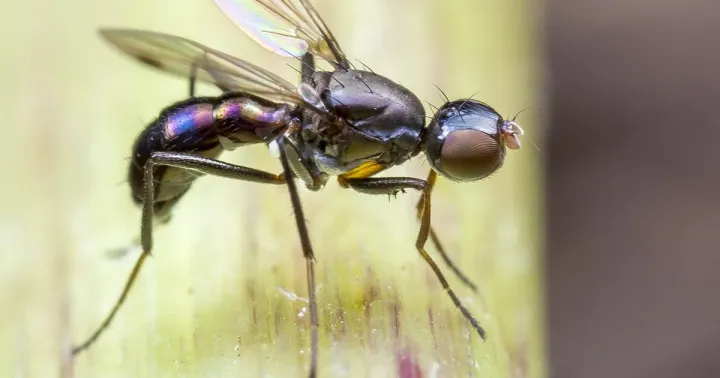
Description
How to identify
The Sepsis fly, scientifically identified as Sepsis fulgens, belongs to the Sepsidae family within the order Diptera. These are generally small flies, measuring approximately 3 to 5 millimeters in length.
The adults are characterized by a shiny body, often exhibiting dark or metallic green reflections on the thorax and abdomen. A notable feature in males is the presence of specialized spines or spurs on the front legs, used during mating rituals.
Their wings are typically clear, although many specimens exhibit a distinctive dark spot at the wing tip, which serves as a key identifier for this particular species.
The head is rounded with large compound eyes, providing the fly with excellent visibility to navigate in search of food and suitable sites for oviposition.
Larvae are maggot-like, typical of the Diptera order, lacking limbs and appearing whitish or cream-colored as they develop within organic matter or decaying plant tissues.
What it damages
While Sepsis fulgens is primarily a scavenger species associated with decomposing organic material, it can occasionally damage weakened plant tissues in agricultural settings.
The larvae are opportunistic, often infiltrating plants that have already been compromised by other pests, fungal infections, or mechanical damage, thereby accelerating the decay process.
This feeding behavior is particularly problematic for vegetables and ornamental plants grown in high-humidity environments, where the larvae can penetrate stems and root collars.
The resulting damage includes reduced plant vigor, yellowing of leaves, and in severe cases, the eventual collapse of the plant structure due to the destruction of internal tissues.
In greenhouse operations, where environmental conditions are often stable and moist, these flies can cause significant losses by infesting seedlings or young crops.
When it appears
The active season for Sepsis fulgens begins in early spring as soon as temperatures become sufficient to support the development of larvae in the soil or organic debris.
Peak population levels are typically observed during mid-summer, coinciding with warmer weather patterns and the increased availability of moisture-rich organic materials.
As autumn approaches and temperatures decline, their activity gradually decreases, and the flies seek protected habitats to survive the colder months in pupal or adult stages.
The species can produce several generations within a single growing season, provided that moisture levels and food sources remain constant, which can lead to persistent pest pressure.
The emergence of these flies is strongly correlated with the application of fertilizers, as the presence of manure or compost creates an immediate attraction for oviposition.
Signs of infestation
The presence of Sepsis fulgens is often first detected by observing swarms of flies near compost heaps, manure piles, or areas where crop residues are left to decompose.
On plants, evidence of infestation appears as soft, discolored patches at the base of the stem, accompanied by an unpleasant, putrid odor characteristic of secondary decay.
Close inspection of the damaged tissue usually reveals the presence of small, white larvae burrowing into the stems or near the root zone, feeding on the decaying material.
Plants affected by the larvae exhibit signs of wilting, even when soil moisture is adequate, because the damaged vascular system is unable to effectively transport water and nutrients.
Over time, the foliage turns yellow and eventually necrotic, starting from the lower leaves and progressing upwards, leading to the overall decline of the crop.
Control measures
Effective management begins with good agricultural practices, specifically the proper handling and composting of manure before it is applied to the soil to avoid attracting pests.
Removing plant debris from fields or greenhouses is critical to eliminate potential breeding sites and break the life cycle of the fly.
Implementing proper irrigation strategies to prevent water stagnation in the root zone can significantly reduce the environment's attractiveness for Sepsis fulgens larvae.
Insecticide applications are primarily effective against adult flies to prevent them from laying eggs, as treating established larvae within plant tissues is extremely difficult.
- Installing fine-mesh screens in greenhouses to exclude adult flies.
- Following crop rotation schedules to lower the pest population pressure.
- Regular cleaning and sanitization of garden tools and greenhouse structures.
- Encouraging natural predators, such as predatory beetles or spiders, to manage populations.
Taxonomy
- Latin name
- Sepsis fulgens
- Order
- Diptera (flies)
- Family
- Sepsidae
- EPPO code
- SEPSFU
Discussion
No discussions yet — be the first.