
Birch seed gall midge
Semudobia tarda
Description
How to identify
The birch seed gall midge (Semudobia tarda) is a small insect belonging to the order Diptera and the family Cecidomyiidae. It is a specialized pest that specifically targets the reproductive structures of birch trees.
The adult insect is a minute fly characterized by long, slender legs and narrow wings. Due to their extremely small size and cryptic behavior, they are rarely observed by the naked eye on the tree canopy.
Identification of this species is primarily based on the specific deformations of birch catkins. These gall-forming insects modify the plant tissues to create a protected environment for their larvae.
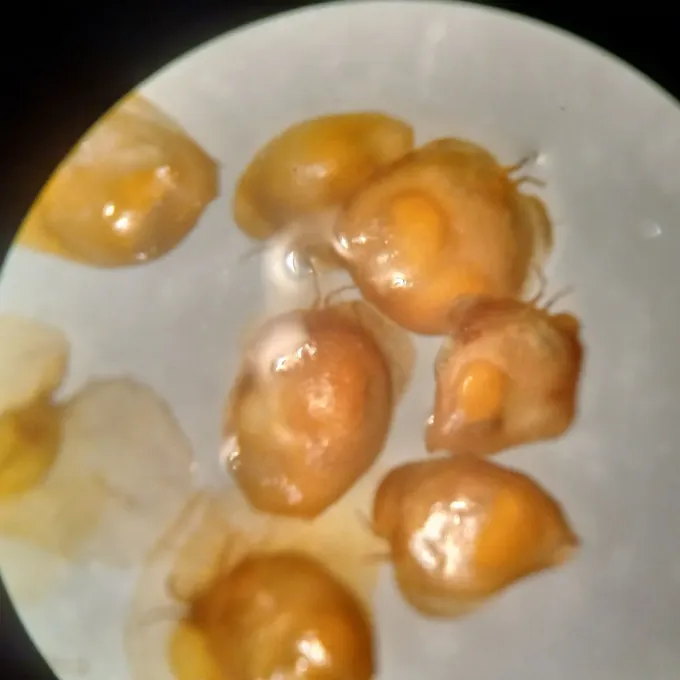
The larvae are typically legless and cylindrical, ranging in color from whitish to orange. They develop entirely inside the catkins, where they are shielded from environmental stressors.
This species shows a high degree of specialization, meaning its phenology is tightly linked to the flowering cycle of its host birch species, such as Betula pendula.
What it damages
The primary damage is caused to the female catkins of birch trees. Larvae feed on the developing seeds and scales, causing the tissue to grow into hard, abnormal structures known as galls.
This feeding activity prevents the formation of healthy seeds, resulting in a significant reduction in viable seed production within the infested catkins.
Affected catkins often display stunted growth or misshapen structures, which are detrimental to the quality of seeds collected for forestry and nursery purposes.
High infestation rates can lead to a substantial loss of the seed crop, affecting the natural regeneration potential of the forest stands.
The presence of galls often makes the catkins fragile and susceptible to early disintegration, further complicating seed harvesting processes.
When it appears
The lifecycle of the birch seed gall midge is highly synchronized with the birch phenology. Adult emergence typically occurs in the spring, coinciding with bud burst and catkin development.
Females lay their eggs into the young, developing female catkins, ensuring that the larvae have immediate access to food upon hatching.
The larvae spend the entire summer feeding inside the galls within the catkins. This period is critical for their development and the accumulation of energy reserves.
The species usually completes one generation per year (univoltine). The larvae overwinter within the mature galls, remaining in a state of diapause until the following spring.
This strategy allows the midge to survive harsh winter conditions, emerging precisely when the new generation of birch catkins becomes available for the next cycle.
Signs of infestation
The most reliable sign of an infestation is the presence of thickened, bumpy, or deformed female catkins on the birch trees.
Visual inspection during the maturation period of catkins reveals localized swellings where the larvae are actively feeding.
- Distorted and misshapen catkins;
- Hard galls within the scales of the catkin;
- Reduced viability of seed samples;
- Fragile texture of the catkins in late autumn;
- Presence of small larvae inside the gall chambers upon dissection.
The presence of these galls transforms the internal structure of the catkin, replacing nutritious seeds with tough, inedible tissue.
In autumn, infested catkins often fall apart more easily than healthy ones, indicating that the larvae have completed their development and are preparing for winter.
Control measures
Controlling the birch seed gall midge is difficult due to the protected nature of the larvae living inside the galls, which makes chemical control less effective.
The most recommended forest management practice involves the timely collection of seeds before the adult midges emerge, which helps reduce the local population density.
Chemical applications are only effective during the very narrow window when adults are actively flying and mating, requiring precise monitoring of local temperature and tree phenology.
Natural biological control, particularly through parasitoid wasps, plays a vital role in keeping midge populations in check in natural forest ecosystems.
In seed orchards, maintaining spatial isolation and ensuring rigorous sanitation measures are essential to prevent the spread of the midge to healthy areas.
Taxonomy
- Latin name
- Semudobia tarda
- Order
- Diptera (flies)
- Family
- Cecidomyiidae
- EPPO code
- SEMUTA
Discussion
No discussions yet — be the first.