
Birch seed gall midge
Semudobia
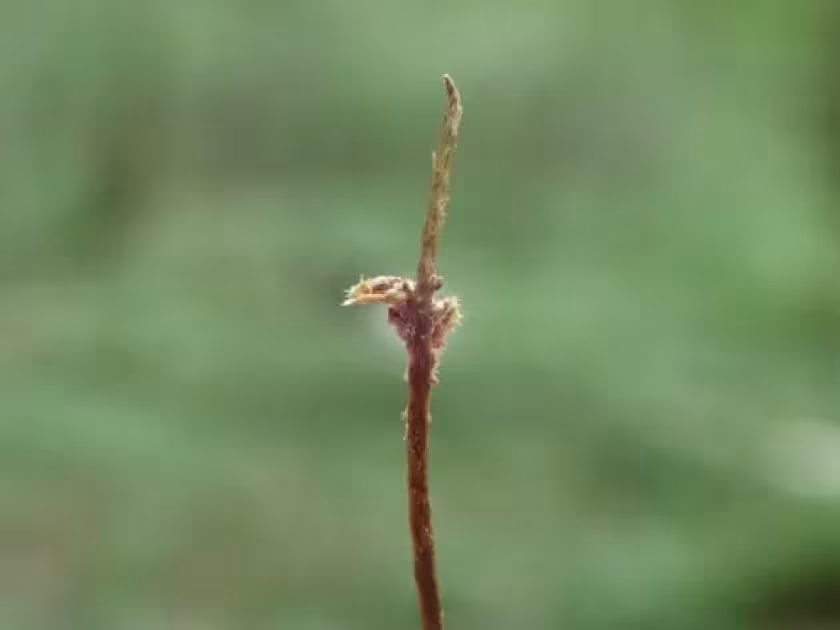
Description
How to identify
The birch seed gall midge (Semudobia) is a small insect belonging to the family Cecidomyiidae within the order Diptera. These midges are specialized pests that specifically target the generative organs of birch trees.
Adult midges are delicate, fly-like insects with narrow wings and long antennae. The females are equipped with elongated ovipositors designed to insert eggs deep into the developing catkins of the birch tree.
The larvae are legless and typically pale or yellowish. They remain entirely within the catkin tissue, creating a protected environment where they feed and complete their developmental stages.
The genus Semudobia includes several species, each often associated with specific types of birch. Accurate identification usually involves examining the morphology of the galls and the larvae located within.
Because they spend most of their life cycle hidden inside plant tissues, these insects are rarely noticed by casual observers, making them a subtle but significant factor in seed production loss.
What it damages
The primary damage caused by Semudobia is the destruction of birch catkins. Larvae feed on the developing seed embryos, rendering the catkins incapable of producing viable seeds.
Infested catkins often exhibit abnormal growth, swelling, or distortion, forming distinct galls. This growth pattern is a direct response of the host plant to the presence and activity of the midge larvae.
For forestry and seed production facilities, the presence of these midges is highly detrimental. It leads to a dramatic reduction in seed yields, which is a major obstacle for forest restoration efforts.
The health of the reproductive system of the birch tree is compromised by these infestations. Heavily infested trees may show a significant decrease in their ability to propagate naturally.
In many cases, the damage is not discovered until harvest time, when gathered catkins prove to be hollow, desiccated, or disintegrating, indicating total larval destruction of the seeds.
When it appears
The life cycle of the birch seed gall midge is synchronized with the phenology of birch trees. Adult activity occurs during the spring, coinciding with the flowering and the initial formation of catkins.
Females lay eggs into the opening catkins, ensuring that the offspring have immediate access to nutrients. This timing makes the trees particularly susceptible during the early spring growth phase.
Throughout the summer, larvae remain inside the catkins, actively feeding on tissues and growing steadily. During this time, they are protected from most environmental stressors and predators.
As autumn approaches, the larvae enter a period of diapause. They overwinter directly inside the galls, whether the catkins remain attached to the tree branches or have fallen to the forest floor.
With the return of warmer weather in spring, the overwintering larvae pupate. Soon after, the new generation of adults emerges to restart the cycle, aligning their emergence with the growth of new catkins.
Signs of infestation
The most visible sign of an infestation is the deformation of birch catkins. Instead of the typical elongated shape, they may appear thickened, stunted, or irregularly bulbous due to gall formation.
Closer inspection of a suspect catkin reveals internal chambers. These chambers contain the larvae or, if the adults have already emerged, empty pockets that signify the pest's previous presence.
Affected catkins often display premature discoloration or desiccation. They may become brittle, and in severe cases, the entire structure of the catkin can collapse or fragment when touched.
Poor seed yield is the ultimate indicator of Semudobia activity. When collectors find that catkins are light, dry, and lack the expected number of winged seeds, it is a clear sign of gall midge impact.
Small exit holes may sometimes be visible on the surface of the catkins, indicating that the adult midges have successfully completed their development and departed from their galls.
Control measures
Effective management in nurseries begins with sanitation. Collecting and destroying infested catkins before the adult midges emerge in the spring is a proven method to reduce future populations.
Chemical control is notoriously difficult because the larvae are shielded by the plant tissue. Insecticides are only effective if timed precisely to the brief window of adult midge flight.
Future integrated pest management strategies may involve biological controls, such as encouraging natural parasitoids or using specific microbial agents, though these are currently in the research phase.
Maintaining the overall health of the forest and ensuring proper spatial distance between seed orchards and natural stands can help minimize the spread and build-up of the pest.
Monitoring programs are essential. By keeping track of the adult emergence times, managers can decide whether intervention is necessary to protect the potential seed crop for the season.
Taxonomy
- Latin name
- Semudobia
- Order
- Diptera (flies)
- Family
- Cecidomyiidae
- EPPO code
- SEMUSP
Discussion
No discussions yet — be the first.