
Rufous hummingbird
Selasphorus rufus
Description
How to identify
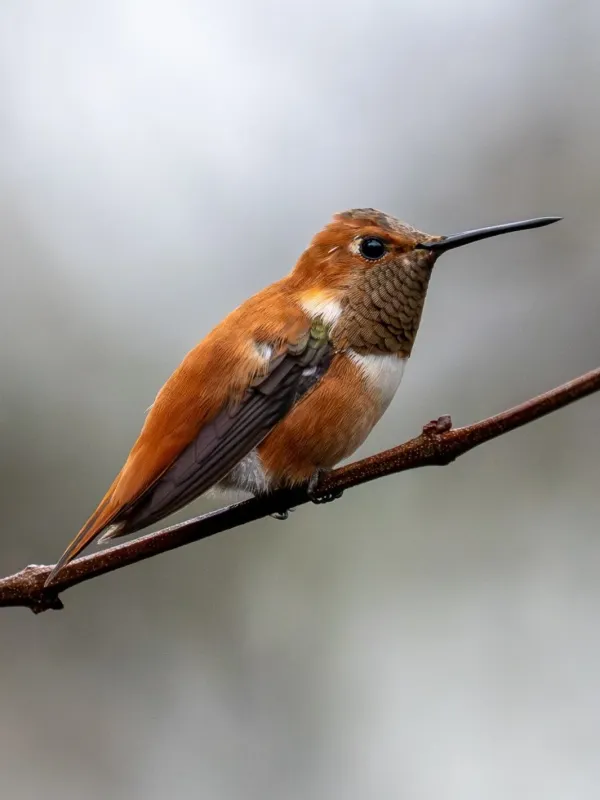
The Rufous hummingbird (Selasphorus rufus) is a small bird belonging to the Trochilidae family within the Apodiformes order. Adult males are distinguished by their bright reddish-brown plumage on the back and abdomen, complemented by a brilliant orange-red iridescent throat patch.
Females and juveniles display a greenish coloration with rufous flanks and white-tipped tails, which serves as excellent camouflage among foliage. These birds are renowned for their incredible agility, including the ability to hover precisely while feeding.
Typically measuring about 8 centimeters in length and weighing barely 3 grams, they are among the smallest avian species. Their long, slender, and slightly curved bills are perfectly evolved for accessing nectar deep within tubular flowers.
This species is highly territorial and displays aggressive behavior when defending its chosen foraging patches from competitors. This behavior often leads to their notable presence in gardens and nurseries.
Their high metabolic rate necessitates constant nectar intake, driving them to frequent flowering plants across agricultural landscapes during the active growing season.
What it damages
The primary concern regarding Rufous hummingbirds in agriculture is not the consumption of fruit, but the incidental damage caused to delicate floral buds and petals while accessing nectar with their sharp bills.
In greenhouses cultivating specialized decorative or berry crops with tubular blossoms, repeated visitation by these birds can lead to deformed flowers or premature bud drop, which impacts production quality.
By aggressively defending their territory, these hummingbirds may deter beneficial insect pollinators such as bees and bumblebees, potentially reducing the overall fruit set in orchards and flower farms.
While they also consume small insects, they are not major pests of vegetative parts; however, their presence in high densities can be disruptive to managed botanical environments.
Heavy activity in nurseries can also cause minor physical trauma to young, tender shoots, which could theoretically create entry points for opportunistic plant pathogens.
When it appears
The Rufous hummingbird is a migratory species known for performing some of the longest bird migrations relative to body size. Their presence in agricultural areas is strictly seasonal and linked to flowering cycles.
Activity peaks during the spring and summer months when abundant nectar sources are available. Their migration patterns often dictate their arrival and departure times in specific agricultural regions.
Autumn migration can occasionally cause temporary aggregations in regions with late-blooming crops, requiring growers to monitor their presence as the season progresses.
For agronomists, understanding migration corridors is crucial for anticipating arrival times and preparing necessary crop protection measures in advance.
Temperature fluctuations and climate patterns can influence migration timing, meaning that annual monitoring is essential for effective local management of bird-related issues.
Control measures
The most effective strategy for protecting sensitive crops from hummingbird damage is the installation of fine-mesh netting to physically exclude birds from greenhouses or high-value experimental plots.
Managing the surrounding landscape by removing unnecessary nectar-producing weeds can decrease the attractiveness of a cultivation site to hummingbirds, thereby reducing their visitation frequency.
Visual deterrents, such as reflective tapes or motion-activated devices, can be deployed to discourage hummingbirds from congregating in specific areas during critical flowering phases.
Strategically planning landscapes to avoid planting highly attractive, nectar-rich decorative species near intensive farming zones helps mitigate potential conflicts.
Always adhere to local wildlife protection regulations when implementing control measures, ensuring that all actions taken remain humane and environmentally responsible.
Taxonomy
- Latin name
- Selasphorus rufus
- Family
- Trochilidae
- EPPO code
- SLSPRU
Discussion
No discussions yet — be the first.